
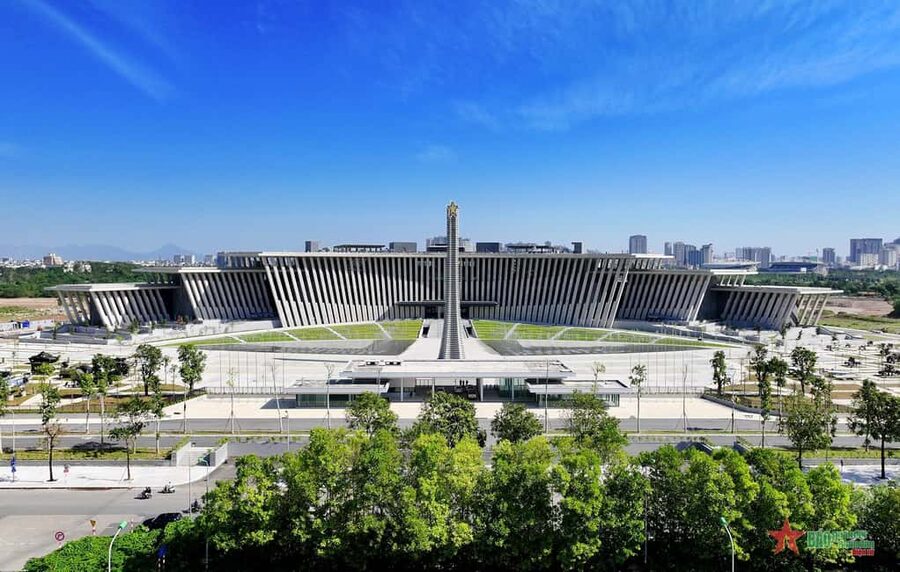
Reviewed · HISTORICAL TOURS
Hanoi: Vietnam Military History Museum and Hanoi Museum Tour
The most striking object here is T54B tank 843, the Soviet-built machine linked to the attack on Saigon’s Presidential Palace on April 30, 1975. I like that this tour also gets beyond the famous tank, showing everything from ancient wooden stakes to American aircraft wreckage. The private format and wide choice of guide languages are two strong points.
The main drawback is the sheer amount of material. Two hours at the Military History Museum and 100 minutes at Hanoi Museum gives you a useful introduction, but not time to read every label. The outdoor military displays can also be less comfortable in heavy rain, as road flooding in Hanoi can affect the day’s timing.
Key points at a glance
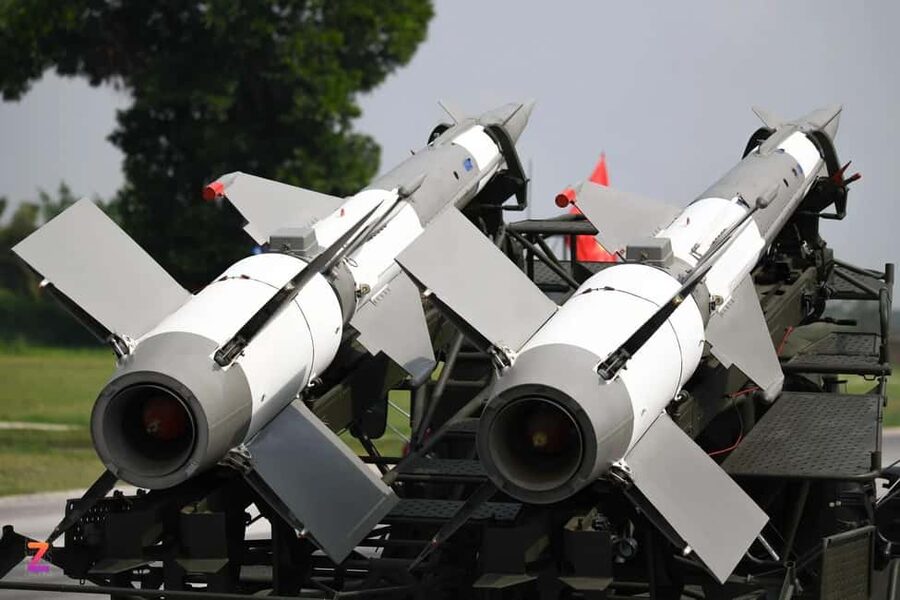
- T54B tank 843: See the Soviet tank associated with the fall of Saigon in 1975.
- Four national treasures: Explore the Military History Museum’s major collection of weapons, documents, and historic objects.
- Aircraft and artillery outdoors: View the tail of an American F-111A, B-52-era artillery, tanks, bombs, and Nguyen Dynasty cannons.
- 70,000 Hanoi artifacts: Visit the city museum for objects covering thousands of years of local history.
- Inverted-pyramid architecture: See Hanoi Museum’s unusual four-level building and central circular atrium.
- Private guided format: Travel from Hanoi with a guide available in 13 listed languages.
Two museums, two very different views of Hanoi
This is a useful pairing because the museums do not tell the same story. The Vietnam Military History Museum focuses on conflict, weapons, resistance, and national independence. Hanoi Museum takes a wider view, covering the capital’s culture, archaeology, people, art, and long civic story.
I like this contrast. The first museum is direct and often visually powerful. The second slows the pace and gives you more context about Hanoi itself. Together, they make a stronger half-day than visiting either museum alone.
The tour begins with pickup in Hanoi and uses a private-group format. The advertised duration ranges from five hours to a full day, with starting times depending on availability. The planned museum visits total about three hours and 40 minutes, so the remaining time allows for transport, pickup, and the distance between the two sites.
At $62 per person, the price makes the most sense if you value door-to-door transport, a private guide, skip-the-line access, and help interpreting objects that may not be easy to understand on your own. If you only want to walk through the museums at your own speed, buying admission separately may cost less, but you would lose the structure and explanations.
More museums and galleries in Hanoi:
- (Private) MUSEUM TOUR in HANOI
★ 5.0 · 262 reviews - Hanoi: War Site Museums Tour
★ 4.8 · 43 reviews - Hanoi Hoa Lo Prison and War museums Tour
★ 5.0 · 24 reviews
Inside the Military History Museum’s three buildings
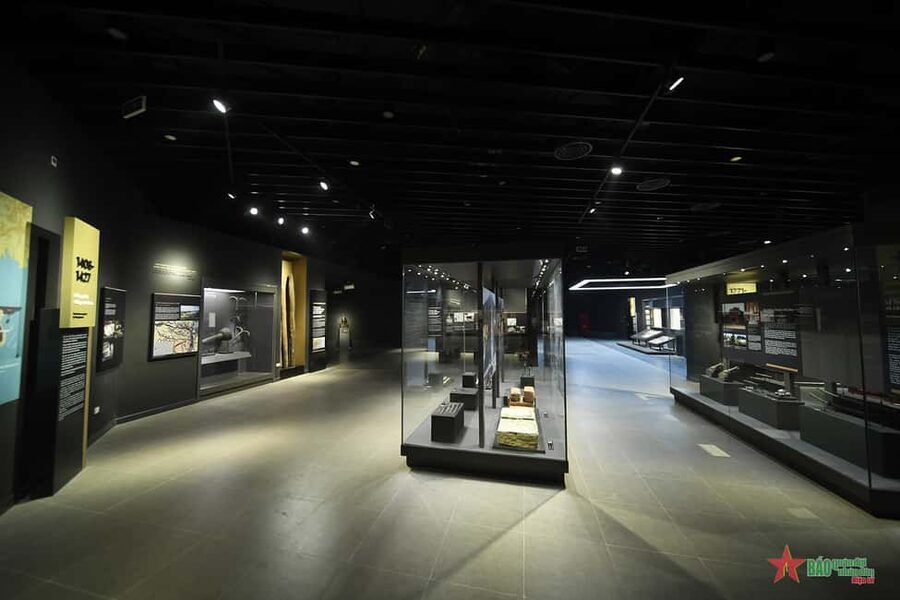
The Military History Museum is the larger and more demanding stop. Its indoor collection spreads across three buildings, so you should expect a lot of ground to cover and plenty of objects competing for your attention.
The exhibits reach far beyond the American War. One early item is linked to the Battle of Bach Dang in 1288, when Vietnamese forces fought the Mongol army. The wooden wattles used in that naval battle show that military history in Vietnam stretches back many centuries, rather than beginning with the twentieth-century wars.
You will also see shell mines, infrared optics, telephones, firearms, and military documents. Some objects explain technology and tactics, while others show the everyday tools used during long periods of conflict. I find this mix more useful than a collection made up only of famous weapons, since it gives you a sense of how wars were organized and fought.
The collection includes butterfly bombs produced by the United States and later used by France during the Indochina War. You can also see guns produced in Vietnam and used during the resistance against American forces. A guide is especially helpful here because the same weapon can carry a different meaning depending on who made it, who used it, and during which conflict.
The museum is one of Vietnam’s six national museums and is described as the largest museum in Hanoi. Its collection includes four national treasures. Those titles give you an idea of the importance assigned to certain objects, but the displays also include humble, practical items that help fill out the story.
The T54B tank and the fall of Saigon
Tank 843 is the museum’s headline object. This T54B was made in the Soviet Union and is associated with the attack on the Saigon Presidential Palace, now called Independence Palace, on April 30, 1975.
That date marked the end of the Vietnam War in the usual historical account and the reunification of Vietnam under the northern government. Seeing the tank in person gives the event a physical focus. Rather than hearing only about troop movements and political decisions, you are looking at the machine connected to the final push into the palace grounds.
The tank is important, but it is worth resisting the temptation to treat it as the whole museum. Its power comes from seeing it alongside the documents, weapons, and other objects that show how Vietnam reached that point.
Another notable item is a bronze statue of a soldier made by sculptor Tran Dinh Hoe in 1960. It is displayed with material related to resistance against French colonial rule. This helps connect the later American conflict with the earlier Indochina War, rather than presenting the two periods as separate stories.
Your guide can also help explain the political language used in the exhibits. The museum presents history from a Vietnamese national perspective, with a strong emphasis on resistance and victory. That viewpoint is central to the experience, and I think it is best understood directly rather than treated as a neutral account of every side.
Aircraft wreckage, bombs, and the outdoor grounds
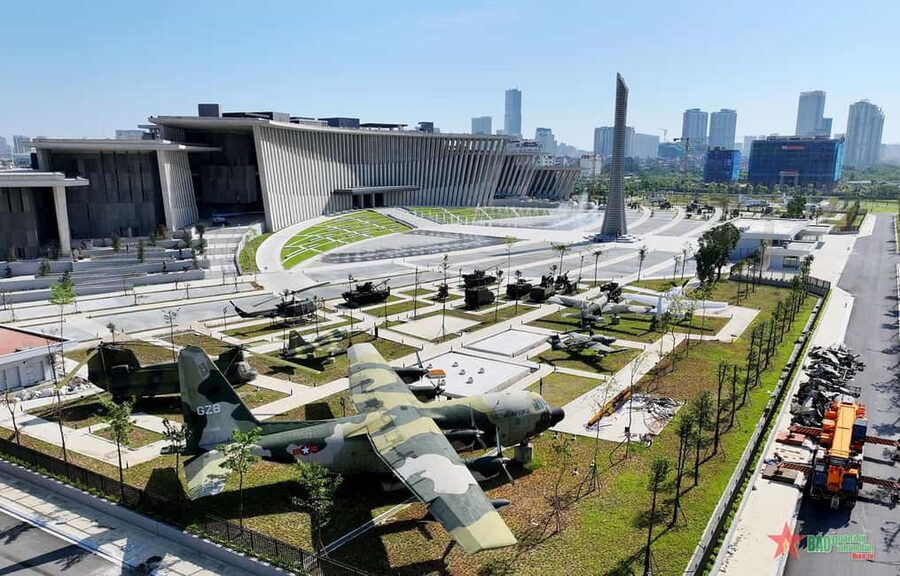
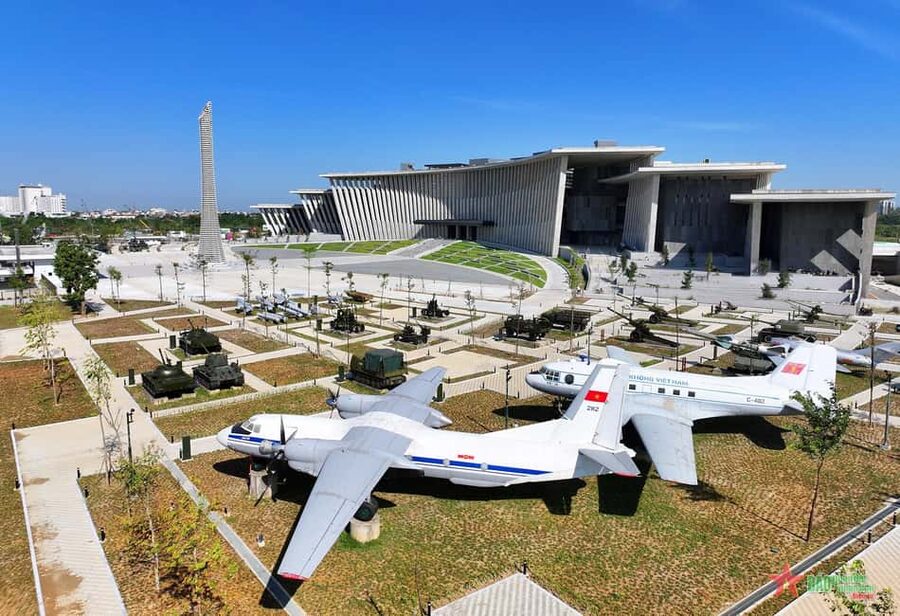
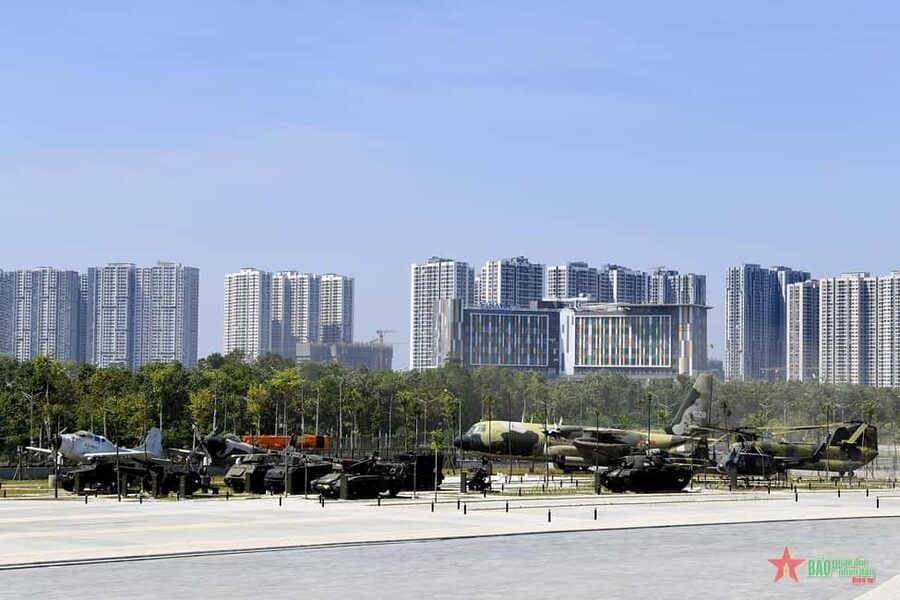
After the indoor galleries, you move outside to the displays at the foot of Hanoi Flag Tower. This section is more open and easier to scan, with aircraft, tanks, artillery, landmines, and other large objects arranged across the grounds.
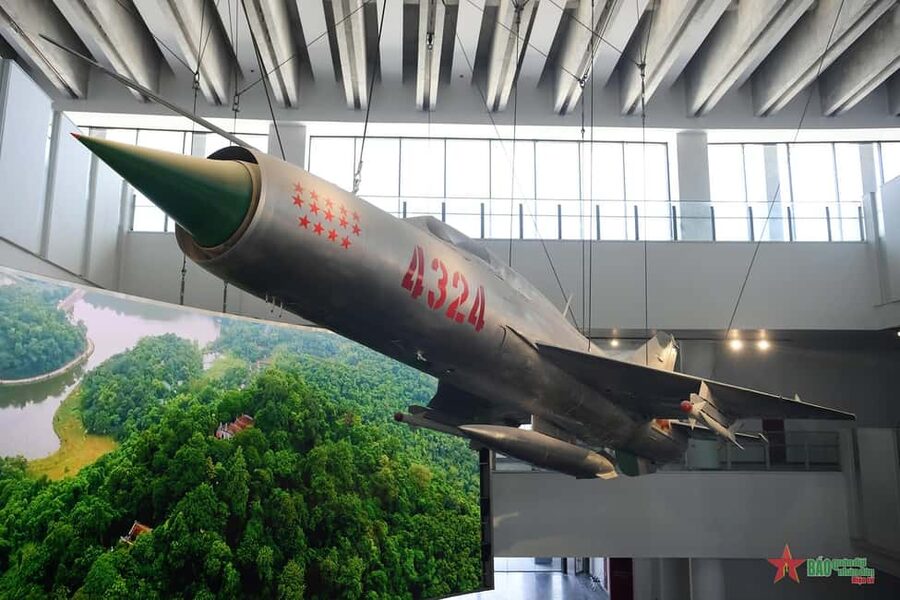
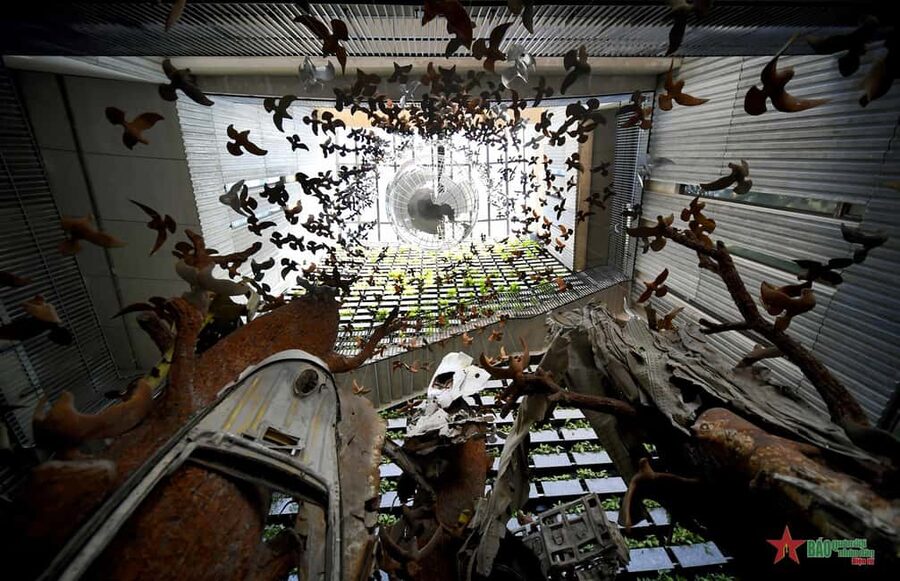
The tail of an American F-111A is one of the most memorable pieces. The aircraft crashed directly into the ground, and the remaining section gives you a stark reminder of the damage involved in air warfare.
You will also see different bomb types used by the United States. Nearby are Vietnamese artillery guns credited with shooting down American B-52 heavy bombers. The outdoor area makes the size of this equipment clear in a way that indoor cases cannot. It also gives you a better sense of how air power and ground defenses faced each other.
The display includes cannons from the Nguyen Dynasty, made in the nineteenth century and found around the Thang Long Citadel area in 2003. Their presence widens the museum’s scope again. This is not just a twentieth-century war museum. It presents military objects from several periods of Vietnamese history.
Allow some flexibility here. The outdoor area is more exposed to the weather, and rain can affect both comfort and road conditions. During a particularly wet day, the route may need adjustments. A previous tour was adapted because of heavy rain and flooded roads, so a little patience is sensible when Hanoi’s weather turns rough.
More history and heritage tours in Hanoi:
- Ninh Binh Heritage Full Day Tour with Buffet Lunch and Limousine
★ 5.0 · 2,692 reviews - Hanoi Heritage Premium Daily Tour
★ 5.0 · 914 reviews - Halong Heritage Luxury Day Cruise-Buffet lunch&Limousine transfer
★ 5.0 · 846 reviews - Heritage Binh Chuan 2 Days 1 Night discovery in Lan Ha Bay
★ 5.0 · 470 reviews
Hanoi Museum’s four floors and inverted pyramid

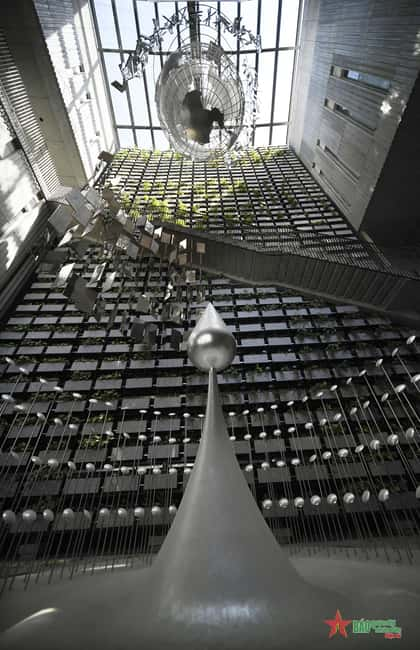
The second stop changes tone. Hanoi Museum occupies a large building of more than 54,000 square meters, with four floors arranged like an inverted pyramid. Each higher level extends farther outward, creating terraces and shade for the galleries below.
The design is one of the main reasons to visit. From the grounds, you see a square structure with a circular atrium in the center. Replicas of traditional Vietnamese villages and displays about Hanoi’s past appear around the grounds, giving you a preview before you enter.
The building was created as part of projects marking the 1,000th anniversary of Thang Long, Hanoi. That anniversary is tied to the city’s long role as Vietnam’s capital. The architecture tries to express that sense of importance without relying on a traditional monument form.
The museum has more than 70,000 artifacts and materials connected with Hanoi’s history and culture. You should not expect to study all of them in one visit. Instead, use the guide to identify the sections that matter most to you and keep moving when a case does not hold your attention.
Floor one: dynasties and carved stone
The first floor includes pillars carved with dragon figures from the Ly Dynasty. It also presents documents and objects from the Ly, Tran, and Le dynasties.
These displays help place Hanoi within the history of the Vietnamese state. The objects are not only decorative pieces. They reflect changes in royal power, religion, architecture, and administration across different periods.
Floor two: nature and daily life
The second floor turns toward natural specimens and images of Hanoi. You might see the skeleton of the Hoan Kiem Lake turtle, a shrimp specimen from West Lake, and photographs showing the city’s scenery and people.
This is a welcome change after the military museum. Hanoi is not only a political capital or a battlefield. Its lakes, wildlife, residents, and changing streets are also part of its identity. The photographs can help you connect the older objects downstairs with the city you are seeing outside.
Floor three: ancient objects and craft
The third floor includes bronze drums, copper coins, old ceramic vases, ivory, dragon statues, and stone turtle statues.
This is a good floor for anyone interested in archaeology and traditional craft. The objects cover different materials and periods, so the displays show how status, ritual, trade, and local production were recorded through physical things.
A guide can make a real difference here. Without background, a bronze drum or stone turtle may seem like an attractive old object. With context, you can better understand why it was made and what role similar objects played in Vietnamese culture.
Floor four: old and modern Hanoi
The fourth floor displays paintings and photographs of Hanoi in earlier and more recent periods. It also includes conference rooms, art studios, a library, and space for temporary exhibitions.
This final level brings the city into the modern age. After seeing dynastic artifacts and natural specimens, you get a more familiar view of streets, people, and urban change. The temporary exhibition areas may vary, so do not plan your visit around a specific temporary display unless you have current information.
Guides, languages, and the private format
The tour lists live guiding in Chinese, English, French, German, Italian, Japanese, Korean, Portuguese, Russian, Spanish, Indonesian, Thai, and Vietnamese. That range is useful for couples and families who want explanations in a preferred language rather than relying on labels.
Guide quality matters more here than at a simple photo stop. The Military History Museum contains weapons, aircraft parts, and political material that benefit from clear explanation. At Hanoi Museum, a guide can help you sort a large collection into a story you can remember.
One French-language guide on this route was able to answer detailed questions, and Lewis was praised for making adjustments during a difficult rainy day. Those details point to the kind of service that matters most: clear communication, answers beyond a memorized script, and practical flexibility when conditions change.
The private group format also lets you set the pace more easily than a large shared tour. You can spend longer with tank 843, ask about the F-111A wreckage, or move faster through objects that do not interest you. The tradeoff is that $62 per person may feel high for a solo visitor or a pair who prefer independent museum visits.
Who should book this museum tour?
I would recommend it to you if you want a guided introduction to Hanoi’s military and civic history in one outing. It suits first-time visitors who want structure, families who need help keeping a museum visit focused, and anyone interested in twentieth-century warfare, Vietnamese independence, archaeology, or urban history.
It is also a good choice if you want a private group and need a particular guide language. The wheelchair-accessible format is another practical advantage, although the information provided does not describe the exact route through every display area.
You may want a different plan if you dislike museums with large collections or prefer to read every label at your own pace. You might also find the full day longer than necessary if you already know Vietnam’s history and only want to see the famous tank.
The best approach is to treat the Military History Museum as the main historical stop and Hanoi Museum as a broader second chapter. Do not expect every object to receive equal attention. Ask your guide to focus on the four national treasures, tank 843, the French and American war periods, and the Hanoi artifacts that best match your interests.
Should you book it?
Book this tour if you want context, private transport, and a guide who can connect individual objects to Vietnam’s wider story. The strongest parts are the T54B tank, the outdoor aircraft and artillery collection, and the contrast with Hanoi Museum’s 70,000 artifacts.
Skip it if you want a short, casual museum visit or plan to explore independently on a low budget. At $62 per person, the value comes from the private format, multilingual guide, skip-the-line access, and the amount of ground covered. For a focused introduction to two of Hanoi’s largest museums, it is a practical choice, especially when you have limited time.
FAQ
Where does the tour begin?
Pickup is in Hanoi.
How long does the experience last?
The stated duration ranges from five hours to one day. The listed museum visits include a two-hour guided visit at the Vietnam Military History Museum and a 100-minute guided visit at Hanoi Museum. Starting times depend on availability.
Which museums are included?
The tour includes the Vietnam Military History Museum and Hanoi Museum.
What can I see at the Military History Museum?
You can see four national treasures, war artifacts and documents, weapons, bombs, shell mines, aircraft wreckage, tanks, artillery, landmines, Nguyen Dynasty cannons, and the T54B tank numbered 843.
What is special about tank 843?
Tank 843 was manufactured by the Soviet Union and is associated with the attack on the Saigon Presidential Palace, now Independence Palace, on April 30, 1975.
How large is Hanoi Museum’s collection?
Hanoi Museum has exhibited more than 70,000 artifacts and materials connected with Hanoi’s history and culture.
What languages are available for the guide?
The listed languages are Chinese, English, French, German, Italian, Japanese, Korean, Portuguese, Russian, Spanish, Indonesian, Thai, and Vietnamese.
Is the tour private and wheelchair accessible?
Yes. The experience is offered as a private group and is listed as wheelchair accessible.
Just added to the Hanoi list
- (TOP) Private car: Hanoi/Noi Bai Airport (HAN) from/to Ninh Binh★ 3.5 · 16 reviews
- Thang Long Water Puppet Theater★ 4.5 · 45 reviews
- Private car transfer from Hanoi Airport to Hotels★ 4.5 · 5 reviews
- Private Tour Ninh Binh 1 Day★ 5.0 · 5 reviews
- Private Hanoi Old Quarter Food Tour with 8+ Authentic Tastings★ 5.0 · 11 reviews
- Private Transfer Service from Hanoi to Ha Long Bay★ 5.0 · 3 reviews
- Private Transfer Between Hanoi City and Noi Bai Airport (HAN)★ 5.0 · 3 reviews
- Private Hanoi Food Walking Tour of the French Quarter★ 5.0 · 38 reviews
Historical Tours, compared.
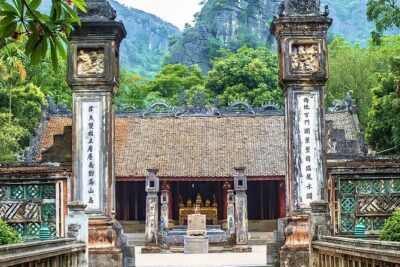
Ninh Binh Heritage Full Day Tour with Buffet Lunch and Limousine
Read our review →

Halong Heritage Luxury Day Cruise-Buffet lunch&Limousine transfer
Read our review →
Heritage Binh Chuan 2 Days 1 Night discovery in Lan Ha Bay
Read our review →
Old Quarter Hanoi Street Foods and Heritage Road Tour by Walking
Read our review →
Discover Trang An Natural World Heritage, Bich Dong Pagoda, Cycling Day Tour
Read our review →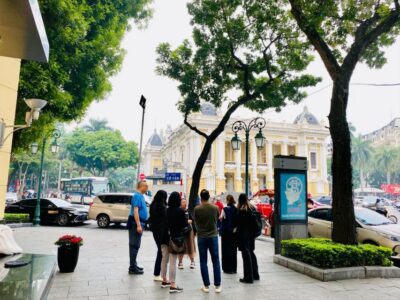
Coffee, History, and Architecture of the French Quarter
Read our review →
Hanoi Full Day A Private Tour With Mix of History and Activities
Read our review →Browse the lists this tour appears in