
Reviewed · WORKSHOPS
Hanoi: Tire Sandal Workshop with Crafting Experience
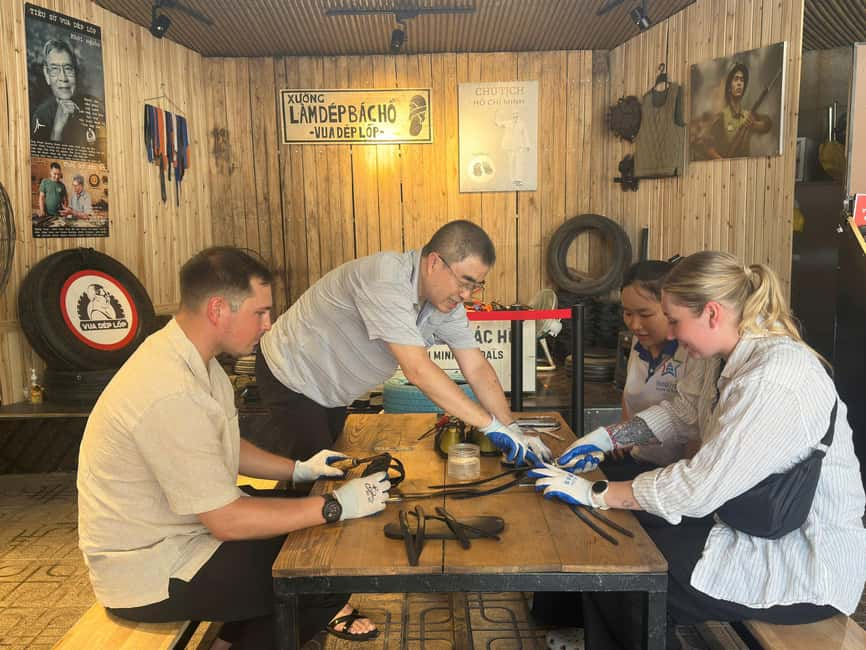
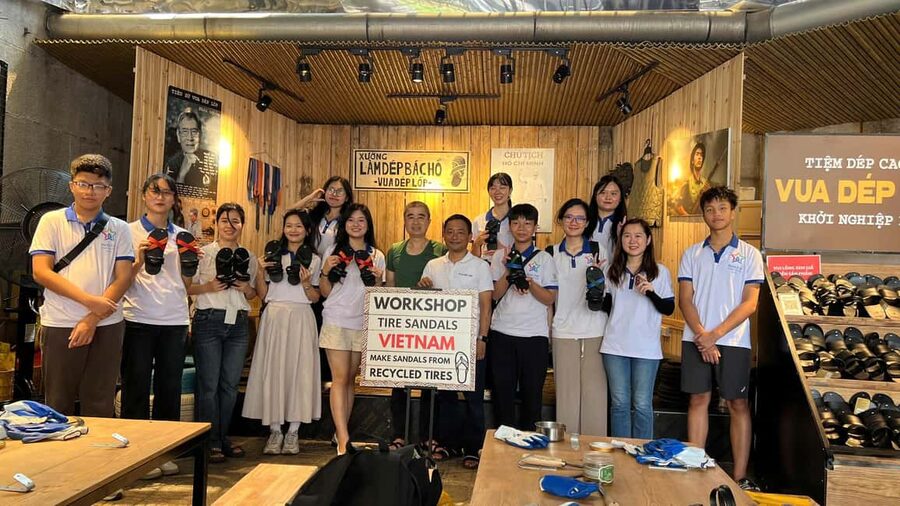
Vietnam’s famous tire sandals began as practical footwear made from old rubber tires. At this four-hour workshop near the Ho Chi Minh Museum, you learn how that humble material became a wartime necessity and a lasting symbol of Vietnamese resourcefulness. I like the hands-on work and the chance to hear family stories tied to the sandals. I also like that the session can be private, so you get direct help rather than being lost in a crowd.
The main drawback is the price needs careful checking. The experience costs about $5, but the materials are listed separately at 300,000 VND, and taking your finished sandals home may cost another 200,000 VND. One recent participant paid about 600,000 VND for the sandals, so ask for the current total before you begin.
Key points to know before you book
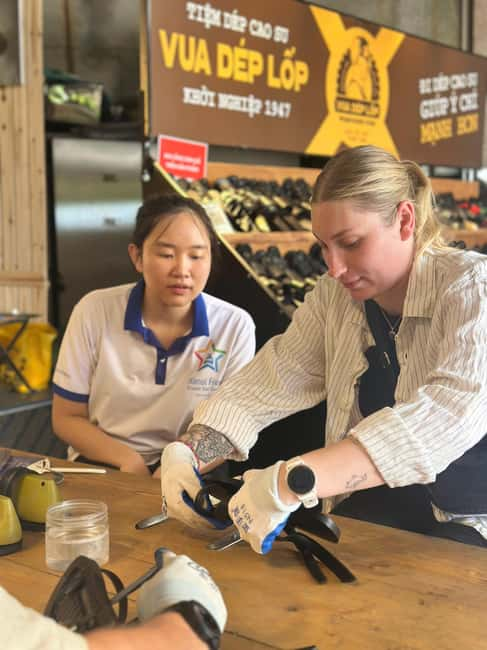
- You work with prepared rubber soles: The holes are already made, so the task is practical and manageable, though using the tool takes some hand strength.
- The workshop sits at 19 Ngoc Ha Street: It is in the Ho Chi Minh Museum complex, under cover, which matters on rainy days.
- You hear war-era and family stories: The English-speaking guide explains how the sandals served soldiers and civilians, while a Ho Chi Minh descendant may help with the craft.
- The group can be private: The activity is suitable if you want direct instruction and time to ask questions.
- The sandals are not automatically included: Materials and the finished pair cost extra, so confirm the payment details before crafting.
- Museum entry is optional: You can add the Ho Chi Minh Museum for 40,000 VND per person and visit with your guide.
Why these sandals matter in Vietnamese history
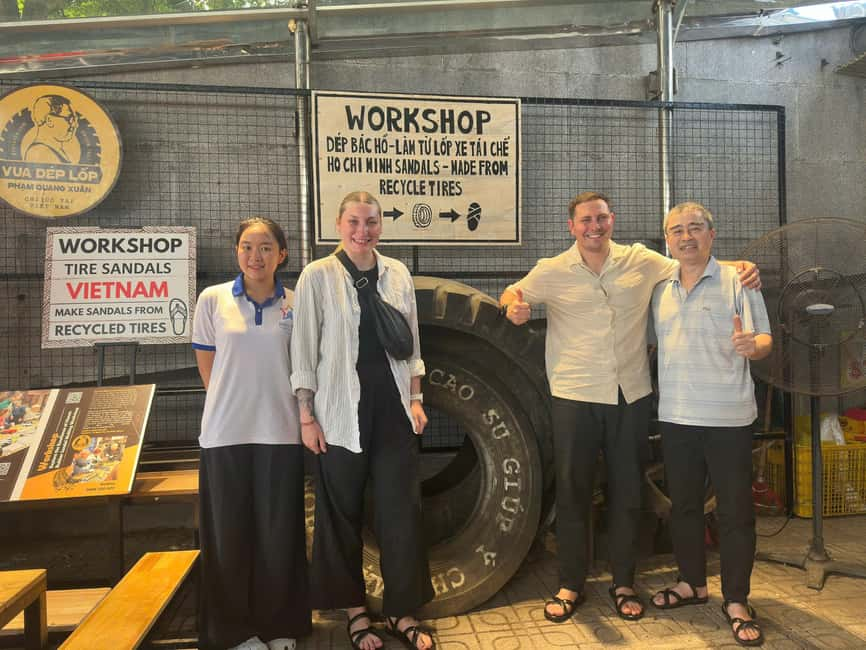
The workshop is not simply a lesson in making footwear. It gives you a small, physical way to understand wartime life in Vietnam.
Tire sandals were made from used rubber, a material that could be reused when new goods were scarce. Their simple shape made sense in a country where footwear needed to be sturdy, inexpensive, and easy to repair. The sandals became closely linked with President Ho Chi Minh, who famously wore them during the war.
That connection gives the workshop its focus. As you work, the guide explains how the sandals entered daily life and why they became associated with endurance and practical problem-solving. You are not just assembling a souvenir. You are handling an object tied to military history, family memory, and ordinary work.
I like this kind of cultural activity because it gives you something to do while you learn. A museum label can explain that a shoe was important. Making one yourself gives you a better sense of the labor behind it.
More hands-on classes and workshops in Hanoi:
- Hanoi Cooking Class: Culture, Local Market & Meaning CSR Impact
★ 5.0 · 5,147 reviews - 5 Traditional Dishes Hanoi Cooking Class with Market Trip
★ 5.0 · 4,890 reviews - Hanoi Coffee Workshop: Taste Salt, Coconut and Egg Coffee
★ 5.0 · 1,286 reviews
Arriving at the Ngoc Ha Street workshop
The workshop is at 19 Ngoc Ha Street, within the Ho Chi Minh Museum complex. Plan to arrive at the stated meeting point and look for the guide at the entrance. The guide speaks English and stays with you during the experience.
The work area is covered, which is a useful detail in Hanoi. Rain can change your plans quickly, and bad weather does not have to cancel a craft session here. The covered setting also keeps the focus on the work rather than on finding shelter.
Timing is flexible, but the full activity is described as lasting four hours. Since this is a private group, your pace may feel more relaxed than a large scheduled class. Still, one participant found the sandal-making portion too brief, so do not assume that all four hours are spent at the workbench. Some of the time may include explanations, museum access, and conversation.
Preparing the rubber soles and choosing colors
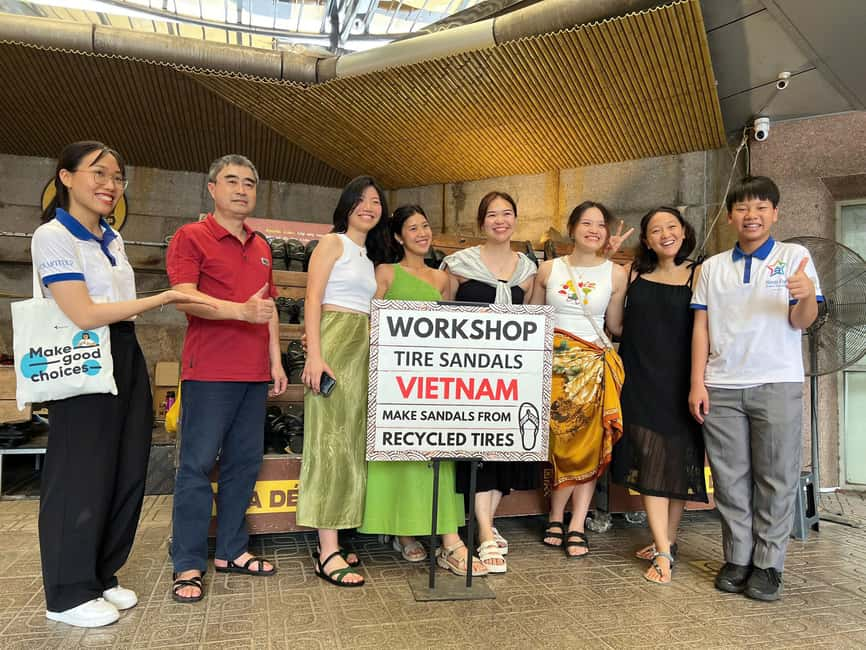
The sandals are partly prepared before you arrive. The soles already have holes in them, which saves you from doing the hardest and most technical preparation.
You will receive step-by-step instruction from local artisans and the guide. The central task is learning how to use a tool to attach or shape the sandal straps through the prepared holes. It is not described as difficult, but it does require some strength. If you have limited hand strength, ask for help early rather than forcing the tool.
You can choose from different colors, which gives the finished pair a personal touch. The range of colors is not specified, so you should treat the selection as a small workshop choice rather than a fully custom design service.
The process is simple enough for someone who has never made footwear before. That is part of the appeal. You do not need specialist skills, but you do get a clear sense that handmade work takes more effort than a finished shop product suggests.
A direct helper at the workshop may be a descendant of Ho Chi Minh. This is one of the more unusual parts of the experience, but the available details do not give that person’s name. You can expect personal assistance and family connections to the story, not a formal lecture delivered by a named historian.
Learning the technique from local artisans
The instruction is practical. You are shown what to do, then try it yourself with help nearby. The guide and artisan can correct your technique and help when the rubber or tool needs more force.
That format suits me better than a demonstration where you only watch. You get a real task, but the work is broken into clear steps. The result should feel like something you made, even though the soles have already been prepared.
Do not expect a factory-perfect pair from your first attempt. Small differences are part of the point. The sandals reflect a tradition based on usefulness, repair, and making do with available materials. Their plain appearance is part of the lesson.
The complimentary photos are a nice practical extra. The host takes pictures during the activity, giving you a record of the work without requiring you to stop and manage your phone. Ask how and when the photos will be provided, since the supplied details do not explain the delivery method.
Something completely different for the rest of your time in Hanoi:
- Hanoi Jeep Tour: Food, Culture and Fun by Vietnam Army Jeep
★ 5.0 · 15,222 reviews - Full-Day Ninh Binh Highlights Tour from Hanoi
★ 5.0 · 7,761 reviews - Hanoi: Ha Long Bay Day Cruise – Swimming, Meal, Kayaking
★ 4.7 · 7,415 reviews - Hanoi: Water Puppet Show Tickets
★ 4.6 · 7,029 reviews
Stories about Ho Chi Minh and wartime daily life
The history talk gives the craft more meaning. You hear about the role of tire sandals during the war and their place in everyday Vietnamese life.
The Ho Chi Minh connection is central. His use of tire sandals helped make them a familiar national symbol, but the workshop also presents them as everyday equipment rather than a display object. They were worn because they were practical.
The guide may also explain how the sandal tradition affected the guide’s own family. That personal angle can make the subject easier to understand. Instead of hearing only a broad account of national history, you get a sense of how memory can pass through families and ordinary objects.
The quality of this part depends on how much time your guide gives it. One participant had a guide who accompanied the museum visit and connected the history to her family’s life. That suggests the conversation can be a major strength, but you should ask questions if you want more than the basic workshop explanation.
Adding the Ho Chi Minh Museum
Museum entry is optional and costs 40,000 VND per person, about $1.60. If you pay for entry, your guide can accompany you and discuss the exhibits.
This is a sensible add-on if you want more historical context. The workshop gives you one object and its story. The museum can help place that object within the wider story of Ho Chi Minh and modern Vietnam.
The museum is not included in the basic cost, so decide based on your interests and available time. If your main goal is a quick craft activity, you may not need it. If you have already planned to visit the museum, combining the two makes practical sense because the workshop is in the same complex.
The museum visit also helps balance the experience. Without it, the activity leans toward craft and storytelling. With it, you have a chance to connect the sandals to a broader historical setting.
What the real cost includes
The advertised price is about $5 per person, but that is not the full amount if you want to make and keep the sandals.
The listed extra charges are:
- Materials for making the sandals: 300,000 VND, about $12
- Finished handmade sandals to take home: 200,000 VND, about $8, listed as optional
- Ho Chi Minh Museum entry: 40,000 VND per person, about $1.60, optional
- Meals and drinks: not included
There is a notable difference between the listed sandal price and one recent payment of about 600,000 VND. Prices may have changed, or the amount may have included additional costs. The safest approach is to ask the workshop for the current material charge and take-home price before starting.
At the lowest advertised rate, the experience itself looks inexpensive. Once materials are added, it becomes a roughly $17 activity before the optional finished pair and museum ticket. That can still be fair for a private, guided craft session, but it is not a $5 souvenir-making class in the usual sense.
The value depends on what you want. If you care about the history, personal instruction, and a handmade object, the total may be worthwhile. If you only want cheap footwear, you can probably find simpler shopping options in Hanoi.
Who will enjoy this four-hour experience
This workshop fits history enthusiasts, craft lovers, families, and anyone who prefers doing something rather than only looking at sights. It also works well for a private couple or small group that wants to ask questions at its own pace.
You do not need previous craft experience. The soles are prepared, the guide explains each step, and help is available. The only physical point to note is that the tool takes some strength.
The covered setting makes it useful during wet weather. Wheelchair access is listed as available, though the details do not explain the exact route or workbench setup. If you use a wheelchair, contact the provider ahead of time to confirm the practical arrangements.
Dress modestly. Shorts and short skirts are not allowed. Meals and drinks are not included, so plan around the four-hour duration.
This may be less suitable if you want a long, highly technical shoemaking course. One participant found the sandal-making part brief, and the basic process is relatively simple. The strength here is the combination of craft, history, and personal storytelling.
What you take home
You can make a pair during the workshop, but the sandals are not included automatically with the booking. The finished pair must be purchased separately if you want to take it home.
That distinction matters. Some craft activities include the object in the admission price. Here, the activity fee, materials, and finished sandals are separate charges. Confirm exactly what you will receive before you begin.
The final pair is more than a standard souvenir. It carries the memory of the work, the wartime story, and the place where you made it. It may not be the most polished footwear in your luggage, but it is a useful conversation piece with a clear connection to Vietnam.
You also receive complimentary photos taken by the host. Together, the sandals and photos give you a record of the activity that is more personal than a shop-bought souvenir.
Booking, timing, and cancellation details
The experience lasts four hours, with starting times available according to the workshop schedule. Flexible timing is offered, but you should check availability for your preferred day.
The activity is led in English and arranged for a private group. That makes it easier to ask about the sandals, the war, Ho Chi Minh, or the technique without waiting for a large group to move along.
You can reserve now and pay later, which helps if your Hanoi plans are still changing. Free cancellation is available up to 24 hours in advance for a full refund.
Because the cost details are split between booking fees and workshop payments, bring enough local currency or confirm the accepted payment method before you arrive. The supplied information says the extra charges are paid directly to the workshop.
Should you book the tire sandal workshop?
Book it if you want a small, personal activity that links Vietnamese history with practical craft. The private format, English guidance, covered workshop, family connection, and optional museum visit give the experience more substance than a quick souvenir demonstration.
Before paying, ask three direct questions: What is included in the booking price, how much are the materials today, and how much will the finished sandals cost to take home? That one check should prevent the main source of confusion.
I would choose this workshop for a rainy afternoon, a culture-focused Hanoi itinerary, or a private group that enjoys making things. I would skip it if you want a long technical course or an all-inclusive price with no extra payments.
FAQ
Where is the tire sandal workshop located?
The workshop is at 19 Ngoc Ha Street in Hanoi, inside the Ho Chi Minh Museum complex.
How long does the experience last?
The stated duration is four hours. Starting times depend on availability, and flexible timing is offered.
Is the experience conducted in English?
Yes. An English-speaking guide leads the experience, and local artisans provide step-by-step help.
Are the materials included in the price?
No. Materials are listed separately at 300,000 VND, about $12, paid directly to the workshop.
Can I take home the sandals I make?
Yes, but the finished sandals are not included automatically. They are listed at 200,000 VND, about $8, though one recent payment was about 600,000 VND. Confirm the current price before starting.
Is the Ho Chi Minh Museum visit included?
No. Museum entry is optional and costs 40,000 VND per person, about $1.60. A guide can accompany you during the visit.
What clothing is not allowed?
Shorts and short skirts are not allowed. Wheelchair access is listed as available.
Just added to the Hanoi list
- (TOP) Private car: Hanoi/Noi Bai Airport (HAN) from/to Ninh Binh★ 3.5 · 16 reviews
- Thang Long Water Puppet Theater★ 4.5 · 45 reviews
- Private car transfer from Hanoi Airport to Hotels★ 4.5 · 5 reviews
- Private Tour Ninh Binh 1 Day★ 5.0 · 5 reviews
- Private Hanoi Old Quarter Food Tour with 8+ Authentic Tastings★ 5.0 · 11 reviews
- Private Transfer Service from Hanoi to Ha Long Bay★ 5.0 · 3 reviews
- Private Transfer Between Hanoi City and Noi Bai Airport (HAN)★ 5.0 · 3 reviews
- Ba Be National Park With Boat Trip, Kayaking, Swimming, Trekking And Cycling★ 5.0 · 10 reviews
Workshops, compared.

Hanoi Cooking Class: Culture, Local Market & Meaning CSR Impact
Read our review →
5 Traditional Dishes Hanoi Cooking Class with Market Trip
Read our review →
Hanoi Coffee Workshop: Taste Salt, Coconut and Egg Coffee
Read our review →
Salt Coffee Workshop Awake Your Senses With 6 Brews
Read our review →
Vietnamese Food Cooking Class in Hanoi with Market Experience
Read our review →
Handcrafted Wood Carving Workshop with Local Artisan
Read our review →
5 Local Dishes Cooking Class with Meal & Market Visit
Read our review →
Hanoi Cooking Class and Market Tour in Ancient House
Read our review →Browse the lists this tour appears in