
Reviewed · WORKSHOPS
Experience Traditional Vietnamese Calligraphy Class in Ha Noi
Vietnamese calligraphy is more than careful handwriting. In this two-hour Hanoi workshop, each brush line has its own method and meaning, and even a simple stroke can change the feel of the finished work. You’ll learn from a local calligrapher, practice with traditional tools, and make a piece of art from a blank sheet.
I like the small group of no more than six, which gives the instructor room to watch your hand and correct your technique. I also like that you leave with something you made yourself, not just a souvenir bought in a shop.
The main consideration is that this is a focused workshop, not a broad tour of Hanoi’s monuments or art scene. At $36, the value depends on how much you enjoy learning a hands-on skill.
Key points before you book
- A two-hour lesson in brush control: You learn how to hold and use the brush, then practice the strokes that shape Vietnamese calligraphy.
- A personal artwork to take home: You choose a simple design or sketch your own and turn it into a finished piece.
- A class limited to six people: The small group makes individual instruction more realistic than in a large craft workshop.
- A blend of Chinese and Latin influences: Vietnamese calligraphy developed from Chinese traditions but also reflects the country’s modern Latin-based writing system.
- A calm setting in Ba Đình: The activity takes place at 371 P. Kim Mã, in a venue described as scenic and serene.
- A lesson with local instructor Sun: Sun is described as young, kind, patient, and highly skilled at demonstrating the craft.
Why Vietnamese calligraphy makes a good Hanoi activity
Hanoi offers plenty of food tours, historic sites, and street walks. A calligraphy class gives you a quieter way to connect with Vietnamese culture. You sit down, slow your pace, and pay attention to the movement of the brush rather than rushing from one sight to the next.
Vietnamese calligraphy came to Vietnam through Chinese calligraphers centuries ago. Over time, it developed into several modern styles. Those styles can communicate different moods and ideas, so the class is not simply about copying pretty letters.
You’ll also encounter an interesting contrast between the writing systems. Vietnamese calligraphy carries the influence of Chinese characters and traditional brushwork, while modern Vietnamese uses a Latin-based alphabet. One of the most useful parts of the session is seeing how those influences meet on the page.
The class also connects brushwork with meditation. That does not mean you need prior experience with meditation or art. It means the process rewards a steady hand, patience, and close attention. If your line wobbles, the answer is not to rush. You try again and learn how pressure, direction, and movement affect the result.
More hands-on classes and workshops in Hanoi:
- Hanoi Cooking Class: Culture, Local Market & Meaning CSR Impact
★ 5.0 · 5,147 reviews - 5 Traditional Dishes Hanoi Cooking Class with Market Trip
★ 5.0 · 4,890 reviews - Hanoi Coffee Workshop: Taste Salt, Coconut and Egg Coffee
★ 5.0 · 1,286 reviews
Arriving at 371 P. Kim Mã in Ba Đình
The meeting point is 371 P. Kim Mã, Ngọc Khánh, Ba Đình, Hanoi 100000. You meet there and return to the same location when the class ends, so there is no separate drop-off point to arrange.
The exact venue is presented as scenic and serene. That matters because calligraphy is easiest to appreciate when you are not fighting noise, crowds, or a packed schedule. The setting helps turn the class into a pause in your day rather than another hurried appointment.
You should allow enough time to find the address and arrive ready to begin. The experience uses a mobile ticket, and confirmation is provided when you book. Since the class is only about two hours, a late arrival could take a noticeable portion of your practice time.
There is no sightseeing transfer built into the activity. You are responsible for reaching the meeting point, and the class ends there. That is simple, but it also means you should plan your route before setting out.
The opening lesson: history, styles, and tools
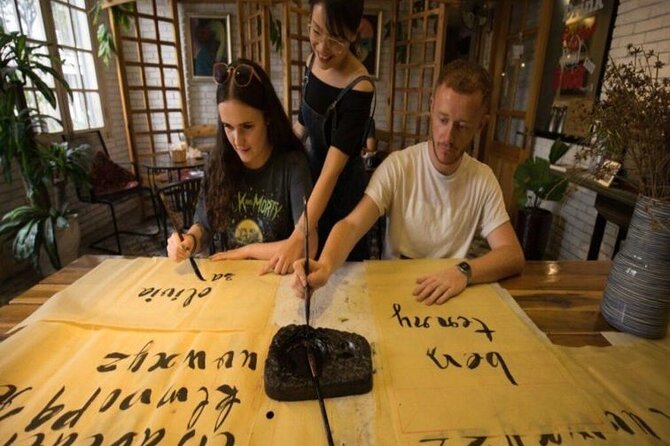
The session begins with an introduction to Vietnamese calligraphy and its place in local culture. You learn how the practice developed from Chinese traditions and changed over time into different modern forms.
This background gives the brushwork a purpose. Instead of treating the script as decoration, you begin to see why different lines, shapes, and arrangements matter. A finished character or word is not just an attractive mark. It carries an idea, a mood, or a message.
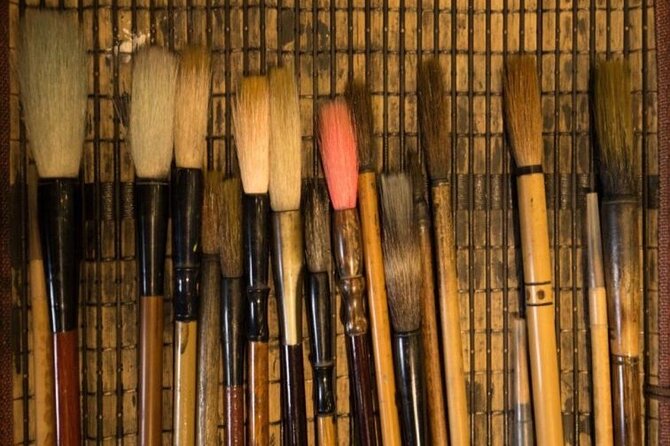
You are also introduced to the tools used by calligraphers. The supplied information does not name each tool, so you should not expect a fixed list in advance. The important point is that the class lets you handle the equipment and learn how each part contributes to the final work.
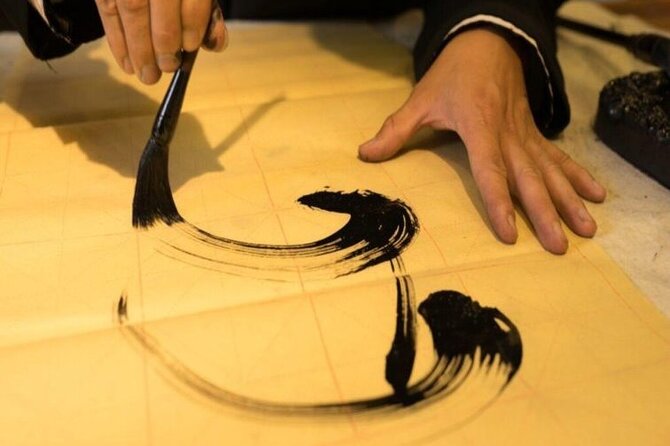
The instructor then demonstrates how to use the brush. This is where the class becomes practical. You are not left to copy a finished example without guidance. You watch how the brush moves, then try the technique yourself.
Sun, the instructor named in the Japanese feedback, is described as young, kind, careful, and fun in his teaching. That combination suits a beginner class. Calligraphy can feel intimidating when the teacher treats every mistake as a serious failure. A patient instructor helps you keep trying long enough to make progress.
Practicing the brush, one line at a time
The most valuable part of the class is the practice period. You learn that there are different ways to draw even a basic line, and each method can carry meaning. That detail gives the workshop more substance than a quick souvenir activity.
A brush is less predictable than a pen. The tip can bend, spread, or tremble as you change pressure. One Japanese participant specifically noted that the brush technique felt very different from Japanese calligraphy and that the brush tip shook at first. That is useful advice: expect a learning curve, even if you already have some experience with a brush.
Do not judge your first attempts too harshly. The class is designed to teach the method, not to turn a beginner into a master in two hours. Your first lines help you understand pressure and movement. Later attempts should feel more controlled because you now know what the brush is doing.
The instructor can show you how to adjust your hand and stroke. With a group capped at six, there is a reasonable chance for direct attention. The small size is especially important here because brushwork is difficult to understand from a demonstration alone. You need to see how your own hand is moving.
This is also where the meditative side of the activity becomes clear. You focus on one line, then the next. For a short time, the usual rhythm of Hanoi gives way to a slower task that demands concentration.
Something completely different for the rest of your time in Hanoi:
- Hanoi Jeep Tour: Food, Culture and Fun by Vietnam Army Jeep
★ 5.0 · 15,222 reviews - Full-Day Ninh Binh Highlights Tour from Hanoi
★ 5.0 · 7,761 reviews - Hanoi: Ha Long Bay Day Cruise – Swimming, Meal, Kayaking
★ 4.7 · 7,415 reviews - Hanoi: Water Puppet Show Tickets
★ 4.6 · 7,029 reviews
Choosing a design and making your final piece
After practicing the basic methods, you can choose from simple designs or sketch an idea of your own. The freedom is limited in a useful way. You are not expected to invent a complex composition without help, but you can still make a personal choice.
If you prefer a clear starting point, select one of the simple designs. This is likely the better choice if you are new to calligraphy, short on artistic confidence, or more interested in learning the brush than designing a full work.
If you already have a word, symbol, or idea in mind, you can sketch your own design. The information does not specify which words or designs are available, so ask the instructor about suitable options during the session. The class gives you room to create something personal, but the final choices may depend on the materials and guidance provided on the day.
The finished work becomes your souvenir. That makes the $36 price easier to assess. You are paying for instruction, cultural context, use of tools, practice time, and a handmade object. It is not just an admission fee, and it is not simply a purchased decoration.
Still, the value depends on your interests. If you want a fast activity with a guaranteed polished result, a calligraphy workshop may feel slow. If you like learning by doing and appreciate imperfect handmade objects, the price is more persuasive.
What the finished artwork means as a souvenir
A shop-bought souvenir can remind you where you went. A piece made during this class can also remind you how you spent part of your time in Hanoi. You remember the brush, the pressure, the first shaky strokes, and the moment the design began to look intentional.
That personal link is the best reason to choose this activity. The artwork does not need to be perfect to have value. In fact, the marks that show your learning may be what makes it meaningful.
You also gain a better understanding of an art form that is easy to admire without understanding. After the lesson, you can look at Vietnamese calligraphy with more attention to line, movement, and balance.
The class is a particularly good fit if you want a cultural activity that does not revolve around food or major landmarks. It can suit solo visitors, couples, friends, and families who want a creative break. The maximum group size of six keeps the experience relatively personal, though children’s participation is not specifically described, so check before booking if that is important to you.
Timing, group size, and practical value
The class lasts about two hours. That is long enough to cover the background, tools, brush handling, practice, and final artwork without taking over your entire day.
I like this length for a Hanoi itinerary. You can place it between other activities without giving up a full morning or afternoon. At the same time, two hours is short enough that you should arrive ready to focus. There may not be time for a long break or repeated redesigns.
The class is booked, on average, about 10 days in advance. That does not guarantee that every date sells out, but it suggests that planning ahead is sensible. The six-person limit is another reason not to leave it until the last minute.
The mobile ticket makes entry straightforward. Confirmation arrives at booking, and the activity begins and ends at the same address. Free cancellation is available if you cancel at least 24 hours before the local start time. Inside that window, the payment is not refunded, and changes are not accepted.
Most people can participate. The provided information does not describe specific accessibility arrangements, so contact the provider if you need a particular setup.
Who should choose this class
Choose this workshop if you want:
- A hands-on cultural activity rather than a passive demonstration.
- A calm break from Hanoi’s busy streets.
- A small class with room for personal instruction.
- A souvenir you create yourself.
- An introduction to Vietnamese art without needing previous calligraphy skills.
- A short activity that fits around a larger Hanoi schedule.
You may want to skip it if you dislike fine-motor activities or prefer a tour with constant movement. The value is in the process. The class will not suit someone who wants a polished artwork immediately or a broad survey of Hanoi’s history.
I would also be cautious about booking it solely for the final piece. The instructor and lesson are central to the experience. Your artwork may be attractive, but it is still beginner work, and the result will depend on your patience and comfort with the brush.
Is the $36 price fair?
At $36 per person, this is not the cheapest way to fill two hours in Hanoi. It is also not an unreasonable price for a small, instructor-led workshop that includes materials and a take-home artwork.
The six-person maximum is important here. A large group could make a similar class feel like a demonstration with limited practice. A small group gives the instructor more opportunity to correct your technique, explain the tools, and help you finish your design.
The price also covers something you cannot get from a casual visit to a shop: context. You learn why the art developed as it did, how the brush is used, and why different lines matter. That makes the class more useful than simply buying a calligraphy print.
I see it as fair value for people who enjoy creative activities and want a meaningful souvenir. It is less compelling for visitors who measure value by the number of sights covered or the amount of transport included.
Should you book the Vietnamese calligraphy class?
Book it if you want a quiet, personal Hanoi activity with a real skill at its center. The combination of a small group, local instruction from Sun, Chinese and Latin influences, and a handmade final piece gives the class more depth than a quick craft stop.
Go in expecting to practice, make imperfect lines, and improve through repetition. If you can accept that the brush may feel awkward at first, you are likely to get more from the session.
I would recommend it most for couples, solo visitors, and small groups who want a cultural memory they can carry home. At $36, it earns its place in your itinerary when the process matters as much as the souvenir.
FAQ
Where does the Vietnamese calligraphy class meet?
The class starts at 371 P. Kim Mã, Ngọc Khánh, Ba Đình, Hanoi 100000, Vietnam.
Where does the activity end?
The activity ends back at the meeting point.
How long does the calligraphy class last?
The workshop lasts approximately two hours.
How many people can join the class?
The activity has a maximum of six participants.
Do I need previous calligraphy experience?
The provided information does not require previous experience. The class introduces the tools and teaches you how to use the brush, and most people can participate.
Can I cancel for a full refund?
Yes. You can cancel for a full refund up to 24 hours before the experience start time. Cancellations or changes made less than 24 hours before the start time are not accepted and are not refunded.
Just added to the Hanoi list
- (TOP) Private car: Hanoi/Noi Bai Airport (HAN) from/to Ninh Binh★ 3.5 · 16 reviews
- Thang Long Water Puppet Theater★ 4.5 · 45 reviews
- Private car transfer from Hanoi Airport to Hotels★ 4.5 · 5 reviews
- Private Tour Ninh Binh 1 Day★ 5.0 · 5 reviews
- Private Hanoi Old Quarter Food Tour with 8+ Authentic Tastings★ 5.0 · 11 reviews
- Private Transfer Service from Hanoi to Ha Long Bay★ 5.0 · 3 reviews
- Private Transfer Between Hanoi City and Noi Bai Airport (HAN)★ 5.0 · 3 reviews
- Private Tour: Hanoi City Tour Including Water Puppet Show and Cyclo Ride★ 4.0 · 57 reviews
Workshops, compared.

Hanoi Cooking Class: Culture, Local Market & Meaning CSR Impact
Read our review →
5 Traditional Dishes Hanoi Cooking Class with Market Trip
Read our review →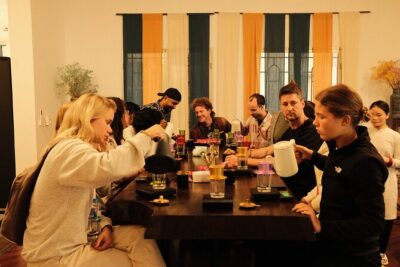
Hanoi Coffee Workshop: Taste Salt, Coconut and Egg Coffee
Read our review →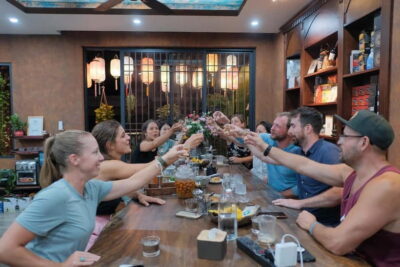
Salt Coffee Workshop Awake Your Senses With 6 Brews
Read our review →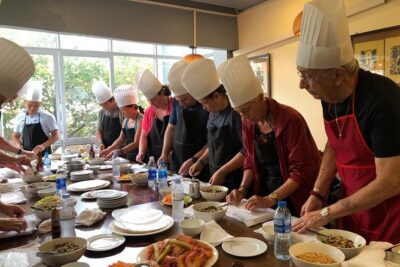
Vietnamese Food Cooking Class in Hanoi with Market Experience
Read our review →
Handcrafted Wood Carving Workshop with Local Artisan
Read our review →
5 Local Dishes Cooking Class with Meal & Market Visit
Read our review →
Hanoi Cooking Class and Market Tour in Ancient House
Read our review →Browse the lists this tour appears in