
Reviewed · HANOI COFFEE TOURS
Hanoi Coffee Culture Tour: Sip, Taste & Hear Local Stories
Hanoi’s best coffee experience may happen far from a polished café on a main street. This two-hour to two-and-a-half-hour walk leads you into narrow lanes, across the Old Quarter and French Quarter divide, and toward a modern café hidden among banks and tall buildings. Along the way, coffee becomes your guide to Hanoi’s past.
I like the small maximum of eight people, which keeps the walk personal and makes questions easy. I also like the mix of coffee tasting and local stories. You are not just handed a drink. You learn how Vietnamese coffee developed, how egg coffee is made, and how Hanoi’s Chinese and French influences still shape daily life.
The main thing to consider is caffeine. Several coffee stops in a short morning can leave you feeling very alert. The walk also uses small alleys and city streets, so this suits you best if you enjoy walking at an easy urban pace rather than sitting in one café for the whole outing.
Key points at a glance
- Several coffee styles in one short walk: Taste different Vietnamese coffees rather than ordering one familiar cup.
- A small group of eight or fewer: The size allows more conversation with guides such as Jennifer, Nick, Rick, Diane, and Ngoc.
- Old Quarter and French Quarter in one route: You see how two different parts of Hanoi fit together.
- Egg coffee is hands-on: You may learn how to prepare one of Vietnam’s best-known coffee drinks.
- Stories beyond the cup: The route covers French rule, local legends, architecture, food, and modern Hanoi life.
- A tucked-away finish: The tour ends in Phan Huy Chu alley, a quiet lane near modern offices and luxury shops.
Why coffee is such a good way to meet Hanoi
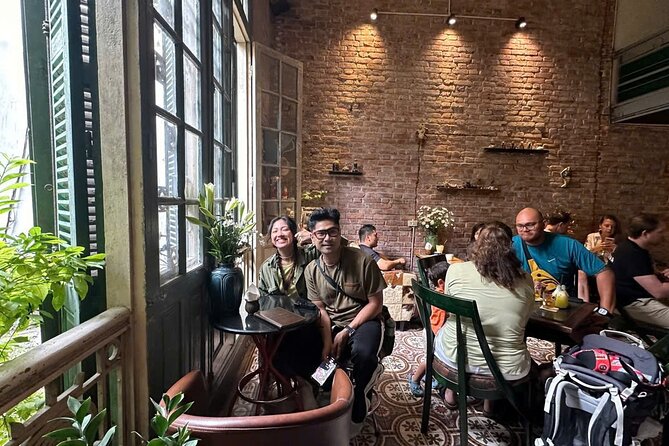
Hanoi coffee is not simply a morning drink. It is part of the city’s rhythm. People pause over small cups, chat at close quarters, and treat a café as a place to watch daily life unfold.
This tour uses that habit to slow your visit down. Hanoi can feel loud and fast, with scooters, horns, shopfronts, and pedestrians all competing for space. A quiet café in a narrow lane gives you a short break from that pressure. You still feel close to the city, but you have time to notice its sounds, smells, and small details.
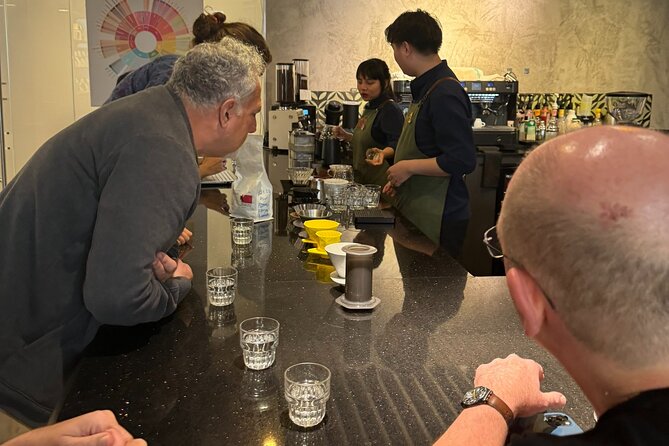
The coffee itself is usually the starting point for a wider discussion. You may hear about robusta beans, the way coffee arrived during French colonial rule, and the local preference for strong flavors. Guides with café and barista experience, including Nick, Rick, and Ngoc, can explain the preparation in a clear, practical way.
I especially like this approach for a first morning in Hanoi. You get useful food and café advice while also learning how the city is laid out. Jennifer, Diane, Nick, Rick, and Ngoc are all named as guides connected with the experience, so your exact host may vary. The guide makes a real difference here because the value comes from conversation as much as from the drinks.
More egg coffee and cafe stops in Hanoi:
- Hanoi Coffee Experience: 6 Brews, 9 Recipes & 3 Liquor Tastings
★ 5.0 · 2,945 reviews - Hanoi Coffee Workshop: Taste Salt, Coconut and Egg Coffee
★ 5.0 · 1,286 reviews - Hanoi: Salt Coffee Workshop Awake Your Senses With 6 Brews
★ 5.0 · 792 reviews
Starting beside St. Joseph Cathedral
The meeting point is St. Joseph Cathedral at 1 P. Nhà Thờ in the Hoan Kiem district. This is a useful place to begin because you are already near the Old Quarter, cafés, and several major sights.
From here, expect to start on foot. The tour has a mobile ticket, and confirmation is provided when you book. It is near public transportation, but no private transfer is included in the stated details, so plan to reach the cathedral on your own.
The cathedral also gives you an immediate sense of Hanoi’s layered past. The surrounding streets combine old shop houses, cafés, religious architecture, and modern commercial life. That contrast sets up the main theme of the tour: Hanoi keeps changing, but older patterns remain visible beneath the surface.
Reading Hanoi through the Old Quarter
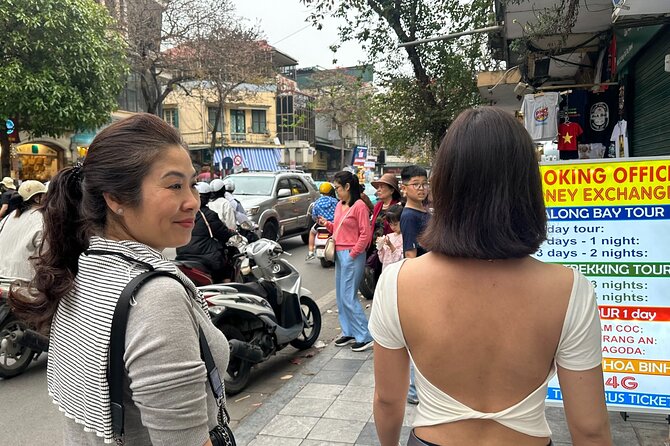
The first main section lasts about 30 minutes in the Old Quarter. You will look at the divide between the Old Quarter and the French Quarter, where older local street life meets wider avenues and colonial-era buildings.
The route uses some of Hanoi’s smallest alleys. These lanes are one of the strongest parts of the experience because they show a side of the city that is easy to miss from a taxi or on a standard sightseeing route. You may pass quiet corners, small cafés, and ordinary neighborhood scenes while traffic carries on nearby.
The guide also explains the French invasion period and how that era still affects Vietnam. That subject matters because French influence is not limited to grand buildings or food. It appears in city planning, architecture, café habits, and the way Hanoi’s districts sit beside one another.
I would pay close attention to the guide’s explanation of the Old Quarter and French Quarter divide. It helps you understand why Hanoi can change so quickly from a narrow lane to a broad, formal street. You also get a better sense of how local culture adapts instead of simply being replaced.
The drawback is that this is not a private architectural tour. The Old Quarter section is short, and the emphasis stays on coffee and storytelling. If you want detailed dates for every building, you may find the commentary more general than a dedicated history walk.
A philosophy lesson at Hoan Kiem Lake
The next stop is Hoan Kiem Lake, also called the Lake of the Restored Sword. The visit lasts about 30 minutes and includes time for photographs.
This is more than a scenic pause. The guide introduces the legend of Hoan Kiem Lake and connects it with Vietnamese ideas about the country’s spirit, values, and way of life. That makes the lake a useful place to discuss how stories shape national identity.
The lake also gives the walking route some breathing room. After the tight lanes of the Old Quarter, open water and public space create a different mood. You can take photos, listen to the explanation, and watch Hanoi move around the shoreline.
I like this stop because it keeps the tour from becoming a string of unrelated tastings. The coffee, the city’s past, and local beliefs are tied together. You are given a story that helps explain why this place matters, not just a quick photo opportunity.
Still, the lake is a public city sight, not an exclusive stop. The value comes from the guide’s interpretation, so listen closely. If your main goal is coffee, the lake section may feel like a pause between tastings. If you enjoy culture and local history, it adds needed context.
Something completely different for the rest of your time in Hanoi:
- Hanoi Jeep Tour: Food, Culture and Fun by Vietnam Army Jeep
★ 5.0 · 15,222 reviews - Full-Day Ninh Binh Highlights Tour from Hanoi
★ 5.0 · 7,761 reviews - Hanoi: Ha Long Bay Day Cruise – Swimming, Meal, Kayaking
★ 4.7 · 7,415 reviews - Hanoi: Water Puppet Show Tickets
★ 4.6 · 7,029 reviews
Walking past the Hanoi Opera House
The route then moves through the French Quarter toward the Hanoi Opera House. The Opera House is described as one of the area’s most important landmarks and serves as a bridge between the historic city and the final café stop.
This part of the walk gives you another chance to compare Hanoi’s districts. The French Quarter has a different scale and feel from the Old Quarter, and passing the Opera House helps make that contrast clear. You will see how colonial design influenced the city without losing sight of the modern life around it.
The tour does not present the Opera House as a long interior visit. It is mainly part of the route to the coffee shop in Phan Huy Chu. That is worth knowing before you book. You will see the landmark as part of a walking story, not take a full performance-house tour.
Ending in Phan Huy Chu alley
The final stop is on Phan Huy Chu Street, in a small alley between tall buildings, major banks, and luxury boutiques. The stop lasts about 30 minutes and has no separate admission fee.
This ending is a smart choice. The lane feels removed from the city’s main traffic even though modern offices and upscale businesses are close by. You can sit with a coffee and notice how quickly Hanoi shifts from formal commercial streets to a quiet neighborhood corner.
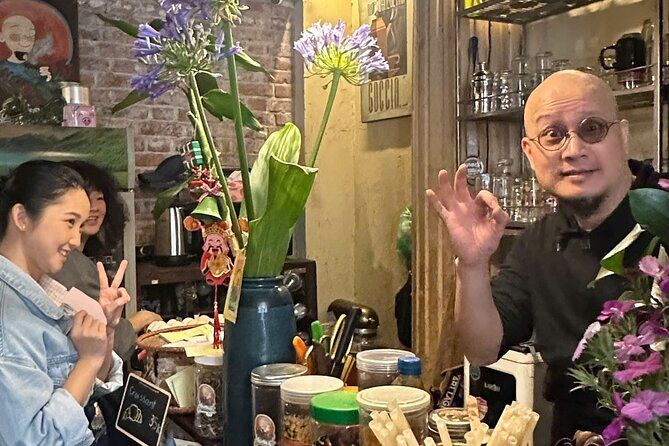
The café here is a modern shop featured in the Michelin Guide. The setting gives you a useful counterpoint to the older cafés and narrow lanes earlier in the route. Hanoi coffee culture is not frozen in the past. It includes traditional drinks, new cafés, changing tastes, and places that fit into the city’s modern economy.
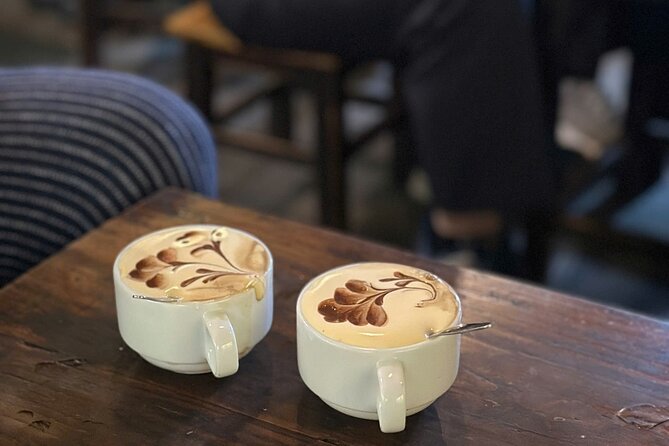
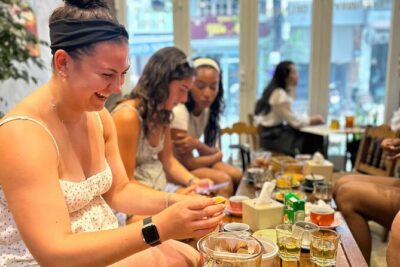
This is also where the interactive side of the tour may come into focus. You may learn to make Vietnamese egg coffee, hear a café owner’s personal story, or taste regional variations. The supplied details do not promise one fixed drink list, so expect the exact selection to depend on the day and the guide.
Egg coffee is a particularly good activity for this tour. It lets you see that Vietnamese coffee is not just about pouring condensed milk into a strong brew. The preparation, texture, and balance of flavors make it a small lesson in local food culture.
What the guides add
The guide is central to this experience. Coffee stops alone are easy to arrange in Hanoi, but a good host connects them to the streets outside.
Jennifer is described as friendly and easy to talk to, with useful advice about Hanoi and places to eat. Nick has previous barista experience and is praised for explaining coffee in a clear, funny way. Rick brings stories about Vietnamese culture and everyday life, while Diane is described as careful with the route and able to give each café its own sense of place. Ngoc, also called Jade, is noted for making the coffee workshop fun and easy to follow.
Your host may be one of these guides, or someone else from the same provider, PhotheSense. Since the group is capped at eight, you should have a reasonable chance to ask about coffee, food, architecture, or your own Hanoi plans.
I would use the tour as a source of practical advice. Ask your guide where to eat next, how to order coffee, and which local drinks are worth trying. Several guides are described as offering food tips and suggestions for the rest of a Hanoi visit, which can make this useful early in your stay.
Is $32 a fair price?
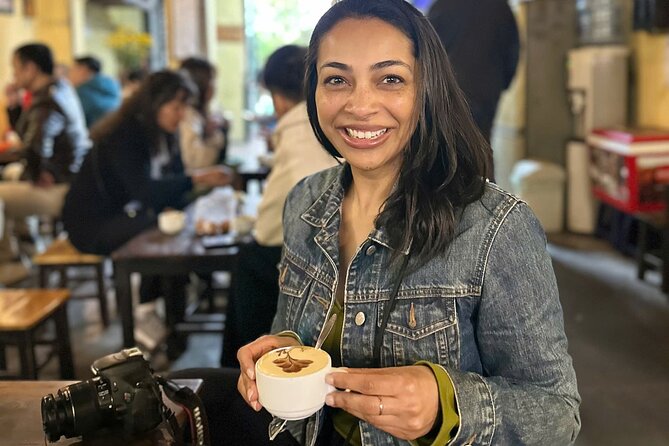
At $32 per person, this is not the cheapest way to buy coffee in Hanoi. You could order several drinks on your own for much less.
The price makes more sense when you count what is bundled together: a small-group walking route, several tastings, a guide, cultural background, and an introduction to places you might not notice by yourself. You are paying for the connection between the cafés and the city.
The group limit matters here. With eight or fewer people, the guide can answer questions and explain the coffee-making process without turning the session into a lecture. If the tour reaches its usual level of personal attention, I think the price is reasonable for a visitor who wants context rather than just caffeine.
The value is lower if you already know Hanoi’s coffee scene, speak with local café owners on your own, or prefer to explore without a planned route. It is also less useful if you avoid caffeine or have little interest in history and local stories.
Timing, walking, and practical comfort
The experience lasts about two to two-and-a-half hours. That is long enough to cover several neighborhoods without taking over your day. You can still plan lunch, a museum, or another afternoon activity afterward.
Wear shoes you can walk in comfortably. The route includes small alleys and city streets, and the tour does not present itself as a seated café crawl. Hanoi’s streets can be crowded and uneven, so you will enjoy the walk more if you keep your clothing and belongings simple.
Most people can participate, and the tour is near public transportation. No special mobility information is provided, so you should contact the provider before booking if you have specific access needs.
The experience can be booked about 35 days ahead on average. That suggests planning early if your dates are fixed, especially because the group is small. You can cancel for a full refund up to 24 hours before the start time. Changes or cancellations inside that window are not accepted for a refund.
Who will get the most from this tour?
I would recommend it to you if you want a gentle introduction to Hanoi and prefer local food and conversation over a checklist of major sights. It suits solo visitors, couples, and small groups who want a guide but do not want a large coach tour.
It is especially useful early in a trip. You can pick up café ideas, food suggestions, district knowledge, and ordering confidence before exploring on your own.
Coffee fans will get the most from the tastings and preparation lesson. History-minded visitors will appreciate the links between French rule, district design, and modern Vietnamese life. Even if coffee is not your main interest, the Old Quarter, Hoan Kiem Lake, and French Quarter route gives the experience wider appeal.
I would hesitate if you dislike strong coffee, have a strict caffeine limit, or want a long architectural tour. The schedule is compact, and the exact cafés and drinks may vary. This is best understood as a cultural coffee walk, not a formal museum visit or a full meal.
Should you book the Hanoi Coffee Culture Tour?
Book it if you want to understand Hanoi through its cafés, streets, and stories. The strongest reasons are the small group, the mix of Old Quarter and French Quarter settings, the chance to learn egg coffee, and the guides’ mix of barista knowledge and local advice.
Skip it if you only want the lowest-cost coffee or prefer to explore every stop independently. For most first-time visitors who want a friendly two-hour introduction, $32 buys more than drinks. It buys a way to read the city, one cup and one alley at a time.
FAQ
How long does the Hanoi Coffee Culture Tour last?
The experience lasts approximately two hours to two hours and 30 minutes.
Where does the tour start?
It starts at St. Joseph Cathedral, 1 P. Nhà Thờ, Hàng Trống, Hoan Kiem, Hanoi.
Where does the tour finish?
It finishes at Ngõ Phan Huy Chú, a small alley near Phan Chu Trinh in Hoan Kiem.
How many people can join the tour?
The tour has a maximum of eight travelers.
Does the tour include learning to make Vietnamese egg coffee?
Learning to make Vietnamese egg coffee is included as an interactive element of the experience. The exact drinks and activities may vary.
Can I cancel for a full refund?
Yes. You can cancel at least 24 hours before the experience start time for a full refund. Cancellations or changes made less than 24 hours before the start time are not accepted for a refund.
Just added to the Hanoi list
- (TOP) Private car: Hanoi/Noi Bai Airport (HAN) from/to Ninh Binh★ 3.5 · 16 reviews
- Thang Long Water Puppet Theater★ 4.5 · 45 reviews
- Private car transfer from Hanoi Airport to Hotels★ 4.5 · 5 reviews
- Private Tour Ninh Binh 1 Day★ 5.0 · 5 reviews
- Private Hanoi Old Quarter Food Tour with 8+ Authentic Tastings★ 5.0 · 11 reviews
- Private Transfer Service from Hanoi to Ha Long Bay★ 5.0 · 3 reviews
- Private Transfer Between Hanoi City and Noi Bai Airport (HAN)★ 5.0 · 3 reviews
- Private Hanoi Food Walking Tour of the French Quarter★ 5.0 · 38 reviews
Hanoi Coffee Tours, compared.
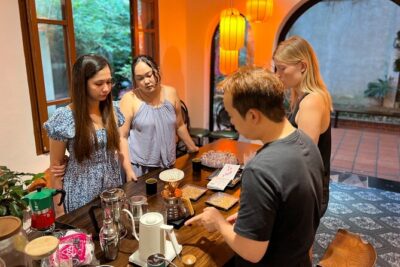
Hanoi Coffee Experience: 6 Brews, 9 Recipes & 3 Liquor Tastings
Read our review →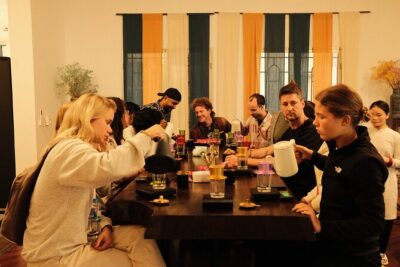
Hanoi Coffee Workshop: Taste Salt, Coconut and Egg Coffee
Read our review →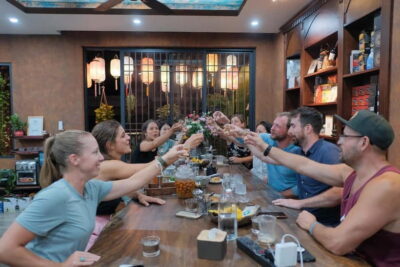
Salt Coffee Workshop Awake Your Senses With 6 Brews
Read our review →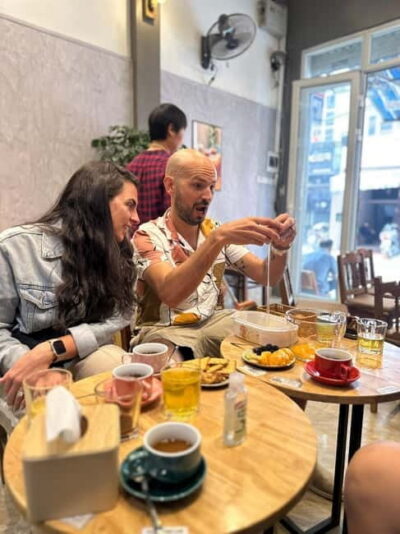
Master the Art of 4-6 Signature Vietnameses Coffees
Read our review →
Hanoi Cooking Class: Pho/Bun Cha/Banh Xeo…+Free Egg/Salt Coffee
Read our review →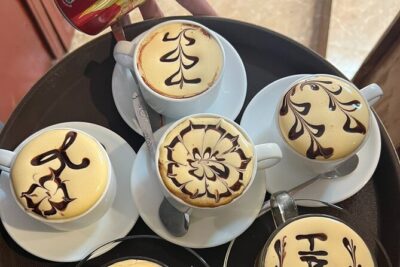
Hanoi Coffee Workshop: Master 6 Signature Vietnamese Coffee
Read our review →Browse the lists this tour appears in