
Reviewed · HANOI COFFEE TOURS
Hanoi French Quarter: Coffee and Stories
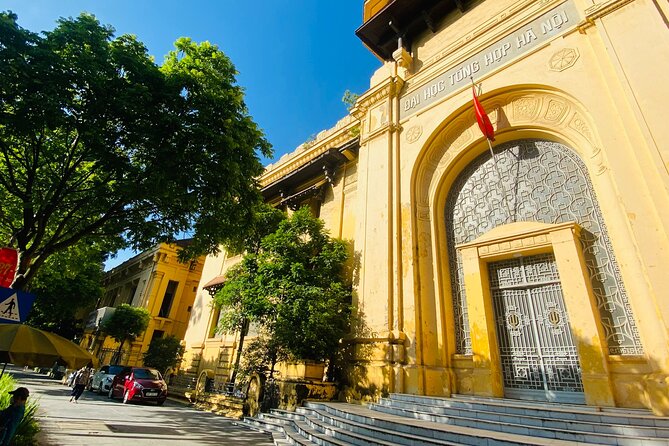
The best part of this Hanoi walk is the way it links French colonial buildings with everyday Vietnamese life. You begin near St. Joseph’s Cathedral, slip into a French villa for coffee, pass a quiet pagoda and grand hotels, then finish near Hoan Kiem Lake and Hanoi University of Pharmacy.
I like the small group limit of 10, which gives you room to ask questions, and I like that the coffee and ice cream are part of the experience rather than an afterthought. The main consideration is simple: this is a walking tour, not a vehicle tour, and a schedule change is possible if staffing or weather affects the original departure time.
Key points at a glance
- French Quarter by foot: Cover major sights at a slower pace, with time to look up, listen, and ask questions.
- Coffee in a French villa: Try Vietnamese coffee, including options such as egg, coconut, lemon, or condensed-milk coffee, in a historic setting.
- Local guides with personality: Mina, Thea, Pinky, Vu, Cong, Kien, Lily, Dung, and Quon have led this experience.
- Eight compact stops: See the cathedral, Opera House, Metropole, Trang Tien Plaza, Hoan Kiem Lake, and more.
- Treats included: Coffee or tea and ice cream are included, helping make the walk feel relaxed rather than rushed.
- Useful first-day tour: The route gives you a quick sense of Hanoi’s architecture, history, food, and central streets in about two and a half hours.
Why this walk works as a first look at Hanoi
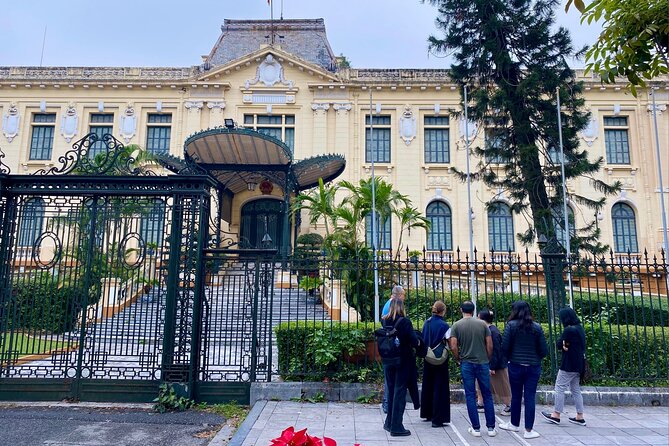
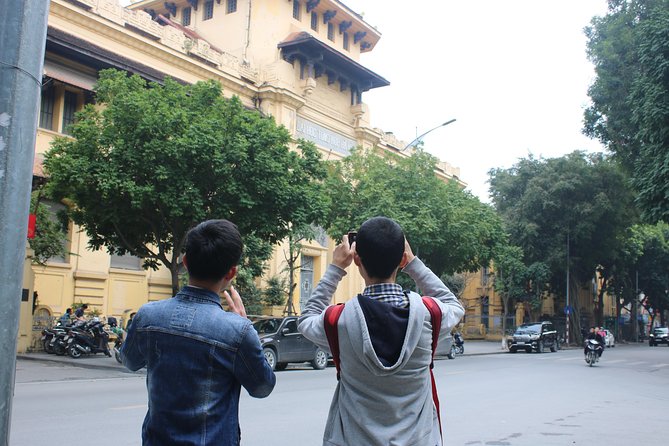
Hanoi’s French Quarter is best understood on foot. The grand buildings are only part of the story. The more interesting question is how French planning, Vietnamese traditions, modern shopping, cafés, hotels, schools, and religious sites now share the same streets.
This tour gives you that mix in a manageable two and a half hours. You are not signing up for a full-day history lecture or a long coach ride. Instead, you move between short stops while your guide explains what you are seeing and adds stories that are easy to miss on your own.
I especially like the balance between famous sights and less obvious corners. St. Joseph’s Cathedral and the Hanoi Opera House are clear landmarks, but Chua Ba Da and the café in a former French villa offer a more personal sense of the district. The route also includes time for questions, which is useful if you want advice about food, coffee, or other things to see later in your stay.
The high rating of 4.9 from 170 reviews and a 99 percent recommendation rate suggest that the guide is central to the experience. That matters here. The buildings are worth seeing, but the tour’s real value comes from the explanation around them. Mina, Thea, Pinky, Vu, Cong, and other guides are repeatedly praised for clear English, humor, patience, energy, and the ability to answer questions.
More egg coffee and cafe stops in Hanoi:
- Hanoi Coffee Experience: 6 Brews, 9 Recipes & 3 Liquor Tastings
★ 5.0 · 2,945 reviews - Hanoi Coffee Workshop: Taste Salt, Coconut and Egg Coffee
★ 5.0 · 1,286 reviews - Hanoi: Salt Coffee Workshop Awake Your Senses With 6 Brews
★ 5.0 · 792 reviews
Meeting at St. Joseph’s Cathedral
The tour begins at 6 P. Ấu Triệu, near St. Joseph’s Cathedral in Hoan Kiem District. This is a practical starting point because the cathedral is easy to identify and gives the walk an immediate architectural focus.
Built in the late 19th century in the Gothic Revival style, the cathedral is one of Hanoi’s best-known landmarks. You have about 15 minutes here, enough to examine the façade and hear how the building fits into the city’s colonial past.
Do not expect a long interior visit or a formal church tour. Admission is free, but the experience is mainly about the exterior, the surrounding streets, and the historical setting. If you want detailed architectural study, you may wish for more time. For a short city walk, the stop does its job well.
A guide such as Mina or Thea can also help you place the cathedral within modern Hanoi, rather than treating it as an isolated European building. That local framing is one reason this tour works better than simply following a map between landmarks.
Coffee in a former French villa
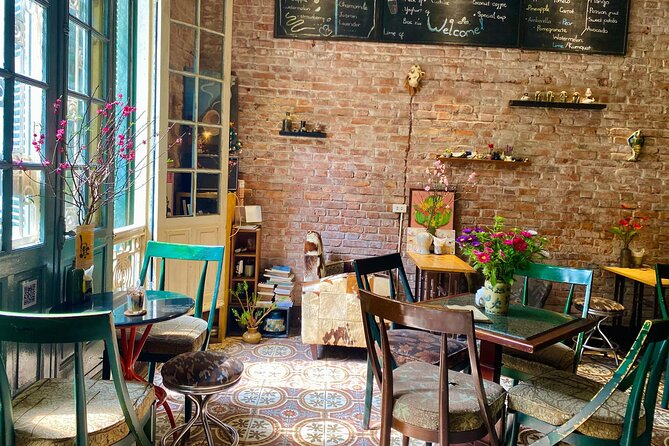
After the cathedral, the group visits Loading T café for about 20 minutes. This is one of the most distinctive parts of the tour. You try Vietnamese coffee in a former French villa while hearing stories connected to the building and the neighborhood.
The included drink may be coffee or tea, and the experience can include styles such as condensed-milk coffee, egg coffee, coconut coffee, or lemon coffee. The exact drink may vary, but the point is to connect Hanoi’s café culture with the architecture around it.
I like this stop because it gives you a place to sit and absorb the information. A walking tour made up only of street corners can become tiring, especially in Hanoi’s heat and traffic. The coffee break creates a natural pause without wasting time.
It is also a useful introduction to Vietnamese coffee. The condensed milk version is sweet and strong, while egg, coconut, and lemon variations offer different flavors. If you are unsure what to order, ask your guide. Thea, Pinky, Mina, and the other hosts are there to explain the local choices, not simply lead you from one address to the next.
Chua Ba Da and the quieter side of the district
The next stop is Chua Ba Da, a small pagoda tucked near one of Hanoi’s busy streets. You spend about 10 minutes here.
This brief visit is valuable because it changes the mood of the route. The cathedral shows one side of Hanoi’s religious and colonial past. Chua Ba Da brings you into a Vietnamese spiritual setting that can be easy to pass without noticing.
The stop is short, so do not expect an extended temple visit. Still, it adds contrast and helps explain why Hanoi cannot be reduced to French façades and grand boulevards. The city’s older religious traditions remain close to its modern commercial streets.
You should listen carefully here, since small sites often depend more on the guide’s explanation than on signs or displays. This is one of the places you might not enter by yourself, especially if you were simply walking toward the larger landmarks.
Something completely different for the rest of your time in Hanoi:
- Hanoi Jeep Tour: Food, Culture and Fun by Vietnam Army Jeep
★ 5.0 · 15,222 reviews - Full-Day Ninh Binh Highlights Tour from Hanoi
★ 5.0 · 7,761 reviews - Hanoi: Ha Long Bay Day Cruise – Swimming, Meal, Kayaking
★ 4.7 · 7,415 reviews - Hanoi: Water Puppet Show Tickets
★ 4.6 · 7,029 reviews
The Metropole and Hanoi’s colonial hotel story
The route continues to the Sofitel Legend Metropole Hanoi at 15 Ngo Quyen Street. You have around 15 minutes to see the exterior and hear about the hotel’s place in the city.
The Metropole is one of Hanoi’s most famous colonial-era hotels. Its polished appearance contrasts with the ordinary streets and shops around it, making it a useful stop for discussing how the French period shaped Hanoi’s institutions, buildings, and social divisions.
Some versions of the experience may include a look inside the hotel, but you should treat this primarily as a brief sightseeing stop rather than a full hotel visit. The value is in the setting and the explanation. Your guide can discuss what the building represented during the colonial period and how it functions today.
This is also a good point to ask questions about the complicated side of French rule. The route does not present colonial architecture as a simple story of beauty. One guide, Vu, is specifically praised for explaining both the positive and negative effects of French influence, as well as later Vietnamese perspectives on the American war.
The Hanoi Opera House and French design
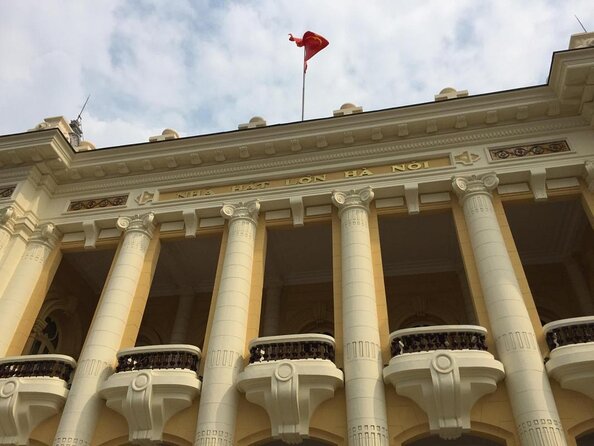
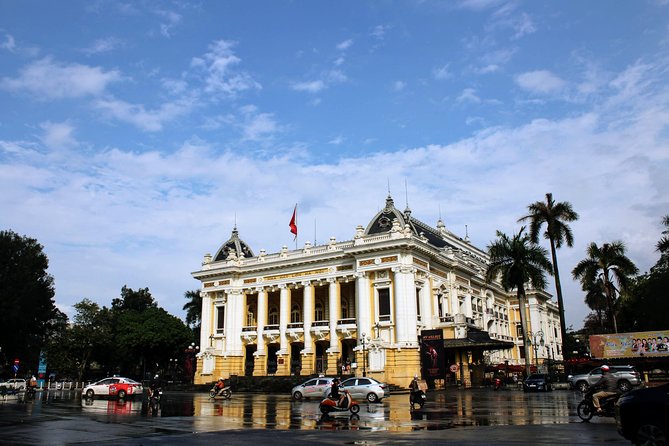
The Hanoi Opera House at No. 1 Trang Tien receives another 15-minute stop. Its grand design makes it one of the clearest examples of French influence in central Hanoi.
You will not be attending a performance, and the tour does not promise an extended interior visit. Instead, your guide explains the building as part of Vietnam’s social and cultural development under French rule.
This is where the walk’s short format works well. You see the Opera House, connect it with the Metropole and cathedral, then continue before the architecture begins to blur together. The guide’s stories provide the thread between the buildings.
For photographers, this is an easy place to pause for exterior pictures. For anyone interested in history, it is a useful reminder that these buildings were not just decorative projects. They were tied to the power structure and public life of colonial Hanoi.
Trang Tien Plaza and a street that changed with Hanoi
Trang Tien Plaza brings the route into a more commercial setting. You spend about 15 minutes around Trang Tien Street, a major central thoroughfare that has changed from the early days of Hanoi through the French period and into the present.
This stop helps you compare old and new Hanoi. The street has colonial associations, but the plaza represents modern shopping and city life. The contrast is more useful than another isolated building because you can see how the district continues to function.
I would not book this tour expecting a shopping stop or free time inside the plaza. The focus remains on the street’s development and the guide’s explanation. Still, it gives the route a welcome change of pace after the cathedral, hotel, and Opera House.
Hoan Kiem Lake and the city’s central symbol
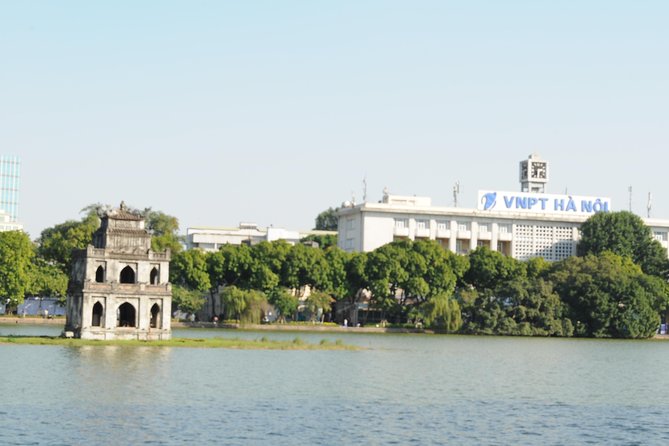
The walk then reaches Hoan Kiem Lake, also called the Lake of the Restored Sword. You spend about 15 minutes here, with attention to Turtle Tower and the lake’s place in Hanoi’s identity.
Turtle Tower combines European and Asian architectural details and has become one of the city’s best-known images. Your guide can explain the patriotic story connected with the lake and why it matters so much to local people.
The lake is an excellent midpoint or later stop because it opens the view after several tightly packed streets. It also gives you a chance to connect the built environment with Vietnamese legend and national pride.
The stop is not a complete circuit of the lake. You should think of it as a focused visit, not a lake walk. If you want more time for photos or a full stroll around the water, return later on your own. The tour ends elsewhere, so you have the rest of the day to continue exploring.
Finishing at Hanoi University of Pharmacy
The final stop is Hanoi University of Pharmacy at 13 to 15 Le Thanh Tong Street. The university is described as the first modern university built by the French, giving the tour a fitting final chapter.
After churches, hotels, civic buildings, shopping streets, and the lake, the university adds education to the story. It shows how colonial-era institutions affected more than architecture. They also shaped schooling, professional training, and the development of modern Hanoi.
The tour ends here rather than returning to the cathedral. That is useful if you plan to continue toward other parts of central Hanoi, but it means you should note the finishing address before booking. The route is designed as a one-way walk through the district.
Coffee, ice cream, and the value of the $29 price
At $29 per person, this is not the cheapest way to walk around central Hanoi. You can see several of these buildings without paying for a guide. The question is what you would miss without the interpretation, café stop, and organized route.
For me, the price is reasonable if you value context and want a local person to connect the sites. The included coffee or tea and ice cream add modest value, but they are not the main reason to book. You are paying mainly for the guide’s time, route planning, language skills, and stories.
The maximum group size is 10. That is small enough to hear the guide and ask questions, though the experience can feel less personal if the group reaches its limit. Some departures may be much smaller, including private-feeling groups of two, but you should not assume that every date will work that way.
The free time afterward also matters. You spend roughly two and a half hours on the tour, then can use the rest of the day for the Old Quarter, more time around Hoan Kiem Lake, museums, food stops, or independent café visits.
What the guides add to the experience
The guide can make or break this tour. Names connected with the experience include Mina, Thea, Pinky, Vu, Cong, Kien Pham, Lily, Dung, and Quon.
Mina is often described as cheerful, energetic, patient, and easy to understand. She also helps with road crossings and offers suggestions for food and other activities. Thea is praised for combining humor with detailed explanations. Pinky is known for enthusiasm and for adjusting the conversation to individual interests.
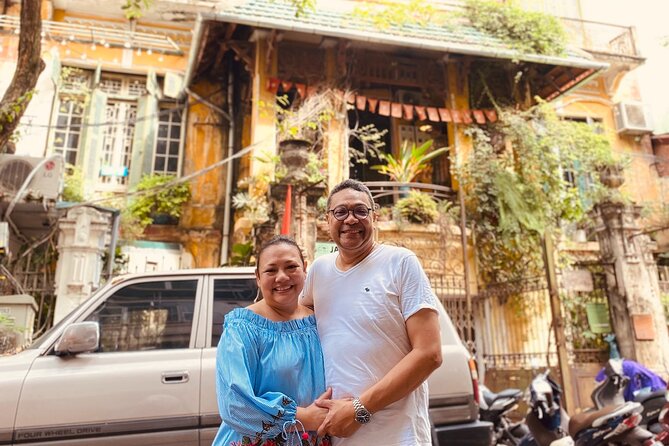
Vu is a good fit if you want a careful explanation of colonial history and later political events. Kien Pham has led highly personal tours for couples, while Cong is noted for telling stories with humor and feeling. Dung and Quon have also guided visitors interested in the continuing French influence on Vietnam.
Guide assignments can change, so do not book solely for one person. Instead, look at the common strengths of the team: clear English, strong local knowledge, patience with questions, and a willingness to explain more than the basic facts.
Who should book this Hanoi walking tour?
I would choose this tour if you have one day in Hanoi and want a fast but meaningful orientation. It also suits first-time visitors who prefer stories and conversation to a bus route with quick photo stops.
It is a good match for people interested in architecture, colonial history, Vietnamese coffee, local religious sites, and city development. The route also works well for couples, solo visitors, and small groups who want a guide without paying for a fully private experience.
You should think twice if walking for two and a half hours is difficult, if you want extensive interior visits, or if you prefer a tour built around food rather than history. This is not a major tasting tour. The coffee and ice cream are pleasant additions to a history walk.
Wear comfortable shoes and allow for Hanoi’s traffic, crossings, and weather. The tour requires good weather. If poor conditions force a cancellation, you are offered another date or a full refund. You can cancel for a full refund up to 24 hours before the start time, but cancellations or changes within 24 hours are not refunded or accepted.
Should you book Coffee and Stories?
Book it if you want a compact, guide-led introduction to Hanoi’s French Quarter with enough time for real questions and a good coffee pause. The route covers the major landmarks, but its best moments come from the smaller contrasts: a pagoda near a busy street, coffee in a French villa, and Vietnamese stories attached to colonial buildings.
I would not book it for a luxury hotel visit, a full architectural tour, or a relaxed café crawl. For a modest group, a clear route, local interpretation, and included treats, the $29 price offers solid value, especially early in your Hanoi stay.
FAQ
How long does the Hanoi French Quarter tour last?
The tour lasts approximately two hours and 30 minutes.
Where does the tour begin?
It begins at 6 P. Ấu Triệu, Hàng Trống, Hoan Kiem District, Hanoi, near St. Joseph’s Cathedral.
Where does the tour finish?
The tour finishes at Hanoi University of Pharmacy, 13 to 15 P. Le Thanh Tong, Phan Chu Trinh, Hoan Kiem District, Hanoi.
What drinks are included?
Coffee and/or tea are included. The experience may feature Vietnamese coffee styles such as condensed-milk coffee, egg coffee, coconut coffee, or lemon coffee.
Is food included?
Ice cream is included as a snack during the walk.
How large is the group?
The maximum group size is 10 people.
Is admission included at the stops?
The listed stops have no admission charge. The experience focuses on seeing the sites and hearing the guide’s explanations.
Is this a walking tour?
Yes. The route connects the French Quarter sights on foot and does not operate as a bus tour.
What is the cancellation policy?
You can cancel at least 24 hours before the start time for a full refund. Cancellations or changes made less than 24 hours before the start time are not accepted, and the payment is not refunded. If poor weather causes the tour to be canceled, you are offered another date or a full refund.
Just added to the Hanoi list
- (TOP) Private car: Hanoi/Noi Bai Airport (HAN) from/to Ninh Binh★ 3.5 · 16 reviews
- Thang Long Water Puppet Theater★ 4.5 · 45 reviews
- Private car transfer from Hanoi Airport to Hotels★ 4.5 · 5 reviews
- Private Hanoi Old Quarter Food Tour with 8+ Authentic Tastings★ 5.0 · 11 reviews
- Private Tour Ninh Binh 1 Day★ 5.0 · 5 reviews
- Private Transfer Service from Hanoi to Ha Long Bay★ 5.0 · 3 reviews
- Private Transfer Between Hanoi City and Noi Bai Airport (HAN)★ 5.0 · 3 reviews
- Ba Be National Park With Boat Trip, Kayaking, Swimming, Trekking And Cycling★ 5.0 · 10 reviews
Hanoi Coffee Tours, compared.
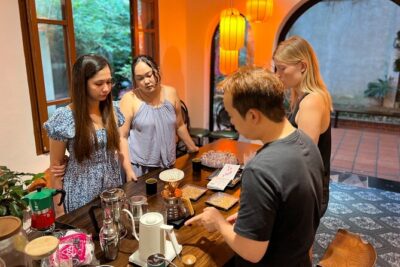
Hanoi Coffee Experience: 6 Brews, 9 Recipes & 3 Liquor Tastings
Read our review →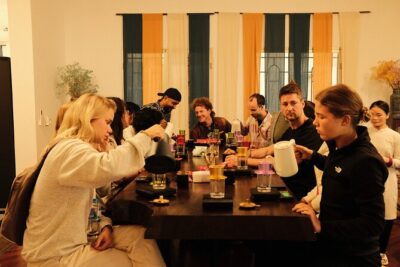
Hanoi Coffee Workshop: Taste Salt, Coconut and Egg Coffee
Read our review →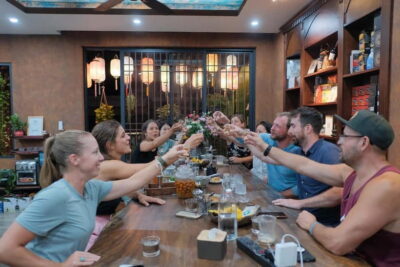
Salt Coffee Workshop Awake Your Senses With 6 Brews
Read our review →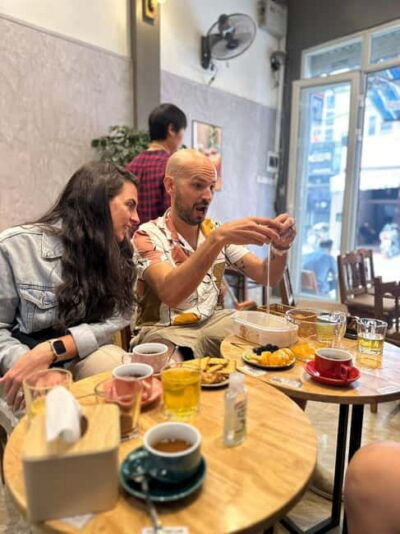
Master the Art of 4-6 Signature Vietnameses Coffees
Read our review →
Hanoi Cooking Class: Pho/Bun Cha/Banh Xeo…+Free Egg/Salt Coffee
Read our review →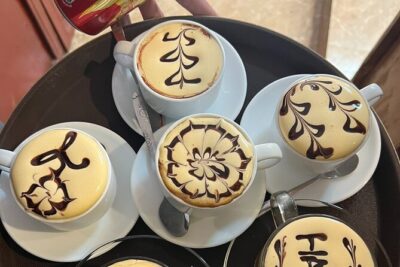
Hanoi Coffee Workshop: Master 6 Signature Vietnamese Coffee
Read our review →Browse the lists this tour appears in