
Reviewed · HANOI
Knife Making in Blacksmith Village in Hanoi
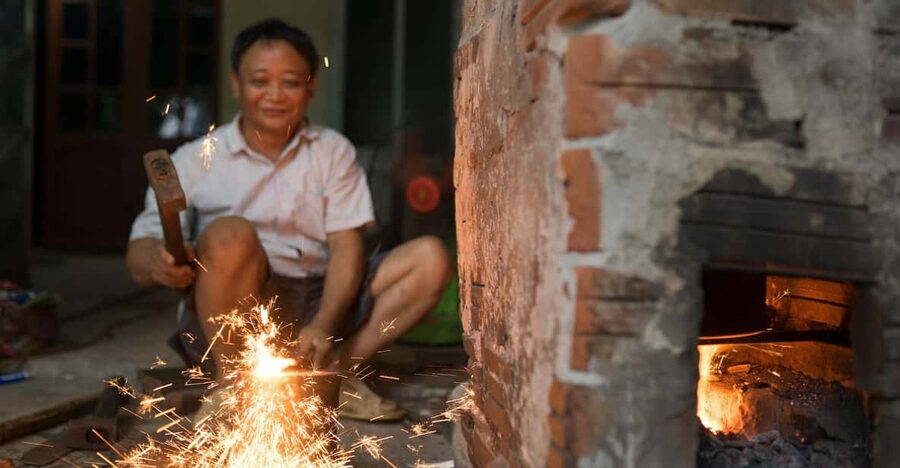
Hanoi has a hands-on souvenir that beats another silk scarf: you forge a knife from hot iron in Da Sy, a working blacksmith village in Ha Dong. You see the fire, hammers, water, and sharpening wheels up close, then help turn raw metal into something useful.
I like the small-group format, limited to 10 people, and the help from English-speaking host Mai and local smith Ha. I also like that the village still makes tools and kitchen goods for daily use, rather than performing a polished show made only for tourists. The main drawback is practical: sparks, heat, and a metalworking floor mean you need sensible clothing, and you must arrange a way to carry the knife home.
Key points at a glance
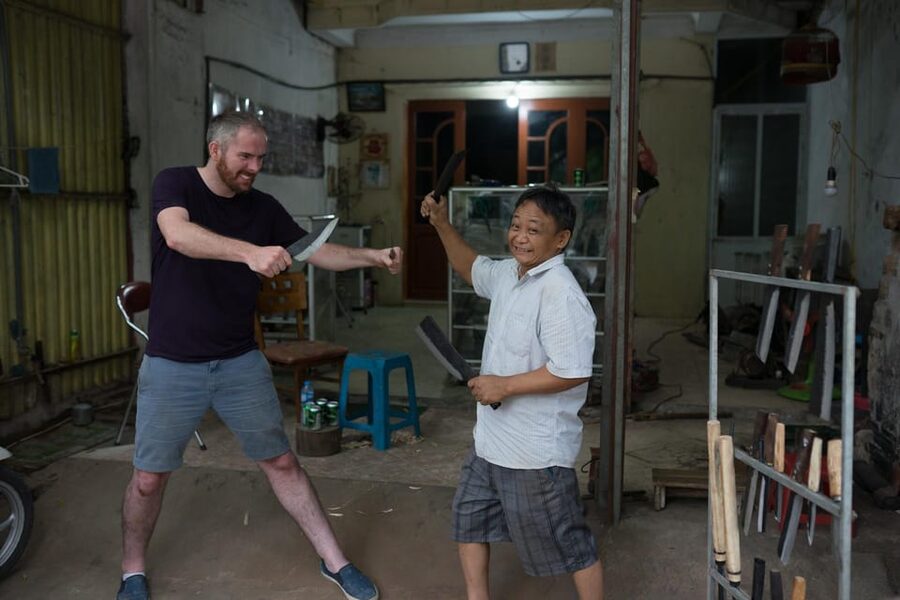
- Forge your own kitchen knife: Shape, temper, and sharpen a simple blade with guidance from the local smith.
- Visit Da Sy village: Learn how a village once linked to wartime weapon production turned to farm tools, machine parts, and household goods.
- Work with Mai and Ha: Mai provides English-language support, while Ha brings the hands-on blacksmithing skill.
- Take home a useful souvenir: The finished knife is included, but a knife cover is not.
- Allow 2.5 hours: The workshop ends back at the meeting point by the football field and green fence.
- Dress for sparks: Long sleeves and long pants are strongly recommended, and you need checked luggage for the return journey.
Why Da Sy is a good place to make a knife
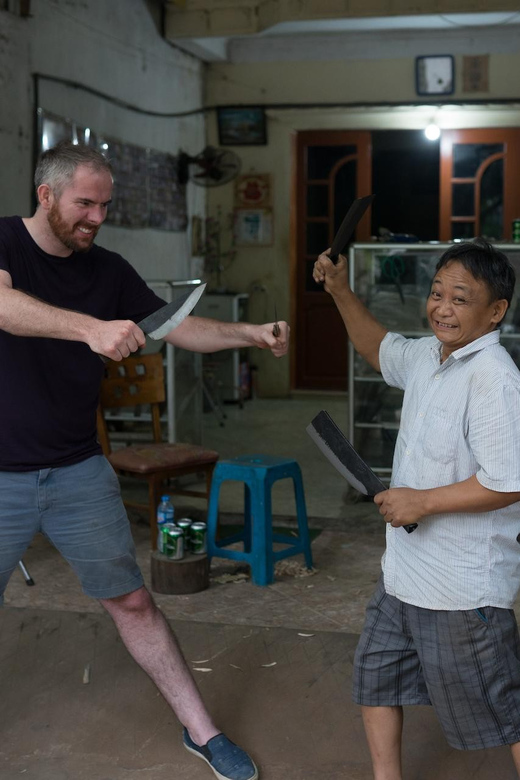
Da Sy lies in Kien Hung Commune, Ha Dong Town, outside the usual central Hanoi sightseeing route. Its blacksmithing trade has served the area for generations. During Vietnam’s wars, the village supplied weapons to the military. After peace returned about 40 years ago, local workers shifted toward ploughs, rakes, machinery parts, and kitchen tools.
That change gives the workshop useful context. You are not simply learning an old craft preserved for display. You are visiting a place where forging has been tied to work, farming, household needs, and local income. The knife is small, but the process connects to a much larger village trade.
I like this kind of setting because the surroundings matter as much as the finished object. The workshop takes place at the host’s house, with the village as your backdrop. You get a look at a local working community instead of spending the whole morning in a tourist district built around sightseeing.
The location does mean you should pay attention to directions. The meeting point is at the entrance to a football field beside a green fence. The activity begins and ends there. Pick-up and drop-off within Hanoi are not included in the $54 price, though they can be added for an extra charge.
Other ways to fill a day around Hanoi:
- Hanoi Jeep Tour: Food, Culture and Fun by Vietnam Army Jeep
★ 5.0 · 15,222 reviews - Full-Day Ninh Binh Highlights Tour from Hanoi
★ 5.0 · 7,761 reviews - Hanoi: Ha Long Bay Day Cruise – Swimming, Meal, Kayaking
★ 4.7 · 7,415 reviews
From rough metal to a working blade
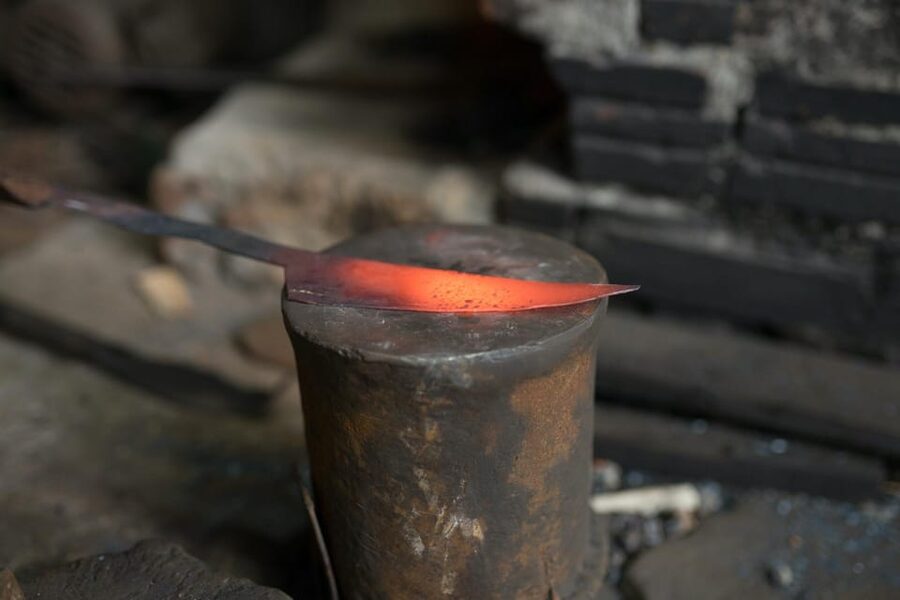
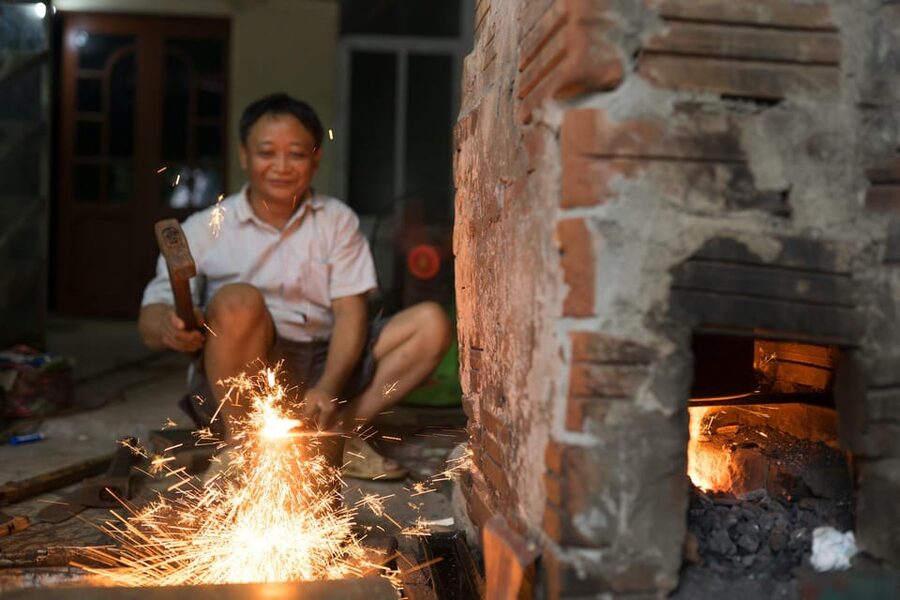
The work follows the basic steps used in traditional hand forging. You begin with a rough piece of metal and help shape it into the outline of a knife. The metal is heated until it becomes red hot, then struck with hammers to stretch and form it.
This is the part most likely to make the workshop memorable. You are not just watching a smith swing a hammer while you stand behind a barrier. You take part in the making, with the local smith guiding the work. The exact amount of hammering you do can vary, but the lesson is built around the real sequence rather than a token souvenir activity.
The fire and hammering also explain why the workshop takes 2.5 hours. This is not a quick demonstration followed by a gift-shop handoff. Metal has to be heated, shaped, reheated, and checked. You need time to understand what is happening and to let the smith correct the blade as it develops.
The knife made in the workshop is described as a simple handmade knife. That is important. You should not expect to choose from a large range of blade patterns or produce a fully customized chef’s knife with an elaborate handle. The appeal is taking part in a traditional process and leaving with a one-of-a-kind object made during your visit.
Tempering the metal with water
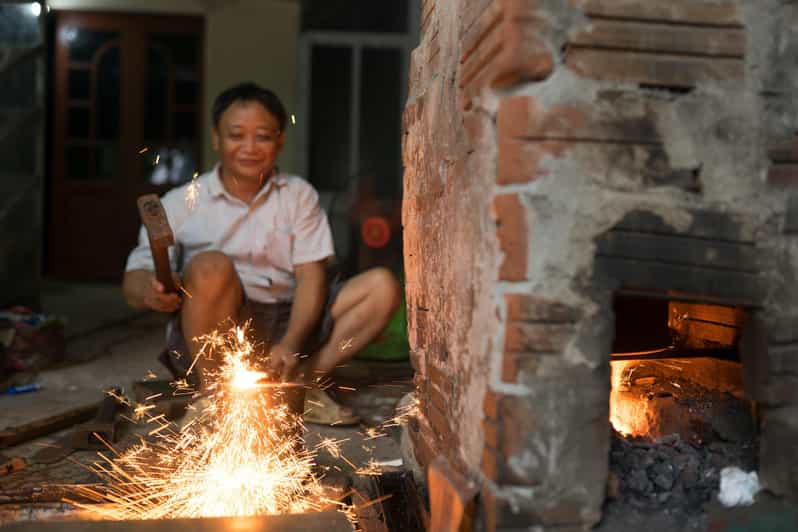
After the knife takes shape, the metal is tempered with water. This strengthens the blade and is one of the key steps in blacksmithing. It also shows why the work requires skill: heating and cooling metal is not just a matter of following a recipe with a timer.
You will then move toward finishing the blade. Sharpening gives the knife its practical edge and brings the rough metal closer to a usable kitchen tool. The full process includes making a rough draft, tending the fire, hammering the red-hot iron, tempering, and sharpening.
That sequence gives you a better sense of the craft than a short tourist demonstration. You see how many separate jobs go into one plain-looking object. A kitchen knife may seem simple, but the village process behind it involves heat control, force, timing, and finishing.
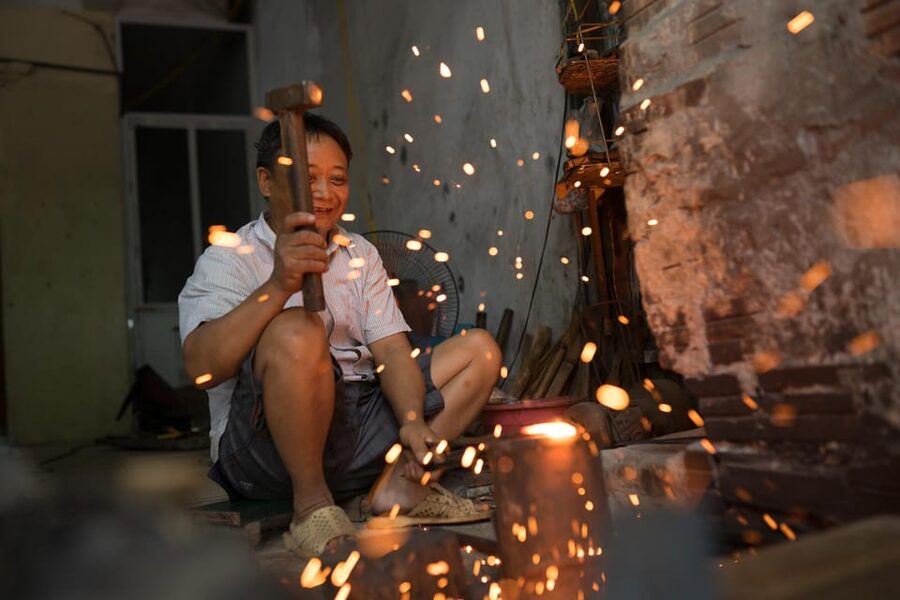
The workshop includes the needed tools, equipment, and materials. It also supplies a mask and eye protection. Those items do not remove every risk, but they make the experience more suitable for a small group working near fire and flying sparks. The host’s role matters here. Mai helps explain the work in English and assists from start to finish, while Ha provides the blacksmithing instruction.
Mai, Ha, and the value of a small group
An English-speaking facilitator makes a real difference in an activity built around small physical steps. You need to understand when to hold, strike, move back, or let the smith take over. Mai’s help also gives you a chance to ask about the village, the history of knife making, and what you are seeing.
Ha is the local smith who works with participants on the knife. The division works well: Mai helps bridge the language gap, and Ha demonstrates the craft itself. One useful detail from the experience is that Mai is involved throughout, not only at the welcome and goodbye.
The group limit is 10 people. That is small enough to keep the workshop personal, though your exact amount of hands-on time will depend on how many people attend and how the work is organized. If you strongly prefer one-on-one instruction, a group of 10 may still feel less private than a solo class. For most people, it offers a good balance between cost and access to the smith.
The activity has also worked for families. It has been taken by children aged 11, 14, and 16, with the host providing help and safety guidance. Still, children need to follow instructions carefully around heat, hammers, and sparks. Parents should decide based on the child’s attention and comfort with a working forge, not just age.
Something completely different for the rest of your time in Hanoi:
- Hanoi: Water Puppet Show Tickets
★ 4.6 · 7,029 reviews - Hanoi Motorbike Tour: Food, Culture and Fun by Vintage Motorbike
★ 5.0 · 6,699 reviews - Hanoi: Guided Food Tour with Train Street Visit
★ 4.9 · 6,239 reviews - Hanoi Cooking Class: Culture, Local Market & Meaning CSR Impact
★ 5.0 · 5,147 reviews
What the $54 price really covers
At $54 per person, this is not the cheapest possible way to buy a knife in Hanoi. You can purchase a kitchen blade for far less. The value here comes from the time, instruction, materials, local setting, and the chance to help make the item yourself.
Your price includes all workshop tools and materials, the knife, an English-speaking facilitator, light refreshments, and protective equipment. The knife is not an add-on or a sample that you merely receive at the end. It is the main product of the session.
I would compare this price with other paid activities by asking how much of the time is active. Here, the entire 2.5-hour session is tied to the making process. You also get a souvenir that has a story and a direct connection to your time in Hanoi.
There are two extra costs to keep in mind. Transport from within Hanoi is not included, though paid pick-up and drop-off may be arranged. A knife cover is also not included. If you want to protect the blade in your luggage, you will need to handle that separately.
The biggest practical issue is carrying the knife home. You should have checked luggage. Do not plan to put the finished blade in your carry-on bag. If you are traveling with only a small cabin bag, this workshop may not be a sensible choice.
Clothing, heat, and workshop comfort
Dress for the work, not for a city walking tour. Long sleeves and long pants are strongly recommended to protect against sparks. Avoid dresses, skirts, loose clothing, and anything you would worry about near a forge.
Eye protection and a mask are provided. You should still expect heat, noise, smoke, and physical work. The experience is not a quiet craft class. You will be near fire and metal, and the atmosphere may feel more like a working shop than a polished studio.
Wear practical shoes. The supplied information does not specify footwear requirements, so I would choose closed shoes that you can stand in comfortably. Avoid open sandals if you have a choice, given the sparks and hot metal.
The activity is listed as wheelchair accessible. That is useful information, but you may want to confirm the exact arrangements when booking if you need specific assistance. The village meeting point and workshop layout are not described in detail, so access to every part of the forging process may depend on the day’s setup.
Getting to the meeting point
The workshop does not include standard hotel transport. You meet at the entrance to a football field beside a green fence, and the activity finishes at the same point. That simple start and finish makes the plan clear, but you need to allow time to reach the area independently.
Timings are flexible. Several starting times may be shown when you check availability, but you can also message the organizer about a different time. Mai can check whether the requested slot works with the schedule.
This flexibility is helpful if you are fitting the workshop around Hanoi sightseeing. It also means the exact start time is not fixed in the basic description, so confirm it before setting up the rest of your day. The 2.5-hour duration does not include any extra time you may need for transport.
Who will get the most from this workshop
I would recommend the knife-making session to you if you enjoy making things, local trades, and souvenirs with a clear story. It is especially well suited to people who have already seen Hanoi’s main sights and want a different kind of half-day activity.
Families with older children can also make good use of it. The 11-year-old who took part had a positive experience, but a forge requires attention. Younger children or anyone uncomfortable around fire may find the setting stressful rather than fun.
The class is also a good fit for cooks and practical souvenir hunters. You leave with a knife you can use at home, not just a decorative object. Still, you should not book it if you cannot place a knife in checked luggage or if you are looking for a completely relaxed activity with no heat or physical effort.
The workshop suits curious beginners. You do not need to arrive with blacksmithing experience. The goal is to learn basic handmade forging techniques, with the smith supporting you through the steps.
Booking and cancellation details
The activity allows free cancellation up to 24 hours before the start time for a full refund. You can also reserve now and pay later, which helps if you are building a Hanoi schedule that may change.
The group uses English, and the instructor support is in English. The activity is offered as a small group with up to 10 participants. Light refreshments are included, but other personal spending is not.
The current rating is 5 out of 5 from eight reviews. The strongest praise centers on three things: the host’s help, the clear introduction to local knife making, and the quality of the finished souvenir. One family described it as their favorite Hanoi activity, while another participant valued the chance to make a useful cooking knife with Ha.
Those points match what matters most here. The workshop is not about checking off another attraction. It is about spending a few hours with a local craft and leaving with evidence of the work in your luggage.
Should you book the Da Sy knife workshop?
Book it if you want a practical, unusual Hanoi experience and have checked luggage for the return trip. The $54 cost is fair for 2.5 hours of instruction, equipment, materials, refreshments, protective gear, and a handmade knife. Mai’s English support and Ha’s role as the smith make the process easier to follow.
Skip it if you want a quick city-center activity, dislike heat and noise, or cannot carry a knife home. Also remember that transport and a knife cover cost extra.
For the right person, this is a strong choice. You learn how an everyday object is made, see a working side of Hanoi, and take home a souvenir that you helped shape yourself.
FAQ
Where does the knife-making workshop take place?
It takes place in Da Sy village in Kien Hung Commune, Ha Dong Town, Hanoi. The meeting point is at the entrance to a football field next to a green fence.
How long does the activity last?
The workshop lasts 2.5 hours. Check the available times when booking, or message the organizer about another preferred starting time.
What is included in the $54 price?
The price includes all equipment, tools, and materials, the handmade knife, an English-speaking facilitator, light refreshments, a mask, and eye protection.
Is transport from my Hanoi hotel included?
No. Pick-up and drop-off within Hanoi are not included in the standard price. They may be arranged for an additional cost.
Can I take the knife home?
Yes. The finished knife is included, but you need checked luggage to carry it home. A knife cover is not included.
What should I wear?
Long sleeves and long pants are strongly recommended because the workshop involves sparks. Avoid dresses and choose practical clothing for a hot, active work area.
Is the activity suitable for children?
The workshop has been taken by a family with children aged 11, 14, and 16. Children must be able to follow safety instructions around fire, hammers, and hot metal.
Just added to the Hanoi list
- Pu Luong Nature Reserve 3 days★ 5.0 · 6 reviews
- Mai Chau 2 days 1 night Pu Luong Adventure★ 5.0 · 10 reviews
- Private transfers from Hanoi to Ninh Binh or Ninh Binh to Hanoi★ 4.5 · 63 reviews
- Pu Luong 3-Day Adventure: Trekking, Cycling & Local Cooking Class★ 5.0 · 26 reviews
- Private Transfer from Hanoi Airport HAN to Old Quarter★ 5.0 · 16 reviews
- Private transfer between Hanoi and Halong★ 5.0 · 51 reviews
- Private transfer between Hanoi – Ninh Binh one way trip★ 5.0 · 31 reviews
- Private kid-friendly Hanoi food tour with a taste of great dishes★ 5.0 · 18 reviews