
Reviewed · HANOI STREET FOOD TOURS
Hanoi Stroll & “Rolling” Street Food Walking Tour
Hanoi’s food culture gets a hands-on treatment here. Instead of simply watching a plate arrive, you wrap grilled beef, crispy pancake, noodles, herbs, and sauces into your own bites. The focus is cuốn, Vietnam’s fresh roll tradition, where rice paper, greens, noodles, meat, and dipping sauce meet at the table.
I like two things right away: the tour introduces foods beyond the standard pho-and-bánh mì circuit, and the guide can adjust the meal around what you have already tried. The three-hour pace also gives you time to walk through Old Quarter backstreets rather than rush from one restaurant to another.
The main drawback is clear: vegans cannot join, and this is not a light snack stop. The portions are described as suitable, but the full tasting is filling, so arrive hungry and plan a modest meal afterward.
Key points to know before booking
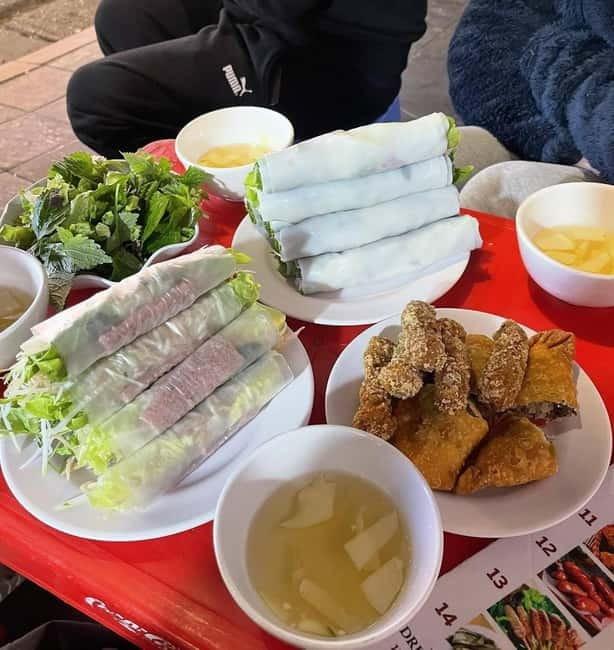
- Make your own rolls: You handle rice paper, herbs, noodles, fillings, and sauces rather than simply receiving finished dishes.
- A focused Hanoi theme: The menu centers on cuốn, or Vietnamese wrap-and-roll foods, including Hanoi-style phở cuốn.
- Several cooked and fresh dishes: Expect grilled beef, crispy bánh xèo, lemongrass pork, shrimp, pork, herbs, noodles, and dessert.
- A guide who can adapt the route: Justin adjusted the food choices for one couple based on what they had already eaten in Vietnam.
- A useful Old Quarter orientation: Clare included quieter backstreets and lively alleys while explaining the food.
- Good value at $26: Food tastings, an English-speaking guide, and bottled water or a local drink are included for three hours.
Why cuốn makes a good first food tour in Hanoi
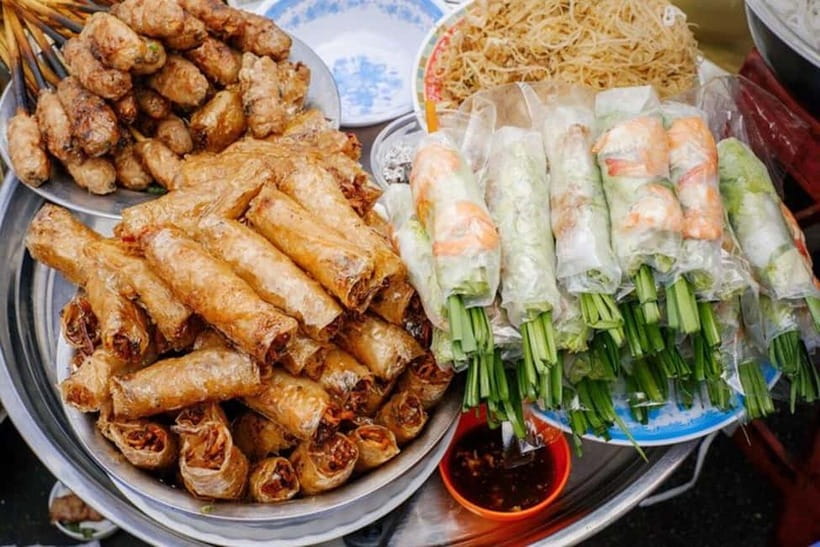
Cuốn means rolled food, and the idea is simple enough to understand at once. You combine a soft wrapper or noodle sheet with meat or seafood, fresh herbs, vegetables, noodles, and sauce. The result is a meal that feels fresh and balanced, even when one of the fillings has been grilled or fried.
I like this format for a first visit because you can compare several types of Vietnamese cooking in one outing. You get smoke from grilled beef, crispness from bánh xèo, cool herbs in fresh rolls, and the sweet-salty bite of fish sauce or peanut hoisin sauce.
The food is also social. You assemble each bite at the table, which gives the guide a natural chance to explain what goes where. If you are unsure how much filling to use or how tightly to roll, the hands-on part removes the guesswork.
Do not expect a formal cooking class. The point is tasting and assembling, not preparing every ingredient from scratch. You will likely receive the main components ready to eat, then build the rolls yourself.
More walking tours in Hanoi:
- [HOT] Hanoi Old Quarter Walking Street Food – Small Group Tour
★ 5.0 · 2,163 reviews - Private Walking Tour of Hanoi City
★ 5.0 · 1,251 reviews - Hanoi: Small-Group Street Food Walking Tour
★ 4.8 · 1,165 reviews
Starting at 38 Bat Su Street in the Old Quarter
The meeting point is the Crossing Vietnam Tour booking office at 38 Bat Su Street. This is a practical starting point for a food walk because the activity begins in Hanoi rather than requiring a separate transfer from outside the city.
The advertised walking time is three hours. That is long enough for several tastings and a bit of neighborhood wandering, but short enough to fit into a busy Hanoi schedule. I would place it early in your stay if you want food ideas for later meals, or near the end if you already know the basics and want more specific dishes.
The route includes charming backstreets and lively alleys. That matters because the Old Quarter is easy to experience only as a blur of traffic, shopfronts, and narrow lanes. A guide gives you a reason to slow down and notice how the food stops fit into the neighborhood.
The walking itself is part of the meal. You move between tastes instead of sitting in one restaurant for three hours. Wear comfortable shoes, and avoid arriving after a large breakfast or lunch.
Bò lá lốt, grilled beef wrapped in fragrant leaves
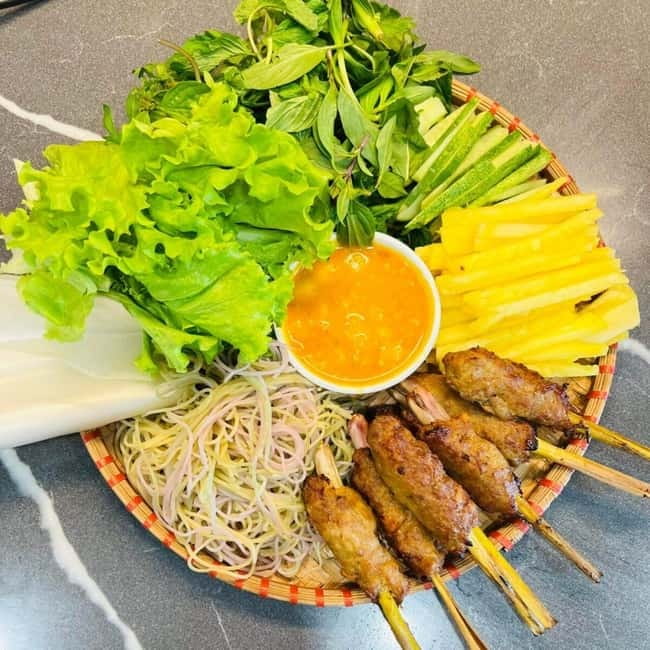
Bò lá lốt is one of the more distinctive dishes on the menu. Minced beef is wrapped in piper lolot leaves and grilled, giving the meat a fragrant leaf aroma and a smoky edge.
You receive rice vermicelli, herbs, pickles, and rice paper alongside the beef. The idea is to place a little of each on the rice paper, roll it, and eat it with the accompanying sauce or seasonings.
This is a good example of how Vietnamese food balances strong and fresh elements. The grilled beef brings richness, while herbs and pickles keep the bite from feeling heavy. Rice vermicelli adds softness and bulk without making the roll dense.
If you have mostly eaten soup and fried snacks in Hanoi, this dish gives you a different view of local food. It is cooked, aromatic, and substantial, but the final roll still has the fresh quality that defines the cuốn theme.
Bánh xèo and nem lụi bring crispness and smoke
Bánh xèo is a savory Vietnamese pancake cooked until crisp, then filled with shrimp, pork, and bean sprouts. It is cut into pieces and wrapped in rice paper with fresh greens.
The fun is in the contrast. The pancake is hot and crisp, while the herbs and wrapper are cool and soft. Sauce ties the whole bite together. You are not meant to eat the pancake as one oversized plateful. Cutting and rolling it makes each portion easier to manage.
Nem lụi adds another grilled element. These are lemongrass pork skewers, with the lemongrass contributing fragrance to the meat. The skewers are also cut into pieces for wrapping with rice paper and herbs.
I see this pairing as one of the stronger parts of the experience because it lets you compare two textures at once: crisp pancake and tender grilled pork. It also gives you more control over each bite. Add extra greens for freshness, or use more meat and pancake for a heartier roll.
The possible drawback is that rice paper rolling can feel awkward at first, especially if you have never used it. That is part of the point, and the guide can show you the basic technique, but neat restaurant-style rolls are not required.
More street food crawls in Hanoi:
- Small Group Hanoi Street Food Tour with a Real Foodie
★ 5.0 · 4,682 reviews - Hanoi: Street Food Tour with Train Street & Hidden Alleyways
★ 5.0 · 2,831 reviews - Hanoi: Guided Street Food Tour with Train Street Experience
★ 4.9 · 2,479 reviews - Hanoi Street Food Tour with local delicacies
★ 5.0 · 1,506 reviews
Phở cuốn, Hanoi’s fresh noodle roll
Phở cuốn is a Hanoi original and one of the most useful dishes for understanding the local cuốn tradition. Instead of serving rice noodles in broth, the wide noodle sheets are used as wrappers around beef, lettuce, and herbs.
The texture is soft and smooth, with the beef and greens adding contrast. You dip each roll into a sweet-savory fish sauce, so the flavor comes from the noodle sheet, filling, and sauce together.
This dish is especially helpful if you already know ordinary phở. It shows how the same broad rice-noodle tradition can become a dry, handheld dish rather than a hot soup.
I would not expect the same heat or intensity as a bowl of phở. Phở cuốn is cooler and lighter, making it a useful change after grilled foods or crispy bánh xèo.
Fresh shrimp and pork rolls keep the meal light
Cuốn tôm thịt is the classic fresh roll familiar to many people who have tried Vietnamese food abroad. It combines boiled shrimp and pork with vermicelli, lettuce, and herbs inside rice paper.
The suggested sauces are peanut hoisin or fish sauce. The peanut hoisin gives a sweet, nutty finish, while fish sauce keeps the flavor more direct and savory.
This is the cleanest, coolest dish in the lineup. It has no grilled crust or fried edge, so it gives your palate a break between stronger dishes. The shrimp also adds a different texture from the minced beef and pork.
The rolls are simple, but that simplicity is useful. You can taste the herbs and rice paper clearly, and you can see how Vietnamese food uses fresh ingredients to balance meat and noodles.
If you do not eat pork or shrimp, check the menu with the guide before booking. The supplied details identify this as a standard part of the tasting, and the tour is not designed for vegans.
Nộm bì cuốn adds a crisp, refreshing finish
Nộm bì cuốn, also called chạo bì cuốn, uses a shredded pork skin salad with herbs, rice noodles, and crushed peanuts. It is another roll rather than a separate salad course.
Pork skin has a springy texture that differs from ordinary sliced meat. The herbs, noodles, and peanuts make the bite lighter and more varied. For some diners, this may be the most unfamiliar food on the menu.
I like seeing this included because it moves beyond the most obvious Vietnamese dishes. It gives you a chance to try a regional-style salad roll with a mix of soft, crisp, and chewy textures.
If you prefer very familiar foods, this is the item that may require the most openness. You can ask the guide what is inside before tasting it, and the small tasting portions make experimentation easier.
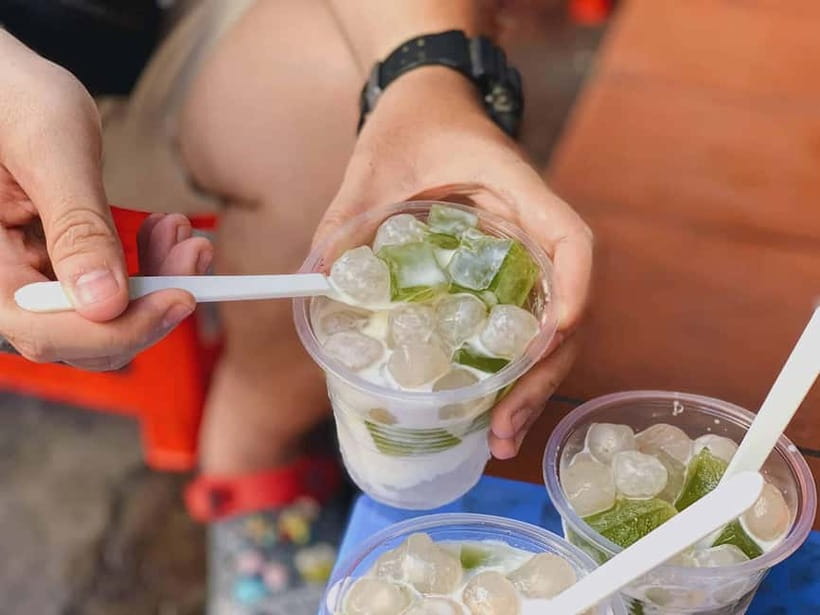
Seasonal chè or pandan jelly yogurt to finish
The meal ends with either chè or fresh fruit yogurt with cheese pandan jelly. Chè is a Vietnamese sweet soup or dessert category that can include soft, chewy, creamy, or fruit-based elements, depending on the preparation.
The pandan jelly yogurt option brings a cool, sweet finish with a fragrant pandan note. It is a useful contrast after fish sauce, grilled meat, and savory pancake.
Because the dessert is seasonal, the exact ending may vary. That is worth keeping in mind if you are booking for one particular sweet. The tour promises a seasonal dessert rather than a fixed dessert menu.
I prefer this kind of ending on a food walk. You finish with something sweet instead of leaving immediately after a savory dish, and the dessert gives the guide one last chance to explain a familiar Vietnamese flavor.
The guides and the value of local context
The tour is led in English. Justin and Clare are named guides associated with the experience, and their roles point to an important benefit: the walk is not only about food.
Justin adapted the tasting for a couple who had already spent three weeks in Vietnam. That kind of adjustment is valuable because a first-time visitor may need the classic introduction, while someone farther into a trip may want less familiar dishes.
Clare included backstreets and alleys while explaining the food. This gives the walk more shape than a sequence of restaurant stops. You get a quick look at parts of the Old Quarter that you might pass without context.
The information provided does not promise a fixed route or a guaranteed guide. Treat the named guides as examples of the English-speaking team rather than a guarantee that one particular person will lead your outing.
A private group is available. If you value a slower pace, have strong food preferences, or want more control over the conversation, that option may be worth considering. Optional hotel pickup is also available for a private tour, which can simplify the start of the evening or morning.
Is $26 a fair price for three hours?
At $26 per person, the price is reasonable if you plan to eat every tasting and value an English-speaking guide. The fee includes all food tastings in suitable portions, bottled water or local drinks, and the three-hour walking experience.
You are paying for more than the raw cost of the dishes. The guide helps you understand how to assemble the rolls, explains the cuốn idea, and points out Old Quarter streets along the way. For someone arriving in Hanoi without a food plan, that orientation has real value.
The price does not include other beverages or personal expenses. If you want additional drinks, budget for them separately. The included food is described as filling, so you probably will not need to buy another full meal immediately afterward.
The value is weaker if you are vegan, avoid most of the listed meats and seafood, or prefer a sit-down meal with one fixed dish. In that case, the menu may not give you enough flexibility for the price.
Who should book this Hanoi food walk?
I would recommend it most strongly to first-time Hanoi visitors who want a guided introduction to local food without committing to a full-day activity. It also suits food fans who have already eaten phở and bánh mì and want to try less familiar dishes.
It is a good fit if you enjoy assembling your own food, sharing several tastes, and walking through narrow Old Quarter streets. The private group option makes it more appealing for couples, families, or small groups that want a more personal pace.
You should think twice if you are vegan. The activity is specifically marked as unsuitable for vegans, and the menu relies on beef, pork, shrimp, and fish-based sauces.
You should also arrive hungry. One verified booking described the experience as filling, and the lineup supports that warning: grilled meats, pancake, noodles, several rolls, and dessert add up quickly.
Should you book it?
Book this tour if you want a practical, food-first introduction to Hanoi’s cuốn culture, especially if you like fresh herbs, rice paper, grilled meat, and hands-on eating. The strongest reasons are the unusual range of rolls, the chance to taste phở cuốn in its Hanoi setting, and the guide’s ability to adjust the food focus.
Skip it if you need a vegan menu, dislike mixed textures, or want a quiet restaurant meal rather than a walking tasting. For everyone else, $26 buys three useful hours, plenty of food, and a clear introduction to one of Vietnam’s most enjoyable ways to eat.
FAQ
Where does the tour start?
The meeting point is the Crossing Vietnam Tour booking office at 38 Bat Su Street in Hanoi’s Old Quarter.
How long does the activity last?
The guided food walk lasts three hours.
What language is the tour conducted in?
The live tour guide speaks English.
What food is included?
The tasting menu includes dishes such as bò lá lốt, bánh xèo, nem lụi, phở cuốn, nộm bì cuốn or chạo bì cuốn, fresh shrimp and pork rolls, and a seasonal dessert.
Is a drink included?
Bottled water or local drinks are included. Other beverages are not included.
Is the tour suitable for vegans?
No. The activity is listed as unsuitable for vegans.
Can I book a private group?
Yes. A private group is available, and optional hotel pickup is offered for private tours.
Can I cancel the booking?
You can cancel up to 24 hours in advance for a full refund. The activity also allows you to reserve now and pay later.
More food tours in Hanoi
- Hanoi: Guided Food Tour with Train Street Visit
★ 4.9 · 6,239 reviews - Hanoi Motorbike Tours Led By Women: Hanoi By Night Foodie Motorbike Tours
★ 5.0 · 1,734 reviews - Private Hanoi Street Food Walking Tour With Real Foodie
★ 5.0 · 1,042 reviews - Hanoi: Eat Like a Local Small Group Street Food Tour
★ 4.9 · 978 reviews
Just added to the Hanoi list
- (TOP) Private car: Hanoi/Noi Bai Airport (HAN) from/to Ninh Binh★ 3.5 · 16 reviews
- Thang Long Water Puppet Theater★ 4.5 · 45 reviews
- Private car transfer from Hanoi Airport to Hotels★ 4.5 · 5 reviews
- Private Tour Ninh Binh 1 Day★ 5.0 · 5 reviews
- Private Hanoi Old Quarter Food Tour with 8+ Authentic Tastings★ 5.0 · 11 reviews
- Private Transfer Service from Hanoi to Ha Long Bay★ 5.0 · 3 reviews
- Private Transfer Between Hanoi City and Noi Bai Airport (HAN)★ 5.0 · 3 reviews
- Private Hanoi Food Walking Tour of the French Quarter★ 5.0 · 38 reviews
Hanoi Street Food Tours, compared.
Small Group Hanoi Street Food Tour with a Real Foodie
Read our review →
Street Food Tour with Train Street & Hidden Alleyways
Read our review →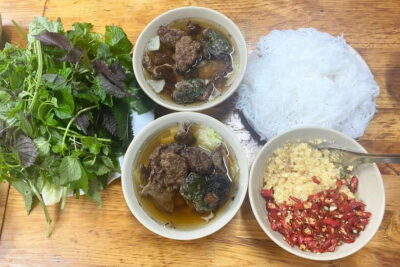
Guided Street Food Tour with Train Street Experience
Read our review →
[HOT] Hanoi Old Quarter Walking Street Food – Small Group Tour
Read our review →
Private Hanoi Street Food Walking Tour With Real Foodie
Read our review →
Browse the lists this tour appears in