
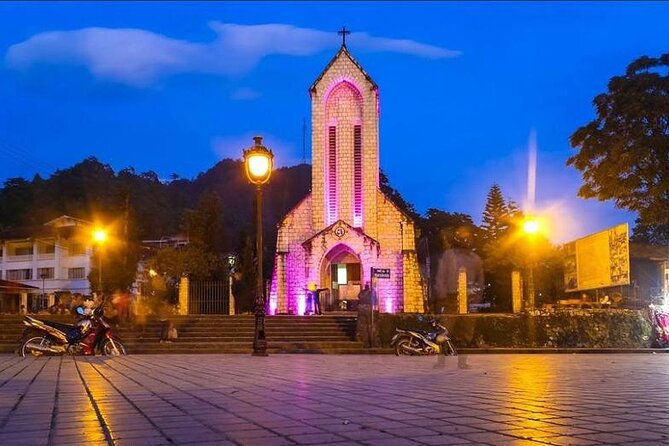
Reviewed · SAPA TOURS FROM HANOI
Hanoi – Sapa 2 Days 2 Nights With Fansipan by cable car
Fansipan is the headline, but the best part of this trip may be the footwork. You ride the Muong Hoa train, take the 6,292.5-meter cable car toward Vietnam’s highest peak, then walk through Hmong and Red Dao villages in the Muong Hoa valley.
I like the sensible package: transport, cable car tickets, meals, a private room in Ta Van, and a local English-speaking guide are covered. I also like the small stated group size of up to 10 people, which matters on narrow village paths. The drawback is the schedule. An overnight bus, an early mountain arrival, and several hours of trekking make this a full trip, not a gentle weekend break.
Key points to know before booking
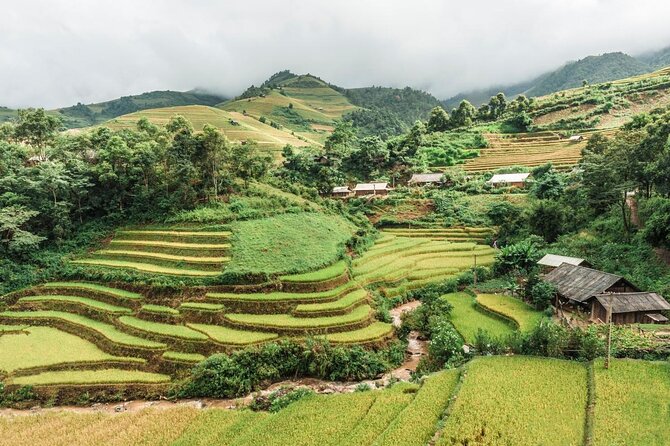
- Fansipan without a full mountain climb: The Muong Hoa train and cable car handle most of the ascent, leaving roughly 600 steps to the summit area.
- Four ethnic-minority villages: The route includes Y Linh Ho, Lao Chai, Ta Van, Giang Ta Chai, and Supan, with Hmong, Day, and Red Dao communities represented.
- An overnight VIP cabin bus: You leave Hanoi around 9:00 to 9:30pm and reach Sapa early the next morning.
- A private room in Ta Van: Your overnight stay is in the village rather than back in central Sapa.
- A guide named Mao Co may lead your walk: One especially warm mention praises Mao Co for explaining village culture and daily life.
- Strong fitness is needed: The walking totals about 9 kilometers across two days, with bridges, a small tunnel, village paths, and uneven mountain ground.
Leaving Hanoi on the overnight bus

Your pickup begins in Hanoi’s Old Quarter between 9:00 and 9:30pm. A small transfer vehicle takes you to the larger bus meeting point at 160 Tran Quang Khai Street or 70 Nguyen Huu Huan Street.
The main ride to Sapa is by VIP cabin bus. It is a practical choice for a short schedule because you travel while sleeping instead of giving up a daytime sightseeing block. Still, I would set your expectations carefully. This is an overnight road journey, not a hotel night. Sleep quality will depend on how well you rest on the bus.
There is no tour guide on the Hanoi to Sapa bus, and the same applies to the return journey. That is not a problem if you are comfortable following transfer instructions, but it means the guided part begins in Sapa. Keep your phone charged and your key belongings close at hand.
The bus reaches Sapa at about 4:30am. You remain on board until 6:00am, then a transfer car takes you to Sapa Retreat Conodtel. This pause gives you a little extra rest before breakfast, though the early arrival still makes Day 1 demanding.
More Sapa treks and homestays:
- Sapa 2 Days 1 Night From Hanoi – Overnight in Ta Van Village
★ 5.0 · 2,669 reviews - Hanoi – Sapa 2 Days 1 Night Overnight At Homestay
★ 5.0 · 899 reviews - From Hanoi: 2-Day Sapa Trekking Trip with Homestay & Meals
★ 4.8 · 704 reviews
Breakfast and a quick start in Sapa
At the hotel, you have a breakfast buffet before the Fansipan visit. Breakfast is important here. You will need energy for the summit steps and the afternoon trek, and there may not be much time to settle into Sapa before leaving again.
The timing is efficient rather than leisurely. You arrive in the mountains at dawn, eat, and set off at about 8:00am. If you prefer a slow first morning with coffee and town views, this plan may feel rushed. If you want to fit Fansipan and the valley villages into one short trip, the early start works in your favor.
The experience is designed around movement. You are not spending the morning touring Sapa’s streets. You are using the town as a base for the mountain and valley sections.
Reaching Fansipan by Muong Hoa train and cable car
The Fansipan visit begins with the Muong Hoa train. It carries you from the Sapa area toward the cable car station and adds a scenic rail segment before the main ride upward.
The cable car route stretches 6,292.5 meters and takes you to Fansipan Station. From there, the summit is about 600 steps away. The final stair section is short compared with a full mountain ascent, but it is still real exertion, especially after an overnight bus and an earlier train and cable car ride.
You receive two-way cable car tickets and the Muong Hoa train ticket. You do not receive a guide at Fansipan, so this part is largely self-directed. That gives you freedom to take in the views at your own pace, but you will not have a tour leader explaining the mountain, the cable-car system, or the summit area.
Weather can shape this stop. On a clear day, the height gives you sweeping views over northern Vietnam’s mountains and cultivated valley slopes. In cloud, the cable car and summit steps still make the ride worthwhile, but the views may be limited. The tour does not promise particular weather, so keep that in mind when judging the cable-car portion.
The Fansipan ticket is a meaningful part of the $155 price. Buying the cable car, train ride, transport, meals, and lodging separately would require more planning. You are paying for convenience as much as for sightseeing.
Walking down through Y Linh Ho and Lao Chai
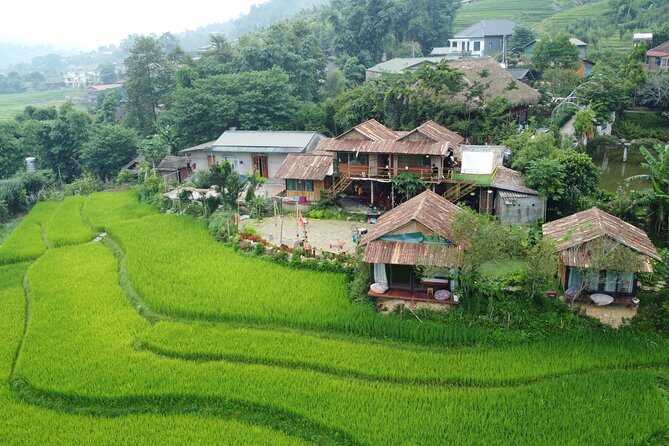
After the Fansipan section, you return to Sapa town. At about 2:30pm, a local guide takes you toward Y Linh Ho, a village associated with the Black H’mong people.
The first walk is about 2 kilometers and lasts roughly an hour. It is a good change of pace after the cable car and summit stairs. Instead of viewing the mountains from above, you begin to see how homes, paths, fields, and village life fit together at ground level.
From Y Linh Ho, you continue around 3 kilometers to Lao Chai, another H’mong village. The route includes a small tunnel and a small bridge leading into the Muong Hoa valley. Those details matter because this is not simply a roadside photo stop. You are walking along a route that connects the villages and gives you a closer look at the valley’s farming areas and terraced fields.
The afternoon trek is not extremely long on paper, but fatigue will be a factor. You have already taken an overnight bus, eaten breakfast early, visited Fansipan, and climbed the summit steps. Good walking shoes are a must. The requirement for strong physical fitness is sensible.
Your guide is the key to this part of the trip. The published guide name is not fixed, but Mao Co is specifically associated with a highly praised village experience. If Mao Co leads your group, you can expect explanations about local culture and daily life. If another guide leads, the quality of interpretation may depend on that person, so use the walk to ask direct questions rather than simply following the path.
More 2-day tours in Hanoi:
- Amanda Cruise – Ha Long, Lan Ha Bay – All Inclusive 2D1N & 3D2N
★ 5.0 · 4,358 reviews - Hanoi: 2-Day Halong & Lan Ha Bay 5-Star Cruise with Balcony
★ 4.8 · 3,300 reviews - Halong Bay – Le Journey Cruises – All Inclusive 2D1N and 3D2N
★ 5.0 · 2,500 reviews - Mon Chéri Cruise 5 star: Unique 2 Days Tuan Chau – Halong bay – Lan Ha Bay
★ 5.0 · 2,422 reviews
Spending the night in Ta Van village
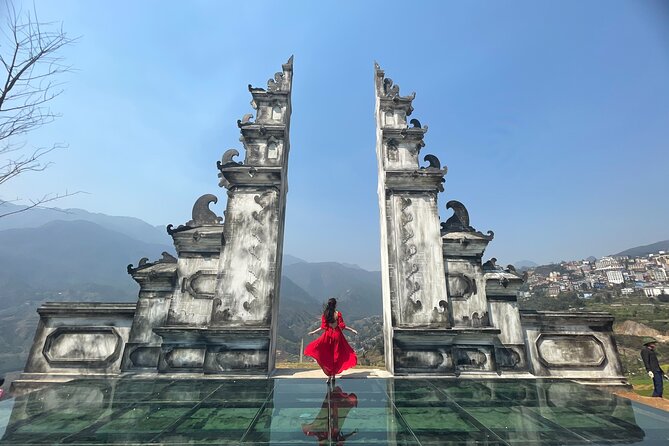
By about 4:00 to 4:30pm, you reach Ta Van, around 8 kilometers from central Sapa. The area is home to several ethnic groups, including the Day and H’Mong.
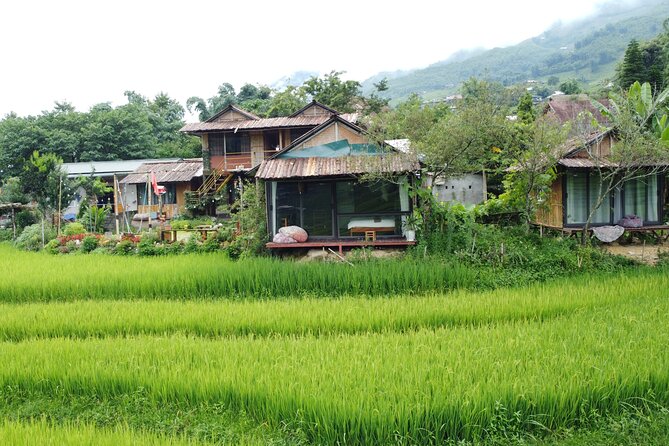
This is one of the strongest features of the package. You spend the night in Ta Van in a private room instead of returning to a standard hotel in Sapa. That puts you closer to the valley villages and makes the next morning’s walk more convenient.
The private room should not be confused with a luxury hotel room. The information provided confirms privacy, but it does not specify room facilities, bedding details, or bathroom arrangements. If those points matter to you, ask the operator before booking.
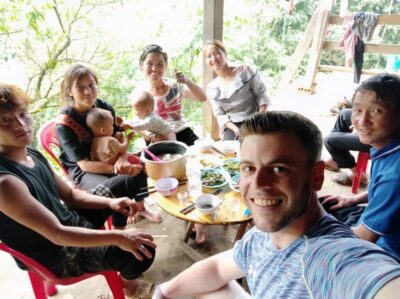
Dinner is included. This gives you a chance to eat in the village setting after a long day, with local food forming part of the cultural side of the trip. Drinks such as beer and wine cost extra, as do personal purchases.
Ta Van is also where the pace finally slows. After a day of bus travel, cable-car sightseeing, and walking, you can settle into the mountain setting instead of rushing back to Hanoi. The overnight stay makes this feel more like a short Sapa experience than a quick cable-car excursion.
The Red Dao route to Giang Ta Chai and Supan
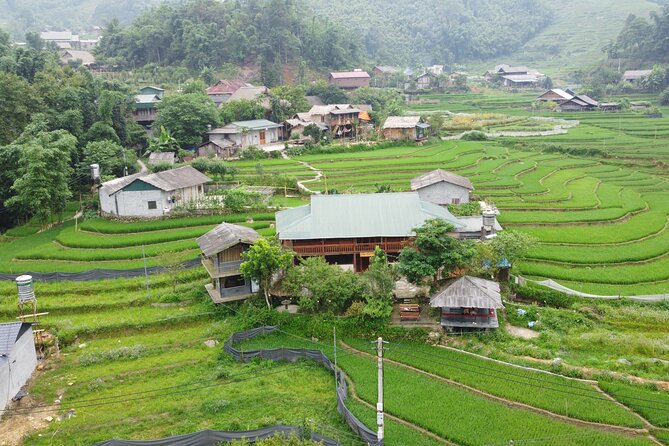
Breakfast at the homestay runs from 7:00 to 9:00am, followed by check-out. You then begin the second day’s trek at about 9:00 to 9:30am.
The route covers around 4 kilometers toward Giang Ta Chai and Supan, villages associated with the Red Dao people. This gives the trip a useful cultural range. The first day focuses mainly on Black H’mong and H’Mong areas, while the second introduces Red Dao traditions and customs.
The walk lasts about four hours. That is longer than the first individual village section, so the physical demand continues even though you are no longer carrying the first day’s travel fatigue. You will want comfortable footwear, water, and clothing that can handle changing mountain weather.
The value here is the combination of walking and local context. A quick drive through Sapa can show you distant terraces, but a guided path lets you move from one village area to another and notice how the settlements connect. The tour description emphasizes traditional customs, so this is the part where your guide’s explanations matter most.
Lunch is included during the day. The package lists two lunches in total, along with two breakfasts and dinner. Since drinks are not covered, budget separately for anything beyond the scheduled meals.
Returning to Sapa, then Hanoi
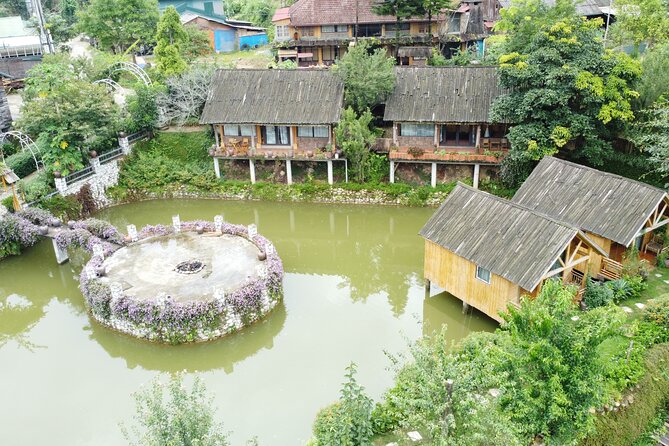
At about 1:30pm, the bus collects you from a local restaurant and takes you back to the hotel in Sapa town. You have free time to explore Sapa before the transfer car takes you to the bus station around 3:00 to 3:30pm.
The return bus leaves between 4:00 and 4:15pm and reaches Hanoi’s Old Quarter around 10:00 to 10:30pm. Drop-off is at Tran Quang Khai Street or 70 Nguyen Huu Huan Street.
This final stretch is another long bus ride, but the timing lets you use most of the second day in Sapa. You are not sent straight back after breakfast. You get a little free time in town after the trek, though it is limited.
The tour begins and ends in Hanoi’s Old Quarter. Pickup and drop-off points are central, but they are not necessarily your hotel door. The small transfer car handles the initial movement to the bus, while the stated end point is on Tran Quang Khai Street or Nguyen Huu Huan Street.
What the $155 price really covers
At $155 per person, this is a strong-value package if you want Fansipan and village trekking without arranging the pieces yourself. The price includes:
- Two-way VIP cabin bus travel between Hanoi and Sapa
- Two-way Fansipan cable car tickets
- Muong Hoa train tickets
- A local English-speaking guide in Sapa
- A private room in Ta Van
- Dinner
- Two lunches
- Two breakfasts
The big savings are in transport and admissions. Fansipan cable-car tickets alone can be a major expense, and the package also includes the train, bus, guide, meals, and overnight stay.
There are limits. The bus has no guide, and Fansipan has no guide. Drinks, personal expenses, and anything not listed are extra. The two-day schedule also packs a lot into a short period, so the value is highest for an active visitor who wants maximum coverage rather than extended rest.
The stated group limit is 10 people. That is small enough to make village walking more manageable and to give you a better chance to speak with the guide. It does not mean every road transfer is private, so read the transport details as a mix of group service and small-group guiding.
Who should book this Sapa trip?
I would choose this experience if you want three things in one compact package: Fansipan by cable car, guided village walks, and an overnight stay in Ta Van.
It suits you if you are comfortable with an overnight bus, early starts, several kilometers of walking, and basic village accommodation. It also works well if you have limited time in northern Vietnam and do not want to organize tickets, transport, food, and a guide separately.
I would hesitate if you need a relaxed schedule, dislike sleeping on buses, or want a detailed guide at Fansipan itself. The summit visit is not a guided history tour. It is a transport-assisted mountain stop followed by the more personal, guided village walking.
The tour requires strong physical fitness. The route includes about 2 kilometers to Y Linh Ho, another 3 kilometers to Lao Chai, and around 4 kilometers toward Giang Ta Chai and Supan. The 600 summit steps add another burst of effort.
Free cancellation is available if you cancel at least 24 hours before the start time. Inside that window, the payment is not refunded and changes are not accepted. That policy is worth noting because the trip involves timed bus and cable-car arrangements.
Should you book it?
Book this trip if you want an efficient, active introduction to Sapa and Fansipan, with the practical pieces handled for you. The combination of the cable car, Muong Hoa train, H’Mong and Red Dao village routes, meals, and a private Ta Van room gives the price real substance.
Skip it if your priority is slow travel or a fully guided Fansipan visit. For the right person, especially someone with only two days and good stamina, this is a well-packed way to see the mountain from above and the valley on foot.
FAQ
How long does the experience last?
The trip is scheduled over two days with two nights of travel and accommodation arrangements. You leave Hanoi late at night, spend the first night traveling by bus, stay in Ta Van, and return to Hanoi on the second evening.
What time does pickup begin in Hanoi?
Pickup from hotels in Hanoi’s Old Quarter begins between 9:00 and 9:30pm. A small transfer vehicle takes you to the main bus meeting point.
Where does the Hanoi bus depart?
The main meeting points are 160 Tran Quang Khai Street and 70 Nguyen Huu Huan Street in Hanoi’s Old Quarter.
Is there a guide on the bus?
No. The Hanoi to Sapa and Sapa to Hanoi bus journeys do not include a tour guide. A local English-speaking guide leads the Sapa activities.
Is Fansipan cable car access included?
Yes. Two-way Fansipan cable-car tickets and the Muong Hoa train are included.
Is there a guide at Fansipan?
No. The Fansipan visit does not include a tour guide. The guided portion takes place in Sapa and on the village treks.
How many steps are there to the Fansipan summit area?
After reaching Fansipan Station by cable car, you walk about 600 steps to the peak area.
Where do you sleep?
You stay in a private room in Ta Van village. The provided details do not specify the room’s facilities.
How much walking is involved?
The listed village walks total about 9 kilometers: approximately 2 kilometers to Y Linh Ho, 3 kilometers to Lao Chai, and 4 kilometers toward Giang Ta Chai and Supan. Strong physical fitness is recommended.
What meals are included?
The package includes dinner, two lunches, and two breakfasts. Drinks such as beer and wine are not included.
Just added to the Hanoi list
- (TOP) Private car: Hanoi/Noi Bai Airport (HAN) from/to Ninh Binh★ 3.5 · 16 reviews
- Thang Long Water Puppet Theater★ 4.5 · 45 reviews
- Private car transfer from Hanoi Airport to Hotels★ 4.5 · 5 reviews
- Private Tour Ninh Binh 1 Day★ 5.0 · 5 reviews
- Private Hanoi Old Quarter Food Tour with 8+ Authentic Tastings★ 5.0 · 11 reviews
- Private Transfer Service from Hanoi to Ha Long Bay★ 5.0 · 3 reviews
- Private Transfer Between Hanoi City and Noi Bai Airport (HAN)★ 5.0 · 3 reviews
- Private Hanoi Food Walking Tour of the French Quarter★ 5.0 · 38 reviews
Sapa Tours from Hanoi, compared.
Sapa 2 Days 1 Night From Hanoi – Overnight in Ta Van Village
Read our review →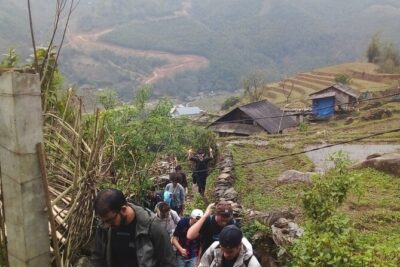

Sapa 3 Days 2 Nights Trekking Tour (1 Night In Ta Van Village, 1 Night In Hotel)
Read our review →
3-Day Trekking Adventure of Sapa from Hanoi – Stay Ta Van Village
Read our review →
2-Day Sa Pa Ethnic Homestay Tour & Trek with Limousine Bus
Read our review →
Sapa 2 Days 1 Night From Hanoi – Overnight in Hotel
Read our review →
Sapa 3 Day 2 Night Trekking With Hotel & Homestay
Read our review →Browse the lists this tour appears in