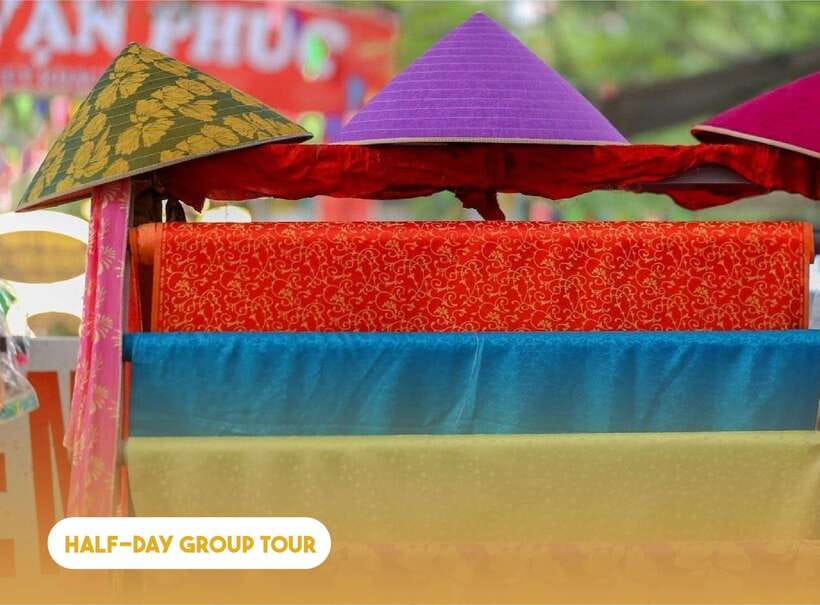
Reviewed · HALF-DAY
Hanoi: Half-day Silk Weaving Journey In Van Phuc Tour
Van Phuc has been making silk for more than 1,000 years, and that long craft tradition is the real reason to take this half-day trip. You will see silk production in family workshops, walk past old village features, and learn how ordinary households turn thread into finished cloth.
I like the close look at handmade production and the chance to meet the people who still earn their living from silk. I also like the village setting, with fish ponds, banyan trees, shrines, communal houses, and newer homes sharing the same streets.
The main thing to understand is that this is also a shopping visit. You can buy silk clothing and other products at reasonable prices, but the tour may feel less appealing if you want a pure sightseeing outing with no sales element.
Key points at a glance
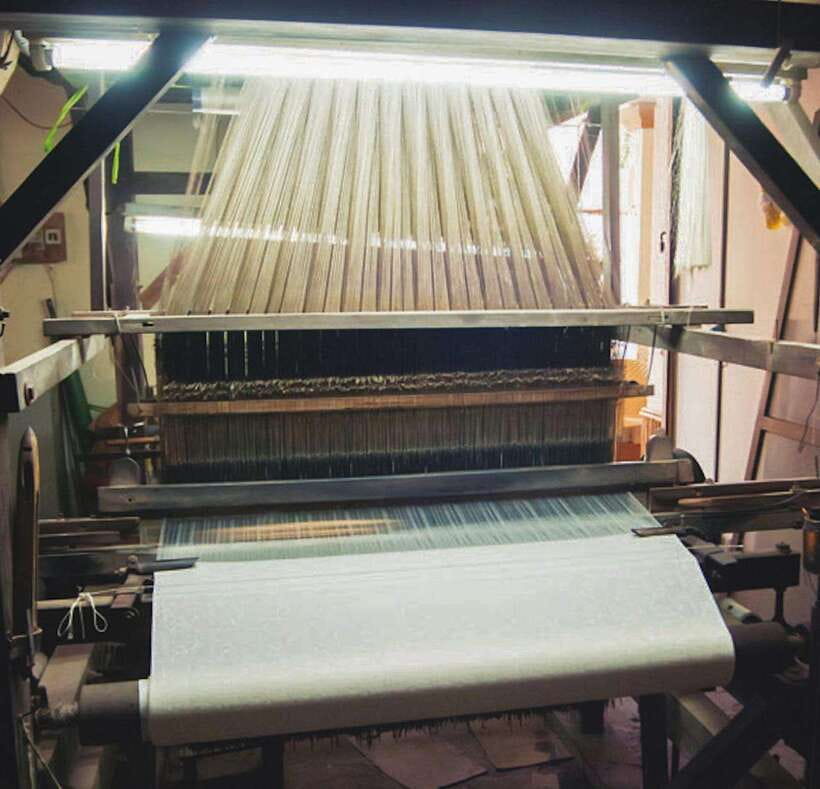
- A 1,000-year-old craft: See the stages of silk work, from spinning and gluing to weaving and finishing.
- A real working village: Van Phuc is home to families who depend on silk production, not just a display built for visitors.
- A short ride from Hanoi: The drive takes about 35 to 45 minutes each way, making this easy to fit into a busy Hanoi stay.
- More than fabric: Walk among traditional houses, fish ponds, ancient banyan trees, communal buildings, and local shrines.
- Shopping is part of the plan: Browse silk clothing and other products made in the village, with purchases paid separately.
- Simple central pickup: Hotel pickup and drop-off are included in Hoan Kiem, Ba Dinh, and Hai Ba Trung districts.
Why Van Phuc makes a worthwhile half-day trip
Hanoi can keep you busy with temples, museums, street food, and old neighborhoods. Van Phuc gives you a different view of northern Vietnam: one shaped by work, family workshops, and a craft passed from one generation to the next.
The village has been known for silk weaving for over 1,000 years. That does not mean every building is ancient or every product is made by hand from start to finish. It does mean silk is tied closely to the place and to the livelihoods of local families.
I find that distinction useful. You are not simply looking at a museum display. You are visiting a living village where traditional methods exist beside modern homes and current retail businesses. The mix can feel less polished than a formal cultural attraction, but it gives the visit more local character.
The tour lasts 3.5 hours, including transportation. That is enough time to see the village, watch the work, visit the shrines, and shop without giving up an entire day in Hanoi. If you want a short cultural outing beyond the city center, the timing works well.
More half-day trips from Hanoi:
- Hanoi Half-day with Food + Fun + Culture By Russian Jeep
★ 5.0 · 1,243 reviews - Hanoi City Tour: Private Half-Day Customized with Train Street
★ 5.0 · 455 reviews - Hanoi City Half-Day Private Tour: Train Street And All Highlights
★ 5.0 · 298 reviews
The ride from Hanoi to Van Phuc
Pickup is available from hotels in Hoan Kiem, Ba Dinh, and Hai Ba Trung districts. The published transport details give a drive of about 35 to 45 minutes each way, so plan on roughly an hour and a half of the total tour being spent in the vehicle.
That ride is a practical tradeoff. You get out of central Hanoi without committing to a full-day excursion, but the village is not a quick walk from the Old Quarter. I would book this tour for a morning or afternoon when you want a focused activity rather than trying to pack several far-flung sights into the same time slot.
Transportation, bottled water, entrance fees, travel insurance, and an English-speaking guide are included. Personal spending is not included, which matters here because shopping is one of the main parts of the visit.
The transfer is especially useful if you are not comfortable arranging your own ride outside Hanoi. The experience is also available as a private group, which can be a better fit for families or small parties that want more control over the pace.
Entering the village through its main gate
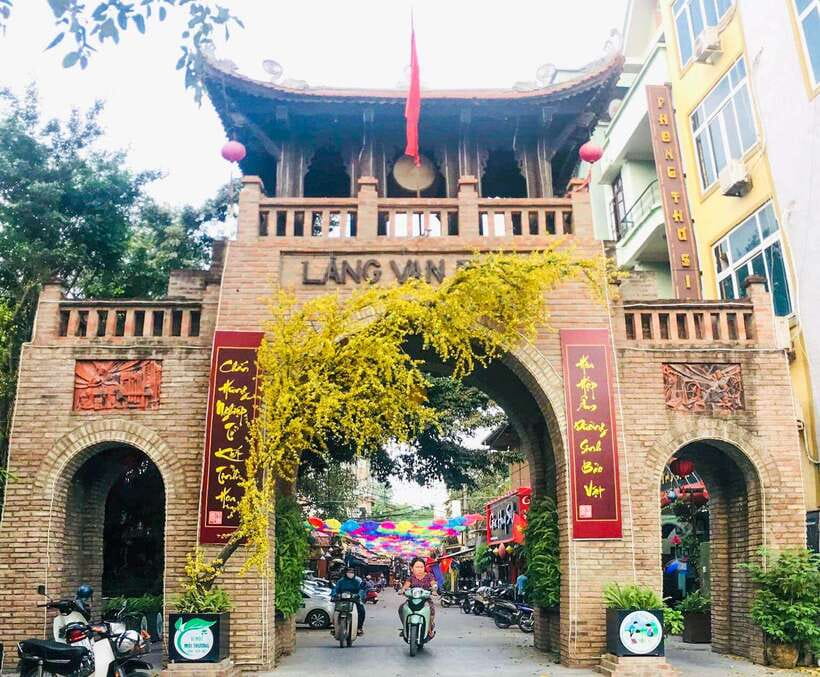
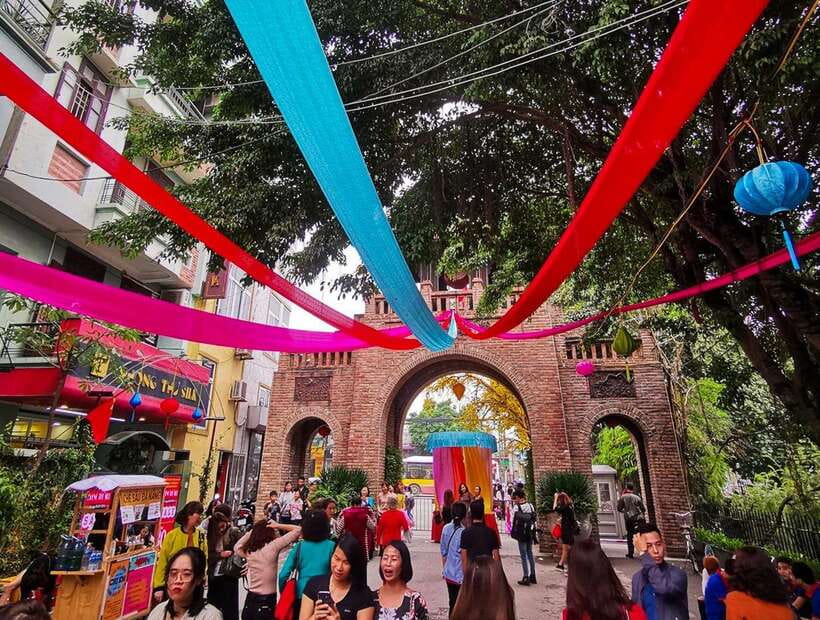
Van Phuc is marked by a main gate that introduces you to the village. From there, the visit continues on foot through streets where traditional features and modern homes sit side by side.
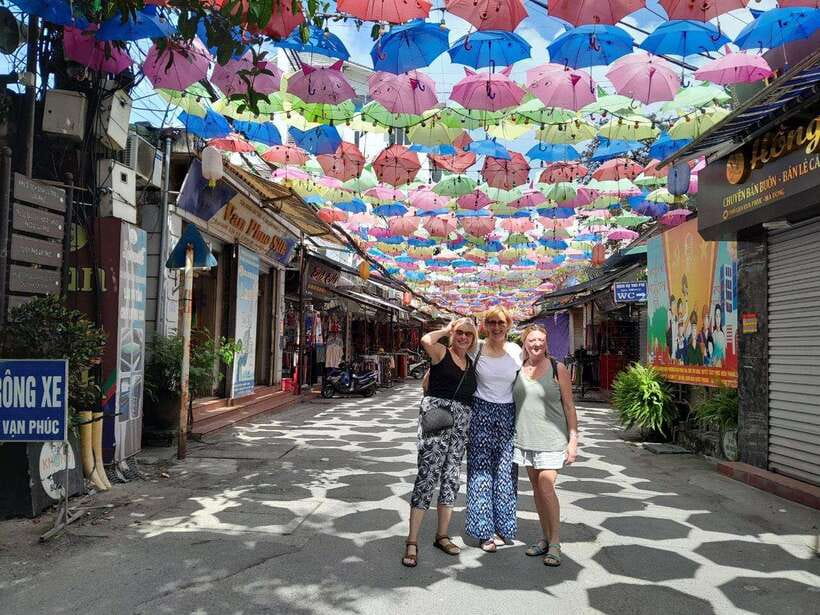
The setting is one of the tour’s quiet strengths. You may see communal houses, calm fish ponds, and old banyan trees alongside newer construction. These details help explain how a historic craft survives in a working community rather than in an isolated heritage park.
The village lies by the Nhue River, adding another layer to the setting. The tour information does not promise a long riverside walk, so I would not book it mainly for river views. Think of the water, ponds, trees, and old structures as part of a short village stroll around the silk workshops.
Wear comfortable shoes. The village portion includes walking and sightseeing, and the surfaces and pace may differ from a standard city attraction. You will get more from the visit if you look around between demonstrations instead of rushing from shop to shop.
Watching silk take shape in family workshops
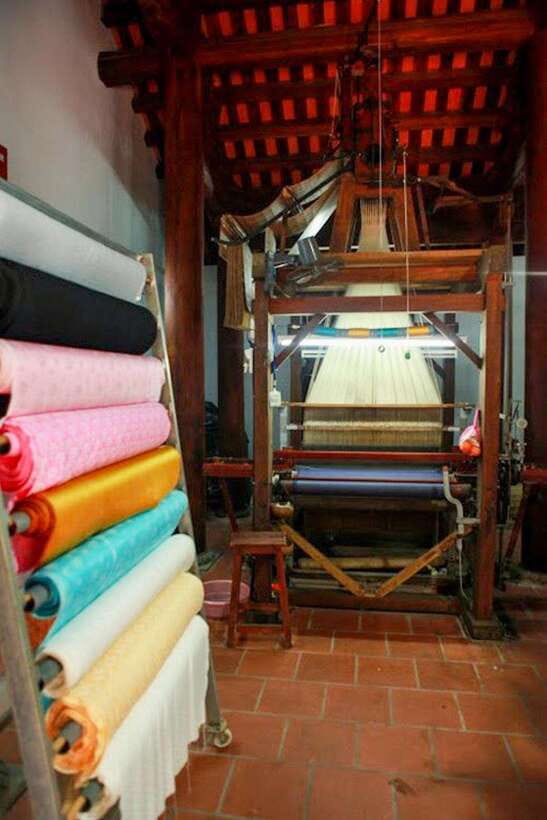
The central part of the experience is the craft demonstration. Local artisans show how silk moves through several stages, including spinning, gluing, weaving, and finishing.
This sequence makes the visit more useful than simply seeing shelves of finished scarves or clothing. You can connect the raw thread to the final textile and get a better sense of why handmade fabric takes time and skill.
The guide helps explain the techniques in English, while the artisans provide the practical demonstration. Names of individual guides are not provided, so you should expect an English-speaking guide rather than a tour led by a specifically advertised personality.
The work itself may look simple at first. Thread passes through a loom, patterns form, and fabric grows. Yet the value of the demonstration is in seeing the repeated, careful steps that are easy to miss when you only encounter silk as a finished product in a shop.
The experience is not presented as a long technical workshop where you make your own scarf. You are watching and learning rather than taking home something you produced yourself. If you want a hands-on class, this may feel limited. If you want an accessible introduction to silk making, the format is a good match.
Something completely different for the rest of your time in Hanoi:
- Hanoi Jeep Tour: Food, Culture and Fun by Vietnam Army Jeep
★ 5.0 · 15,222 reviews - Full-Day Ninh Binh Highlights Tour from Hanoi
★ 5.0 · 7,761 reviews - Hanoi: Ha Long Bay Day Cruise – Swimming, Meal, Kayaking
★ 4.7 · 7,415 reviews - Hanoi: Water Puppet Show Tickets
★ 4.6 · 7,029 reviews
Meeting artisans and understanding the village economy
The tour gives you a chance to meet families who rely on silk production for their income. That human element keeps the visit from becoming only a shopping stop.
A craft survives when it pays for food, housing, schooling, and daily life. Seeing that connection can change the way you look at the price of a finished silk item. You are not just comparing fabric colors or patterns. You are also looking at the outcome of a local production system that supports households in the village.
The tour does not promise a detailed lecture on wages, export markets, or the differences between silk grades. You should treat it as a brief introduction, not a full study of Vietnam’s textile industry. Still, even a short explanation can make the products feel less anonymous.
I would pay attention to the stages the artisans show you and ask your guide practical questions about the items you are considering. The supplied details do not promise a formal testing process or certification for every product, so it is sensible to ask about fabric, care, and what is handmade before buying.
Shrines, patterns, and the village’s first masters
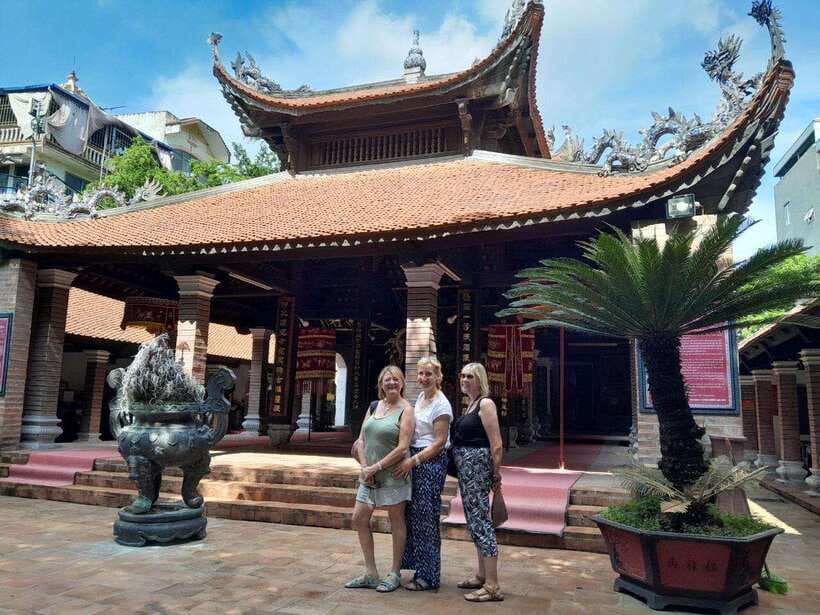
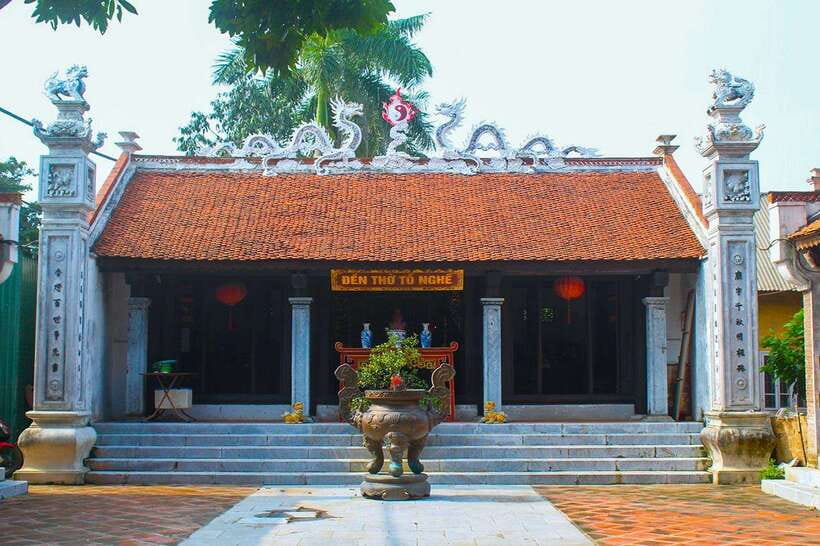
The visit also includes shrines dedicated to the village’s first silk masters. These sites connect the work you see today with the people credited with establishing the craft in Van Phuc.
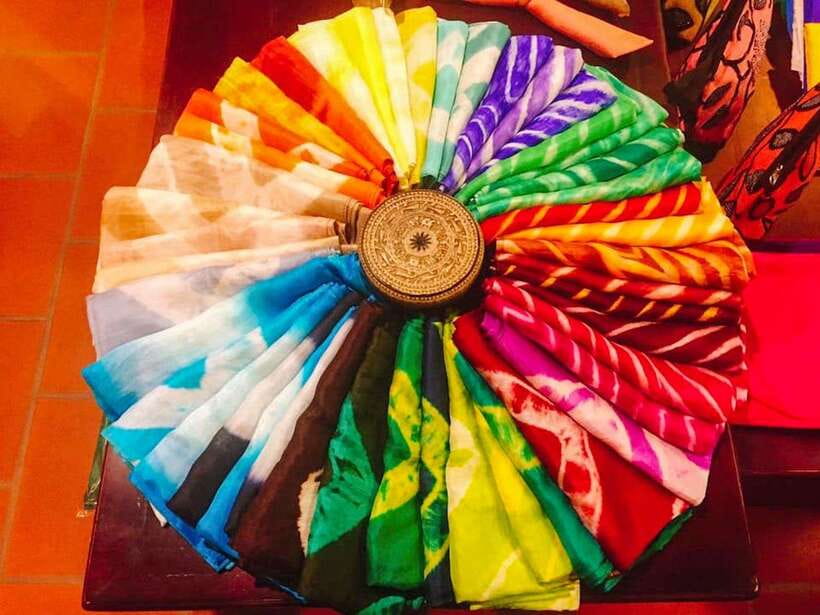
You will also have a chance to appreciate the patterns used on the finished silk pieces. This is a small but important part of the visit. Silk is not only about a smooth surface or a bright color. The design, weave, and finishing work help distinguish one piece from another.
Do not expect a large religious complex or a long temple visit. The shrines are one stop within a compact village tour. Their value comes from the connection to local craft traditions, not from grand architecture.
For me, this part adds context to the workshops. The artisans are not demonstrating an isolated technique. They are working within a village identity shaped by generations of silk making.
Shopping for silk without losing sight of value
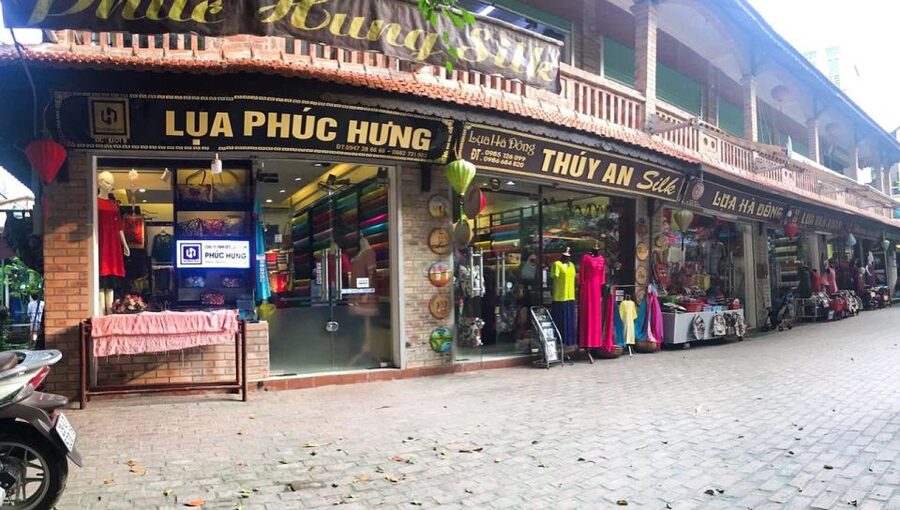
Shopping is built into the experience, and you should approach it with clear expectations. The tour provides time to browse and buy silk clothing and other products made in the village. The prices are described as reasonable, but you still need to decide what offers good value for your own needs.
A low price does not automatically mean a bargain, just as a high price does not prove better quality. Ask what the item is made from, how it should be washed, and which parts were produced locally. If you are buying clothing, check the cut and size carefully.
The shopping stop can be useful if you want a practical souvenir rather than a decorative trinket. Silk products are light and easy to pack, though the tour details do not specify exactly which items will be available on the day.
The key is to leave room for browsing without feeling obliged to purchase. One of the useful points about this tour is that the shopping comes after you have seen the production process. You can look at the finished goods with more understanding than you would have at a regular city shop.
Still, the shopping focus is the clearest drawback. One firsthand account describes the tour as clearly intended to encourage purchases, even while noting that the prices were good and the local fabric production was worth seeing. That is fair advice. Book this activity if you are comfortable with a retail stop as part of the cultural experience.
Is $43 a fair price?
At $43 per person, the price is reasonable if you value convenience and want a guided visit outside Hanoi. The fee includes hotel transportation, entrance fees, bottled water, an English-speaking guide, and travel insurance.
You are paying for more than the village walk itself. The transfer removes the need to arrange a separate car, and the guide gives structure to a place you might otherwise visit without understanding what you are seeing.
The value is weaker if you plan to spend very little time in the workshops and have no interest in buying silk. In that case, you are paying for transport to a village whose main attraction is a craft you do not care much about.
The price also does not include personal expenses, so set aside extra money if you intend to shop. A private group is available, but the supplied information does not state an additional price, so confirm the cost before booking if privacy is important to you.
Free cancellation is available up to 24 hours before the activity, and you can reserve now and pay later. Those terms are useful if your Hanoi plans are still changing, but they should not be the main reason to choose the tour.
Who will enjoy this tour most
I would recommend Van Phuc to several types of visitors:
- You want a short trip beyond Hanoi without giving up a full day.
- You are interested in crafts, textiles, design, or local family businesses.
- You prefer seeing a working community instead of only visiting formal museums.
- You want the option to buy silk products at the place where they are made.
- You are traveling with a small group and would value private transportation and guiding.
Families can join, but every child must be accompanied by an adult, and unaccompanied minors are not allowed. The tour is not described as a children’s workshop, so younger children may enjoy the colors and machinery more than the detailed explanation.
It also suits shoppers who want context before buying. If your main goal is a quiet village walk with no commercial element, you may find the retail portion too prominent.
What to know before you reserve
This is a private-group option, but the basic details do not say that every booking automatically becomes private. Confirm the group arrangement when you book if that matters to you.
Pickup and drop-off cover Hoan Kiem, Ba Dinh, and Hai Ba Trung districts. If your hotel is outside those areas, the included pickup terms may not apply, so check before paying.
The tour is conducted in English. Entrance fees, transportation, water, and insurance are included. Personal expenses, including anything you buy, are not.
Starting times vary, so check availability for the date you want. With only 3.5 hours in total, the exact start time can affect how easily you combine this outing with lunch, a museum visit, or an evening activity in Hanoi.
Should you book the Van Phuc silk tour?
Book it if you want a practical half-day introduction to one of northern Vietnam’s long-running crafts. The combination of artisan demonstrations, village scenery, local shrines, and included transport gives you a useful look at Van Phuc without requiring a full day away from Hanoi.
Skip it if you dislike shopping stops or want a more hands-on class. The strongest reason to go is not simply the chance to buy silk. It is seeing how the work is done and understanding why the craft still matters to local families.
At $43, I see this as a fair convenience-focused outing. Go with realistic expectations, watch the production stages closely, and treat shopping as an optional part of the visit rather than the whole purpose.
FAQ
How long does the Van Phuc silk tour last?
The tour lasts 3.5 hours, including transportation between Hanoi and Van Phuc.
How far is Van Phuc from Hanoi?
The drive takes about 35 to 45 minutes each way according to the provided tour timings.
Is hotel pickup included?
Yes. Hotel pickup and drop-off are included for hotels in Hoan Kiem, Ba Dinh, and Hai Ba Trung districts.
Is an English-speaking guide included?
Yes. An English-speaking live tour guide is included.
What will I see being made?
You will see stages of silk production including spinning, gluing, weaving, and finishing.
Can I meet local silk artisans?
Yes. The tour includes the chance to meet local families and watch artisans demonstrate their techniques.
Is shopping included in the tour?
You can browse and buy silk products during the visit, but personal purchases are not included in the tour price.
Are entrance fees included?
Yes. Entrance fees are included.
Can children join the tour?
Children can join when accompanied by an adult. Every child must have an adult with them, and unaccompanied minors are not allowed.
Can I cancel the booking?
You can cancel up to 24 hours in advance for a full refund. The reserve now and pay later option is also available.
Just added to the Hanoi list
- (TOP) Private car: Hanoi/Noi Bai Airport (HAN) from/to Ninh Binh★ 3.5 · 16 reviews
- Thang Long Water Puppet Theater★ 4.5 · 45 reviews
- Private car transfer from Hanoi Airport to Hotels★ 4.5 · 5 reviews
- Private Tour Ninh Binh 1 Day★ 5.0 · 5 reviews
- Private Hanoi Old Quarter Food Tour with 8+ Authentic Tastings★ 5.0 · 11 reviews
- Private Transfer Service from Hanoi to Ha Long Bay★ 5.0 · 3 reviews
- Private Transfer Between Hanoi City and Noi Bai Airport (HAN)★ 5.0 · 3 reviews
- Ba Be National Park With Boat Trip, Kayaking, Swimming, Trekking And Cycling★ 5.0 · 10 reviews
Half-Day, compared.

Hanoi Half-day with Food + Fun + Culture By Russian Jeep
Read our review →
Hanoi City Tour: Private Half-Day Customized with Train Street
Read our review →
Hanoi City Half-Day Private Tour: Train Street And All Highlights
Read our review →
Private Hanoi City Half-Day Tour with Train Street Visiting
Read our review →
Half-day Explore Bat Trang Ceramic Village by Russian Jeep
Read our review →