
Reviewed · TOURS
Hanoi: 4 Hour Hop on Hop off Bus Tour
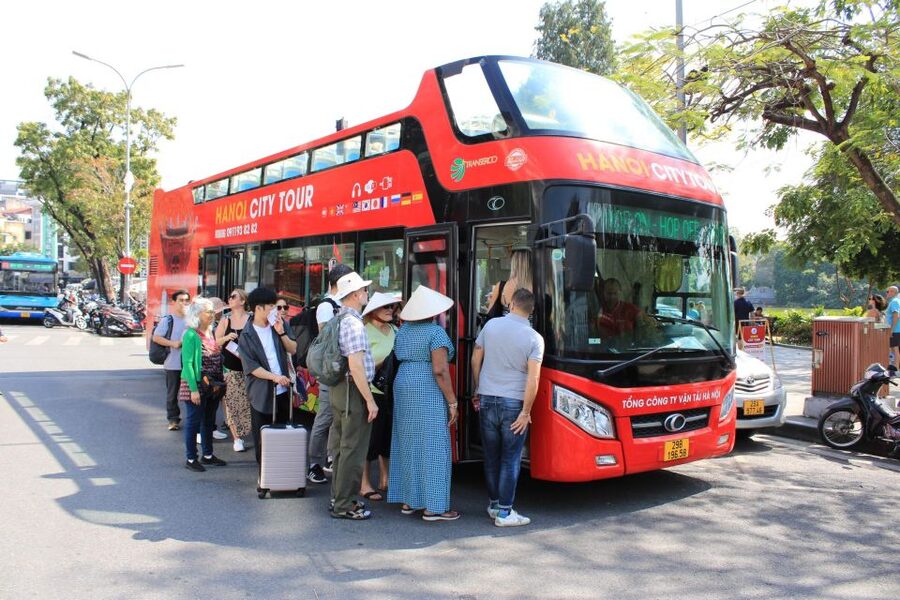
Hanoi’s red double-decker bus gives you a quick way to understand the city’s layout before you tackle it on foot. From the open top, you pass lakes, colonial buildings, temples, museums, and major monuments while an audio guide explains what you are seeing. I especially like the clear audio system and the freedom to get off at the sights that interest you most.
The $13 price is good value if you use the bus as both transport and a sightseeing ride. I also like the practical extras: free water, Wi-Fi, a city map, a conical hat, and a raincoat. The catch is the four-hour limit. Since buses run only until 5:00 pm and the full loop takes about an hour, a late start leaves little time for stops.
Key points to know before boarding
- Four hours begins at first activation, so board early enough to make the ticket worthwhile.
- Buses leave about every 30 minutes, with a full loop lasting approximately one hour.
- The open-top deck gives broad city views, but Hanoi traffic and weather can affect comfort and timing.
- Audio commentary is available in several languages, including English, French, German, Spanish, Russian, Japanese, Korean, and Vietnamese. The booking information also lists Chinese, so confirm the available language when boarding.
- Weekday and weekend meeting points differ, so check the day before heading out.
A practical way to see Hanoi in half a day

Hanoi can feel confusing at first. Streets twist around Hoan Kiem Lake, scooters appear from every direction, and important sights are spread across several neighborhoods. This bus tour gives you a simple first look at the city without asking you to navigate every street immediately.
The ticket is valid for four hours from the moment you first use it. You can remain on board for the full circuit, or hop off at a stop, explore, and catch a later bus. With departures roughly every 30 minutes, the plan is flexible, though traffic can make the schedule less exact.
I would treat the tour as a sightseeing route with transport benefits, not as a private guided tour. The audio guide gives information in multiple languages, but you will not have a guide walking beside you or answering questions at each monument. That makes the experience independent and easy to manage, but less personal than a small-group city tour.
Other ways to fill a day around Hanoi:
- Hanoi Jeep Tour: Food, Culture and Fun by Vietnam Army Jeep
★ 5.0 · 15,222 reviews - Full-Day Ninh Binh Highlights Tour from Hanoi
★ 5.0 · 7,761 reviews - Hanoi: Ha Long Bay Day Cruise – Swimming, Meal, Kayaking
★ 4.7 · 7,415 reviews
Starting at Hoan Kiem Lake or the Opera House
From Monday through Friday, you meet the bus at Dong Kinh Nghia Thuc Square, at 7 Dinh Tien Hoang beside Hoan Kiem Lake. Look for the red double-decker Hanoi City Tour bus and the ticket booth.
On Saturday and Sunday, the meeting point is the Hanoi Opera House. The change matters, especially if you are following a weekday plan on a weekend. Show your printed or mobile ticket to staff when you board.
Hoan Kiem Lake is a useful starting point because it is close to several central sights. You can look across the water, get your bearings, and then let the bus handle the first stretch of the route. The Opera House is another logical starting point, with its grand French colonial design and broad streets around the building.
The bus returns to the meeting point at the end of the circuit. Since the entire loop takes about an hour, you can stay seated for an overview before deciding where to hop off. I recommend that approach if this is your first morning in Hanoi and you are still working out which places deserve your limited time.
Hoan Kiem Lake and Saint Joseph Cathedral

Hoan Kiem Lake is one of Hanoi’s central meeting places and a useful reference point throughout the city. From the upper deck, you get a clear view of the water and surrounding streets. It is also one of the easiest places to begin a walking visit after the bus ride.
Saint Joseph Cathedral gives the route a very different architectural note. Its Gothic appearance reflects Hanoi’s French colonial period, while the streets around it lead into busy central neighborhoods. The bus provides a quick look, but you may want to get off if churches, architecture, or street life interest you.
The audio guide is useful here because passing landmarks can blend together when you are seeing them from a moving vehicle. The sound system has been praised for being especially clear, which matters when traffic noise and city sounds compete with the commentary.
Hanoi Flag Pole and the Imperial Citadel

The Hanoi Flag Pole is one of the city’s recognizable historic markers. It sits within the wider area of the Imperial Citadel of Thang Long, a major stop for anyone interested in Vietnam’s political and military past.
The Imperial Citadel is better suited to a proper visit than a quick photograph from the bus. If you get off here, allow enough of your four-hour ticket for walking around before waiting for another bus. The bus can show you where the site is, but the value comes from seeing the grounds and remains at your own pace.
This is one place where the tour’s time limit becomes important. A full loop uses about an hour, and a visit to the citadel can take more than a quick stop. You cannot see every sight in detail during one four-hour period, so choose two or three priorities rather than trying to collect every stop.
Something completely different for the rest of your time in Hanoi:
- Hanoi: Water Puppet Show Tickets
★ 4.6 · 7,029 reviews - Hanoi Motorbike Tour: Food, Culture and Fun by Vintage Motorbike
★ 5.0 · 6,699 reviews - Hanoi: Guided Food Tour with Train Street Visit
★ 4.9 · 6,239 reviews - Hanoi Cooking Class: Culture, Local Market & Meaning CSR Impact
★ 5.0 · 5,147 reviews
Ho Chi Minh Mausoleum and nearby religious sites
The route also passes the Ho Chi Minh Mausoleum, one of Hanoi’s best-known monuments. Even if you do not get off, the bus gives you a useful view of the area and places the monument within the city’s wider collection of official and historic sites.
Quan Thanh Temple and Tran Quoc Pagoda offer a different side of Hanoi. Quan Thanh is a traditional religious site, while Tran Quoc Pagoda sits by West Lake and is known for its calm setting. The bus lets you connect these places with the city center without arranging separate transport.
Cua Bac Church adds another architectural contrast. In a single ride, you may see religious buildings from different traditions, government monuments, lakeside sites, and colonial structures. The audio commentary helps explain the stops, though you should still check the route on the map so you know where to hop off.
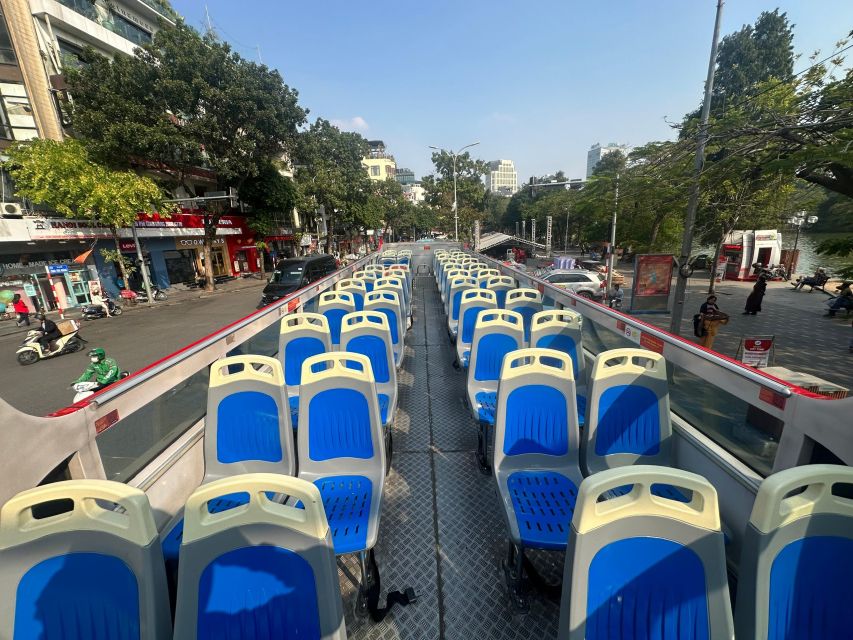
The upper deck is the best place for broad views, especially when the bus is moving through open streets. It is also the more exposed option. Hanoi weather can change, and the supplied raincoat and conical hat are practical additions rather than decoration.
Temple of Literature and Hoa Lo Prison
The Temple of Literature is one of Hanoi’s most important cultural stops. It is associated with learning and Vietnam’s Confucian tradition, and it gives you a quieter, more enclosed experience than the traffic-filled roads outside.
Hoa Lo Prison presents a more difficult chapter of the city’s past. A visit here adds historical weight to the route and helps balance the pleasant sightseeing of lakes, churches, and public buildings. If you are interested in modern Vietnamese history, this is a strong candidate for one of your planned stops.
Both places reward time on foot. You can use the bus to reach them, but the four-hour ticket does not turn each stop into a guided visit. Check the bus timing before leaving the vehicle, and keep track of how much validity remains.
Vietnam Women’s Museum and the Opera House
The Vietnam Women’s Museum provides another cultural perspective, with a focus different from the city’s military and political landmarks. It is a useful choice if you want more than a quick parade of monuments.
The Hanoi Opera House is one of the route’s most prominent architectural sights and the weekend starting point. The surrounding area is also a convenient place to finish or begin a central Hanoi itinerary. The Hanoi Post Office appears on the route as well, giving you another brief look at the city’s colonial-era civic buildings.
The information provided directs you to get off at the Hanoi Opera House. That makes the Opera House a practical reference point, even if you choose to use another stop during the four-hour period. Ask staff on the bus if you are unsure about the current stopping pattern, since traffic, weather, holidays, and road closures can cause sudden route changes.
What the open-top bus is really good at
The strongest part of this experience is orientation. Hanoi has many sights, but they do not all sit in one compact museum district. Sitting above the traffic lets you see how the central lake, government quarter, old streets, religious buildings, and western lake area relate to one another.
I also like the way the bus gives you a break from walking. Hanoi’s sidewalks can be uneven or crowded, and crossing streets takes attention. The bus does not remove traffic delays, but it lets you cover more ground while listening to commentary.
The clear sound system is a real advantage. Poor audio can ruin a sightseeing bus ride, especially when you are trying to follow names and dates. Here, the commentary is offered in English, French, German, Spanish, Russian, Japanese, Korean, and Vietnamese. The booking details also mention Chinese, so ask which recordings are loaded on the bus that day if language choice is important to you.
The free Wi-Fi may help with maps and messages, while water is welcome in Hanoi’s heat. The included map is basic but useful for marking which stops you have seen and which ones you want to revisit on foot.
The four-hour limit and how to use it well
The most important tip is simple: start early. Service operates from 8:30 am to 5:00 pm, but after 5:00 pm the buses continue without stopping, so you cannot hop on or off then. Your four-hour ticket begins at first activation, not at the end of the day.
A late afternoon start may give you only one loop and perhaps one short stop. A morning start gives you more room to remain on the bus, leave at a major sight, explore, and return to the route.
A practical plan could look like this:
- Take the first part of the loop while listening to the commentary.
- Choose one major historical stop, such as the Imperial Citadel, Temple of Literature, or Hoa Lo Prison.
- Rejoin the bus and choose one cultural or architectural stop.
- Finish near Hoan Kiem Lake or the Opera House, depending on the day’s meeting point and route.
Do not plan to visit every attraction in depth. The list includes too many important places for that within four hours. The tour works best when you use it to select highlights, then return independently to the one or two sites you want to explore more carefully.
Price, comfort, and who gets the best value
At $13 per person, this is reasonably priced for a city overview that includes transport, commentary, Wi-Fi, water, a map, a conical hat, a raincoat, and bus insurance. The value is strongest if you stay on for much of the loop and make at least one or two useful stops.
The price is less attractive if you only want a short transfer or if you plan to spend most of the four hours inside museums. In that case, walking or arranging direct transport may be more efficient. The bus is not designed for luggage, and oversize luggage is not allowed.
This tour suits first-time visitors, short-stay visitors, families who need a rest from walking, and anyone who wants a broad view before exploring alone. It is also helpful if you prefer recorded commentary in your own language.
It may not suit you if you want a personal guide, a tightly timed schedule, or a detailed visit to every monument. Hanoi traffic can slow the route, and sudden changes may occur because of road closures, public holidays, weather, or other conditions.
The bus is wheelchair accessible, but the supplied information does not explain boarding details for every stop. If you use a wheelchair, confirm the practical arrangements with the operator before setting out.
Small details that make the ride easier
Bring your mobile ticket and show it each time you board. Keep the map with you after getting off, since the next bus may not arrive at exactly the advertised interval during traffic delays.
Use the upper deck for views, but move downstairs if the weather turns poor. The free raincoat is helpful, and the conical hat offers some sun protection. Drinks are not allowed in the vehicle, and smoking is prohibited.
Pets, bikes, scooters, skateboards, skates, drones, weapons, sharp objects, oversize luggage, alcohol, drugs, and other restricted items are not permitted. Eating and drinking in the vehicle are also restricted, so plan food stops outside the bus.
The service accepts mobile tickets and includes free cancellation up to 24 hours before the activity for a full refund. You can also reserve now and pay later, which is useful when your Hanoi plans may change.
Should you book the Hanoi bus tour?
Book it if you want a low-cost introduction to Hanoi, clear recorded commentary, open-top views, and the freedom to choose a few stops. Start in the morning, sit through at least part of the full loop, and use the remaining time for two carefully selected visits.
Skip it if you prefer slow walking, personal conversation, or detailed guided visits at each site. At $13, the bus is a good orientation tool, but its value depends on using the full four hours and accepting that traffic may alter the schedule. For a first look at Hanoi’s major sights, it is a practical choice.
FAQ
How long is the ticket valid?
The ticket is valid for four hours from the time you first activate it.
What are the operating hours?
The buses operate from 8:30 am to 5:00 pm daily. After 5:00 pm, buses run without stopping, so you cannot hop on or off.
How often does the bus leave?
The bus is scheduled to leave approximately every 30 minutes.
How long does the complete loop take?
The full loop lasts approximately one hour.
Where is the weekday meeting point?
From Monday through Friday, meet at Dong Kinh Nghia Thuc Square, 7 Dinh Tien Hoang, beside Hoan Kiem Lake. Look for the red double-decker bus and ticket booth.
Where is the weekend meeting point?
On Saturday and Sunday, meet at the Hanoi Opera House.
What languages are available for the audio guide?
The listed languages are English, French, German, Spanish, Russian, Japanese, Korean, and Vietnamese. The booking information also lists Chinese, so confirm availability with staff when you board.
Is the bus wheelchair accessible?
Yes, the activity is listed as wheelchair accessible. The supplied information does not specify the boarding arrangements at each stop, so confirm details with the operator if needed.
Just added to the Hanoi list
- (TOP) Private car: Hanoi/Noi Bai Airport (HAN) from/to Ninh Binh★ 3.5 · 16 reviews
- Thang Long Water Puppet Theater★ 4.5 · 45 reviews
- Private car transfer from Hanoi Airport to Hotels★ 4.5 · 5 reviews
- Private Tour Ninh Binh 1 Day★ 5.0 · 5 reviews
- Private Hanoi Old Quarter Food Tour with 8+ Authentic Tastings★ 5.0 · 11 reviews
- Private Transfer Service from Hanoi to Ha Long Bay★ 5.0 · 3 reviews
- Private Transfer Between Hanoi City and Noi Bai Airport (HAN)★ 5.0 · 3 reviews
- Private Tour: Hanoi City Tour Including Water Puppet Show and Cyclo Ride★ 4.0 · 57 reviews
Tours, compared.

Hanoi Jeep Tour: Food, Culture and Fun by Vietnam Army Jeep
Read our review →
Full-Day Ninh Binh Highlights Tour from Hanoi
Read our review →
Hanoi Motorbike Tour: Food, Culture and Fun by Vintage Motorbike
Read our review →

Small Group Hanoi Street Food Tour with a Real Foodie
Read our review →
Ninh Binh Full-Day Tour from Hanoi to Hoa Lu, Tam Coc & Mua Cave Via Boat & Bike
Read our review →
Ninh Binh, Bai Dinh/Hoa Lu, Trang An, & Mua Cave Tour
Read our review →