Reviewed · HALF-DAY
Half-Day Mindfulness Meditation Retreat in Hanoi
A half-day at a Hanoi pagoda offers more than a quiet break from city noise. You’ll take part in Buddhist chanting, learn meditation methods, practice qigong and mindful breathing, and speak with monks about a life shaped by faith rather than possessions. It is a structured spiritual program, not a casual sightseeing stop.
I like the mix of hands-on practice and Buddhist teaching, especially the shift from sutra chanting to walking meditation and quiet reflection. I also like that the program includes a vegetarian lunch and an animal-release ritual, giving the day a clear focus on gratitude and compassion. The main consideration is pace: four hours can feel full if you prefer a relaxed meditation retreat with long periods of silence.
Key points to know before you book
- Four hours in a Hanoi pagoda: The experience stays focused on Buddhist practice rather than general city sightseeing.
- Sutras and Buddhist doctrine: You begin with chanting and lessons about ethics and daily life.
- Several forms of meditation: Expect qigong, mindful breathing, walking meditation, and focused meditation.
- Conversation with monks: Time with monks gives you a chance to ask about Buddhist teachings and monastic life.
- Animal release and vegetarian lunch: These activities connect compassion, gratitude, and ritual with everyday conduct.
- $60 per person: The price includes lunch, while an air-conditioned vehicle is not included.
Four hours of Buddhist practice in Hanoi
This experience is best understood as a guided introduction to Buddhist ritual and meditation. You are not simply shown a pagoda and left to observe. The program asks you to participate, listen, reflect, and practice several methods of calming the body and mind.
The setting matters. A pagoda gives the activities a religious context that a hotel meditation room cannot match. You’ll follow the rules of the pagoda, join in solemn chanting, and hear Buddhist ideas explained as principles for daily life. Some parts may feel unfamiliar, especially if you have never taken part in a Buddhist ceremony before.
The program also has a clear progression. It begins with orientation and ritual, moves into teaching and physical practice, then becomes quieter through meditation. The day closes with compassion, food, gifts, and farewell. That structure helps you understand how Buddhist practice can connect thought, movement, conduct, and community.
More half-day trips from Hanoi:
- Hanoi Half-day with Food + Fun + Culture By Russian Jeep
★ 5.0 · 1,243 reviews - Hanoi City Tour: Private Half-Day Customized with Train Street
★ 5.0 · 455 reviews - Hanoi City Half-Day Private Tour: Train Street And All Highlights
★ 5.0 · 298 reviews
Starting with pagoda rules and sutra chanting
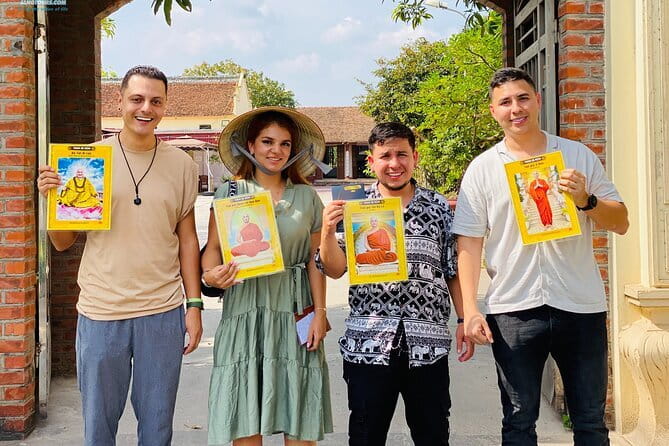
Your first lesson covers the rules of the pagoda. This is useful because Buddhist places of worship often have customs that are not obvious to first-time visitors. Rather than guessing how to behave, you receive an introduction before the main activities begin.
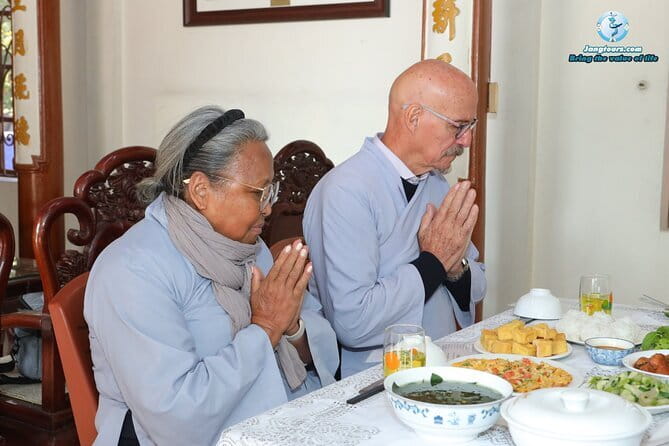
The first major activity is chanting sutras. These texts contain the teachings of Buddha, so the chanting is not presented as a performance. It is a way to listen to Buddhist ideas through sound and repeated words.
You may find this part more ceremonial than the meditation sessions that follow. That is part of its value. Meditation is often presented as a private technique, but here you see it connected to a larger religious tradition. The chanting gives the experience a formal beginning and asks you to slow down before moving into lessons and exercises.
If you are not familiar with Buddhist rituals, do not worry about understanding every word immediately. Pay attention to the rhythm, the setting, and the explanation from the guide. The point is to participate respectfully while learning what the ritual means.
Learning Buddhist ethics for daily life
After the chanting, the program turns to Buddhist doctrine and ethical teaching. The focus is not only on abstract religious ideas. You are encouraged to consider how these principles apply to ordinary life.
The themes highlighted in the program include gratitude, loving-kindness, and compassion. These ideas return later during the animal-release activity and vegetarian meal, so the teaching has a practical thread running through the morning or afternoon.
I like this part because it gives the meditation a purpose beyond relaxation. You are not simply learning how to sit quietly for a few minutes. You are asked to think about how your behavior affects other people and living creatures.
The exact depth of the doctrine lesson will depend on the guide and the group. Still, the schedule clearly makes room for Buddhist teaching before the physical and meditation exercises. That makes this a better choice for someone who wants cultural and spiritual context, not just a wellness session.
Qigong and mindful breathing before meditation
The next stage combines movement with breath. You’ll practice qigong and mindful breathing, both described as activities that support good health.
This is a sensible point in the schedule. A sudden move from chanting and discussion into seated meditation can leave you restless or stiff. Gentle movement gives you a way to settle your body first. Mindful breathing then narrows your attention and prepares you for stillness.
You should not book this expecting a fitness class. The purpose is not strenuous exercise or technical athletic training. It is closer to a calm preparation for meditation, with attention placed on breathing, posture, and awareness.
The qigong portion also broadens your understanding of the program. Buddhist practice here is not limited to silent sitting. It includes the body, breath, voice, and ethical habits. For a first-time participant, that variety helps keep four hours from becoming monotonous.
Something completely different for the rest of your time in Hanoi:
- Hanoi Jeep Tour: Food, Culture and Fun by Vietnam Army Jeep
★ 5.0 · 15,222 reviews - Full-Day Ninh Binh Highlights Tour from Hanoi
★ 5.0 · 7,761 reviews - Hanoi: Ha Long Bay Day Cruise – Swimming, Meal, Kayaking
★ 4.7 · 7,415 reviews - Hanoi: Water Puppet Show Tickets
★ 4.6 · 7,029 reviews
Walking meditation and the art of touching peace

Walking meditation follows the breathing and qigong practice. This is often a helpful introduction for people who find seated meditation difficult. Instead of trying to clear your mind while sitting still, you focus on deliberate movement and present awareness.
The program describes this section as a way to enjoy tranquil moments. Expect a slower, more attentive form of walking rather than a tour around Hanoi. Your attention is directed toward the act of moving, not toward sightseeing.
After walking meditation, you learn meditation methods and ways to focus the mind. The stated aim is true happiness, a phrase that reflects the Buddhist emphasis on mental discipline rather than short-term entertainment.
This part may be the quietest and most inward-looking portion of the retreat. If you want a quick activity with constant explanation, you may find it too still. If you want a chance to practice concentration in a religious setting, it is likely to be one of the more useful sections.
The phrase touching peace captures the intended mood, but do not treat it as a promise of instant calm. Meditation takes practice. You may leave with a better method for focusing your mind, even if you do not reach a perfect state of quiet during the session.
Speaking with monks about a different kind of life

The conversation with monks is described as one of the most anticipated parts of the experience. It gives you a chance to ask about Buddhist doctrine, monastic life, and the decision to give up worldly pleasures.
This personal exchange adds something that a lecture cannot. You can hear how Buddhist ideals relate to the life of someone who has renounced ordinary possessions and social routines. The subject is not simply meditation technique. It is a question of how a person chooses to live.
The conversation also helps place the earlier activities in context. Sutra chanting, ethical lessons, compassion, and meditation are not separate attractions. They are pieces of a religious way of life. Speaking with monks can help you connect those pieces.
No monk names or specific discussion topics are provided, so you should not expect a guaranteed conversation about a particular issue. The value comes from having time set aside for questions and exchange rather than being hurried from one activity to the next.
Releasing animals as a lesson in compassion
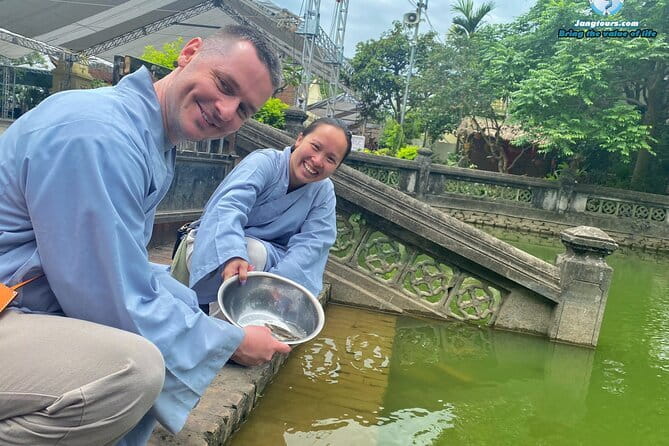
The animal-release activity gives the program a visible expression of compassion. In Buddhist practice, releasing animals can be connected with respect for living beings and the wish to reduce suffering.
Here, the activity follows the teaching and meditation sections. That order matters. You first hear about compassion and loving-kindness, then take part in a ritual intended to express those values.
This is not a wildlife excursion or animal encounter. The point is the act itself and the ethical meaning attached to it. You may find it moving, especially if you appreciate rituals that turn an idea into a physical action.
You should also approach it with the same respect as the chanting. It is a spiritual activity, not a photo opportunity. The program presents it as part of the Buddhist experience, so give it your full attention rather than treating it as a quick extra.
A grateful vegetarian lunch
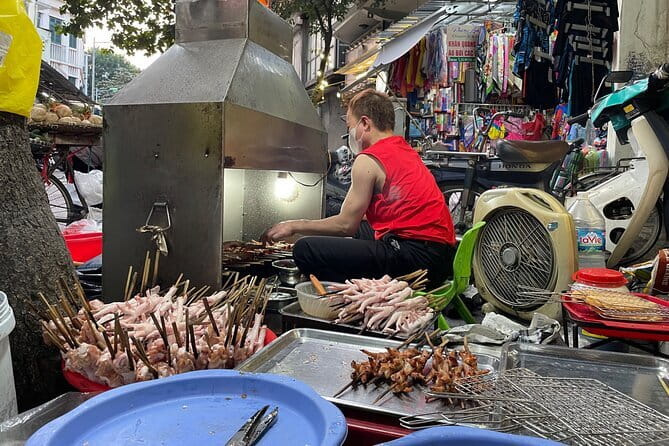
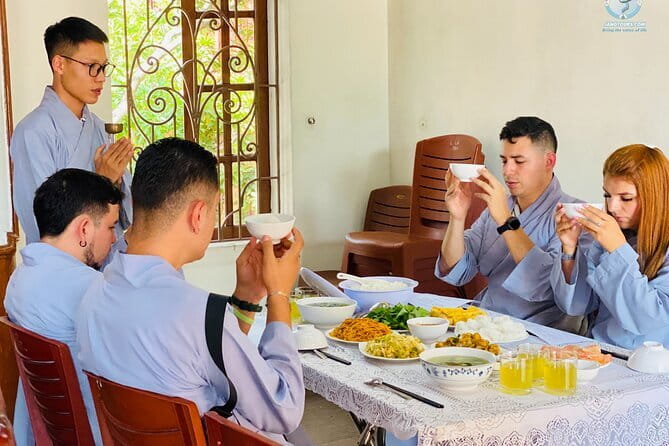
A vegetarian lunch is included in the $60 price. It is more than a practical meal break because the program links eating with gratitude.
After the animal-release activity, sharing a vegetarian meal creates a natural connection between compassion and daily choices. Food becomes part of the lesson. You are invited to receive it with appreciation rather than treating lunch as an interruption.
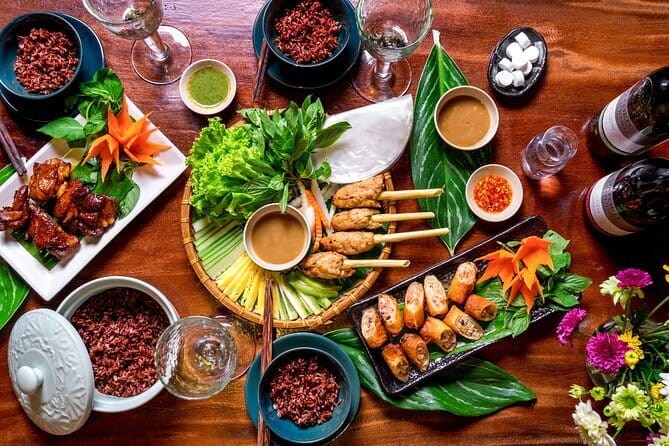
The meal also makes the four-hour schedule easier to manage. You will not need to arrange a separate lunch during the experience. Since the food is vegetarian, this tour may suit you if you already prefer meat-free meals or want to try one in a Buddhist setting.
The menu is not specified, so do not book based on expectations of a particular dish. The reliable detail is that vegetarian food is included. If you have dietary needs beyond that, the available information does not confirm what can be accommodated.
Gifts, farewell, and the value of the final moments
The program closes with an exchange of gifts and a farewell. This gives the retreat a social ending after the quieter meditation and reflection.
Small closing rituals can help mark the difference between an ordinary activity and a special visit. You arrive as a guest learning the rules of the pagoda, take part in its practices, and leave after sharing food and conversation.
The gifts are not described, so their value should not influence your decision. Think of this part as a courteous closing gesture rather than a significant included item.
The ending also reinforces the welcoming side of the experience. You are not expected to master Buddhist practice in four hours. You are given an introduction, time to ask questions, and a respectful way to say goodbye.
Is $60 a fair price?
At $60 per person, this costs more than a simple pagoda visit or a standard meal in Hanoi. The price makes better sense if you value guided instruction, organized rituals, meditation practice, monk interaction, and lunch in one four-hour program.
The included vegetarian meal adds practical value, but the main cost is the structured access to activities you might not arrange independently. You would need to find a pagoda, understand its rules, locate an appropriate meditation session, and arrange time for Buddhist teaching and conversation. This experience brings those parts together.
An air-conditioned vehicle is not included. That matters if you are counting on transport from your hotel or want a fully managed outing. Check how you will reach the pagoda before booking, since the available details do not specify transportation arrangements.
The experience is booked an average of 47 days in advance. That suggests you should plan ahead if your Hanoi dates are fixed. It also means this is not necessarily the sort of activity to leave until the last day of your trip.
A mobile ticket is included as a feature, which makes entry and booking confirmation simple. Still, the practical value depends more on your interest in Buddhist practice than on convenience alone.
Who should book this Hanoi retreat?
I would recommend it to you if you want a thoughtful cultural activity with active participation. It suits first-time visitors to Buddhist practice, people curious about meditation, and anyone who wants a quieter contrast to Hanoi’s regular sightseeing.
It is also a good fit if you like learning through several formats. You’ll chant, listen, move, breathe, walk, sit, talk, eat, and take part in a compassion-focused ritual. The variety gives the half-day a clear rhythm.
You may want to skip it if you are looking only for a short temple photo stop, a sightseeing tour, or a long silent retreat. The schedule is full, and the spiritual elements are central rather than decorative.
Should you book the Half-Day Mindfulness Meditation Retreat?
Book this experience if you want to understand Buddhist practice by taking part in it. The strongest reasons are the combination of sutra chanting, ethical teaching, several meditation methods, conversation with monks, animal release, and a vegetarian meal.
Before you commit, remember the two practical limits: the experience lasts about four hours, and an air-conditioned vehicle is not included. For the right visitor, $60 is a fair price for a guided introduction with lunch and a clear spiritual focus. For someone seeking casual sightseeing, it will likely feel too serious and structured.
FAQ
Where does the mindfulness meditation retreat take place?
The retreat takes place at a pagoda in Hanoi, Vietnam.
How long does the experience last?
The experience lasts approximately four hours.
What activities are included?
You can expect pagoda orientation, sutra chanting, Buddhist doctrine lessons, qigong, mindful breathing, walking meditation, meditation instruction, conversation with monks, animal release, a vegetarian meal, gift exchange, and farewell.
Is lunch included?
Yes. Vegetarian food is included.
Is transportation included?
No. An air-conditioned vehicle is not included.
How much does the retreat cost?
The listed price is $60 per person.
Just added to the Hanoi list
- (TOP) Private car: Hanoi/Noi Bai Airport (HAN) from/to Ninh Binh★ 3.5 · 16 reviews
- Thang Long Water Puppet Theater★ 4.5 · 45 reviews
- Private car transfer from Hanoi Airport to Hotels★ 4.5 · 5 reviews
- Private Tour Ninh Binh 1 Day★ 5.0 · 5 reviews
- Private Hanoi Old Quarter Food Tour with 8+ Authentic Tastings★ 5.0 · 11 reviews
- Private Transfer Service from Hanoi to Ha Long Bay★ 5.0 · 3 reviews
- Private Transfer Between Hanoi City and Noi Bai Airport (HAN)★ 5.0 · 3 reviews
- Ba Be National Park With Boat Trip, Kayaking, Swimming, Trekking And Cycling★ 5.0 · 10 reviews
Half-Day, compared.

Hanoi Half-day with Food + Fun + Culture By Russian Jeep
Read our review →
Hanoi City Tour: Private Half-Day Customized with Train Street
Read our review →
Hanoi City Half-Day Private Tour: Train Street And All Highlights
Read our review →
Private Hanoi City Half-Day Tour with Train Street Visiting
Read our review →
Half-day Explore Bat Trang Ceramic Village by Russian Jeep
Read our review →