Reviewed · SHOW
Hanoi: Quintessence of Tonkin Show – A Cultural Spectacle
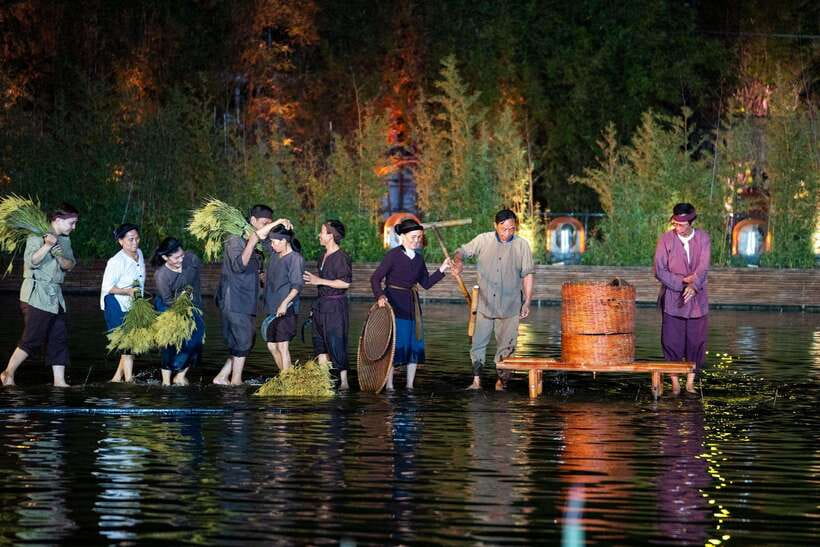
The most striking part of the Quintessence of Tonkin is its stage: a broad outdoor setting with water, lights, music, and nature working together near Thay Pagoda. You are not sitting in a small theater watching a cultural lecture. You are watching rural life, religion, folk customs, and old court traditions unfold across a lake.
I like the show’s strong sense of place, especially its link to Thay Pagoda and Tu Dao Hanh, the monk associated with the pagoda and with the origins of water puppetry. I also like the generous pre-show window, which gives you time to look around and try local snacks. The main consideration is language: the story is made for Vietnamese audiences, so you may not understand every detail without a guide or prior reading.
Key points to know before you go
- Six acts tell a Northern Vietnamese story: The performance moves from village life and water puppetry to examinations, folk religion, and Quan Ho singing.
- The outdoor stage is part of the show: Water, lights, music, and the setting near Thay Pagoda carry as much weight as the performers.
- Arrive by 6:30 PM: The show begins at 7:30 PM, and arriving early lets you explore the venue and buy traditional snacks.
- The performance lasts about two hours: Plan on roughly four hours for the full activity, including arrival, the show, and time afterward.
- The listed price is $42 per person: That can be fair for a large-scale cultural production, but food and transport may cost extra.
- The language may be a hurdle: The visual scenes are easy to follow, but the historical and religious meaning is more rewarding if you read a little beforehand.
A large outdoor stage near Thay Pagoda
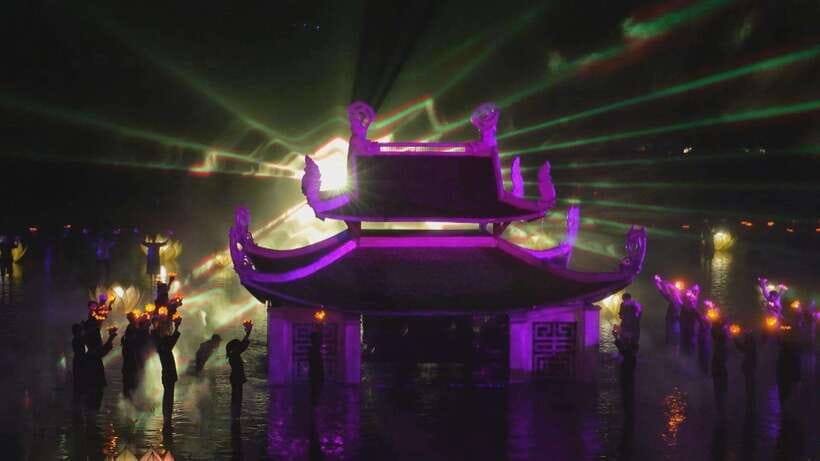
The show takes place at Tinh Hoa Bắc Bộ, at the Baara Land cultural and entertainment area in Đa Phúc Hamlet, Sài Sơn, Quốc Oai, Hanoi. This is outside central Hanoi, so it is not the sort of performance you casually walk to after dinner in the Old Quarter.
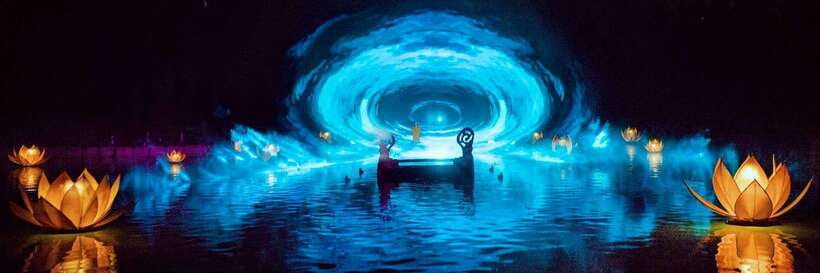
The setting matters. The production is designed around the atmosphere of Thay Pagoda and the old Red River Delta. Instead of placing Vietnamese traditions behind glass, it puts them into motion on an open-air stage. Water becomes a working surface for puppets. A lake becomes a setting for musicians and dancers. Night lighting turns the area into something more theatrical without removing its rural feel.
You should expect a polished production rather than a small village performance. Hundreds of performers are involved, and the stage uses interactive effects, lighting, music, and water. That scale is exciting, but it can also make the experience feel more like a major cultural spectacle than a quiet visit to a pagoda.
The performance is listed as wheelchair accessible. Since the activity is outdoors, you should still confirm the exact seating and route details when booking if mobility access is important to you.
More water puppet shows in Hanoi:
- Hanoi: Water Puppet Show Tickets
★ 4.6 · 7,029 reviews - Hanoi: Water Puppet Show Ticket with Hotel Delivery Add-On
★ 4.5 · 1,554 reviews - Hanoi: Thang Long Water Puppet Show Ticket – Skip The Line
★ 4.6 · 836 reviews
Arriving early for snacks and atmosphere
The show starts at 7:30 PM, and you are advised to arrive at least one hour early. That means aiming for about 6:30 PM. This is not dead time. Outdoor food vendors operate at the venue before the performance, and local snacks and refreshments are available for purchase.
The food is not included in the $42 ticket. Think of it as an optional pre-show stop rather than part of the admission package. You can arrive early, look around, buy something small, and settle into the evening without rushing straight from a car to your seat.
I like this arrangement because it gives the evening a little breathing room. You have time to get your bearings, see the venue in daylight, and notice the pagoda-inspired design before the lights take over. If you are hoping for a full meal, though, do not assume the vendors replace dinner. The information provided only promises a variety of local snacks and refreshments.
The location also creates a practical issue. Transport is not included in the base ticket information, and the meeting point is at the venue. Another part of the activity description refers to inclusive round-trip transfer services, so the transport terms are not fully consistent. Check your exact booking carefully before paying, and confirm if a shared or private transfer is included. If not, you will need to arrange your own way there and back.
Act One: rural life through poetry and folk song
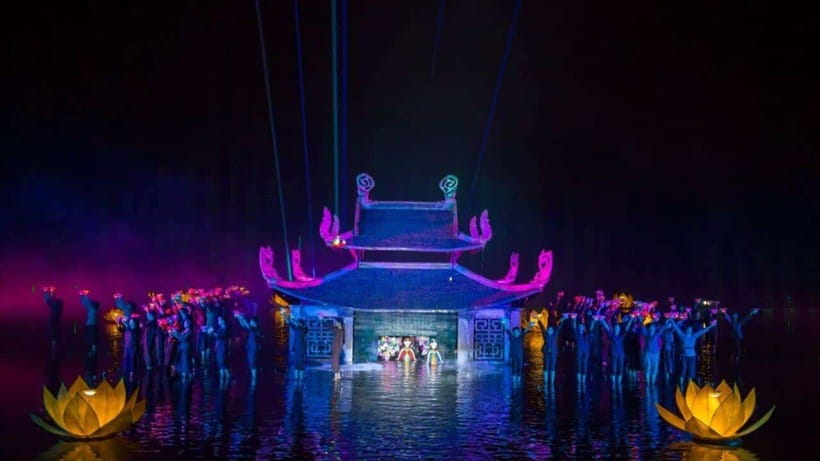
The opening scene takes its inspiration from the poetry of Nguyen Khuyen. It presents traditional rural life in Northern Vietnam, with the folk song Tat Nuoc Dau Dinh and a Tonkin lullaby setting the mood.
This is a useful beginning because it introduces the world before presenting its famous figures and religious stories. You see the countryside as a place of work, music, family customs, and seasonal rhythms. The point is not to explain every historical fact in English. Instead, the production uses movement, sound, and familiar rural images to establish the tone.
If you know only modern Hanoi, this opening gives you a different picture of Northern Vietnam. It turns toward village traditions rather than city life. The visual details should carry the scene even if you do not understand the lyrics.
Act Two: Tu Dao Hanh and the origins of water puppetry
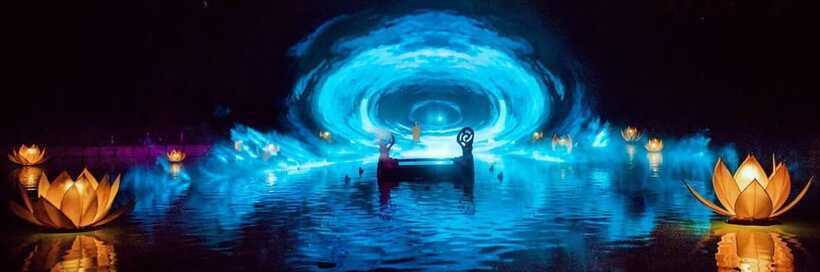
The story then turns to Tu Dao Hanh, the monk connected with Thay Pagoda. The show presents him as a healer, teacher, and creator of water puppetry, one of Vietnam’s best-known traditional art forms.
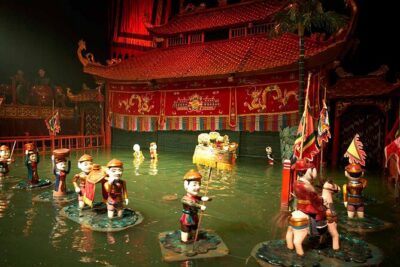
This is the heart of the production for many visitors. Water puppetry is often associated with small pools, wooden puppets, and village performances. Here, the form is part of a much larger stage picture. The water is not simply a prop. It helps tell the story of a spiritual figure whose life connects religion, teaching, healing, and performance.
You may find the religious references harder to follow than the physical action. That is not a flaw in the production so much as a reminder that this show was created for Vietnamese cultural understanding. A little reading about Thay Pagoda and Tu Dao Hanh before you go will help you recognize why this section matters.
The show also points to the long connection between religion and monarchy in Vietnamese history. Those links can be difficult to absorb in one evening, but the performance gives you a memorable visual introduction.
Something completely different for the rest of your time in Hanoi:
- Hanoi Jeep Tour: Food, Culture and Fun by Vietnam Army Jeep
★ 5.0 · 15,222 reviews - Full-Day Ninh Binh Highlights Tour from Hanoi
★ 5.0 · 7,761 reviews - Hanoi: Ha Long Bay Day Cruise – Swimming, Meal, Kayaking
★ 4.7 · 7,415 reviews - Hanoi Motorbike Tour: Food, Culture and Fun by Vintage Motorbike
★ 5.0 · 6,699 reviews
Act Three: the road to the Thang Long examination
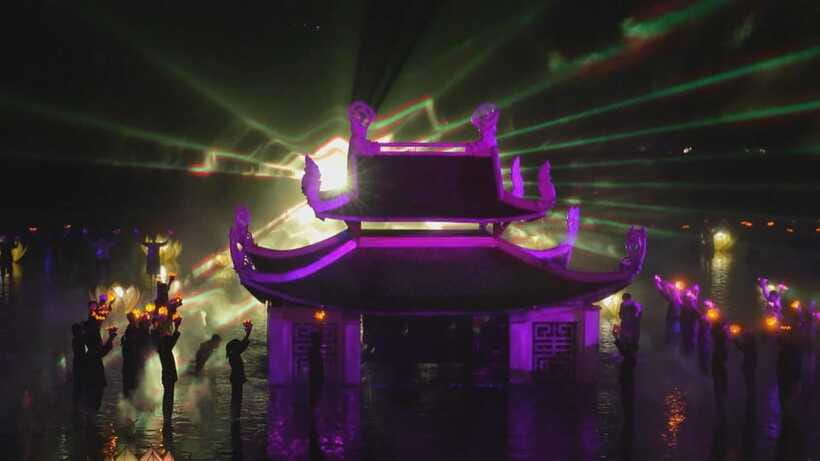
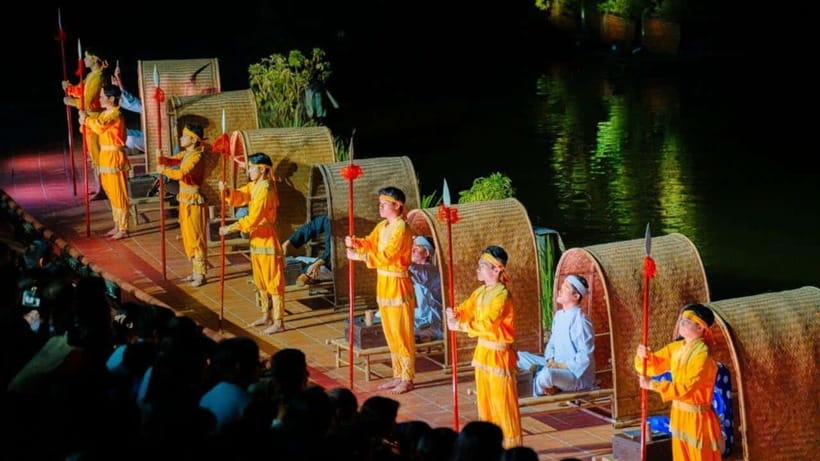
One of the most distinctive scenes follows candidates traveling toward the Thang Long Citadel for the mandarin examination. They carry cloth bags and bamboo tents, evoking the practical hardships of the old academic system.
This section gives the show a welcome change of pace. After the spiritual story of Tu Dao Hanh, you see ambition, study, travel, and social status enter the picture. The examination system was a major path to public office, and the scene shows that education in historical Vietnam was not simply a matter of sitting for a test. Candidates made a journey and lived with the uncertainty of the result.
The cloth bags and bamboo shelters are small details, but they make the scene easier to understand. You are shown the physical life behind an old institution. The result is more human than a formal history lesson.
Look for the contrast between the open stage and the idea of the imperial capital. Candidates travel across a broad rural setting toward Thang Long, making the old journey feel physical and communal.
Act Four: musicians, fairies, and a lakeside scene
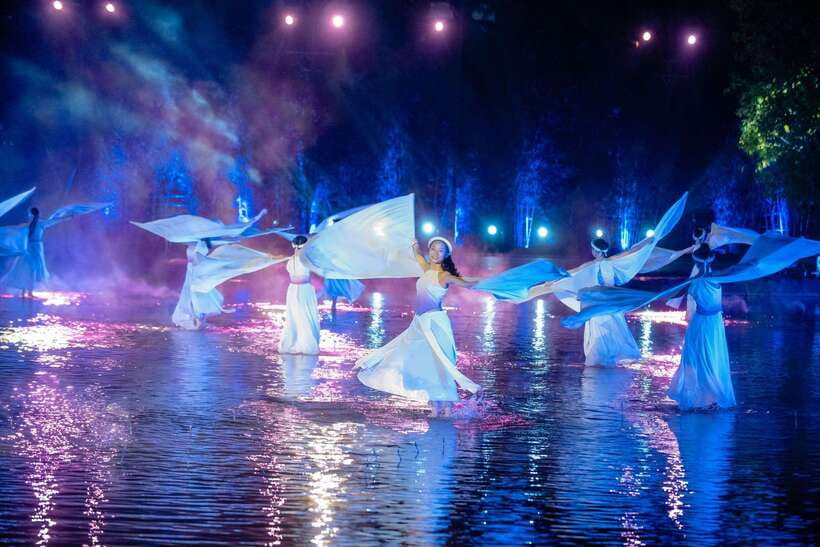
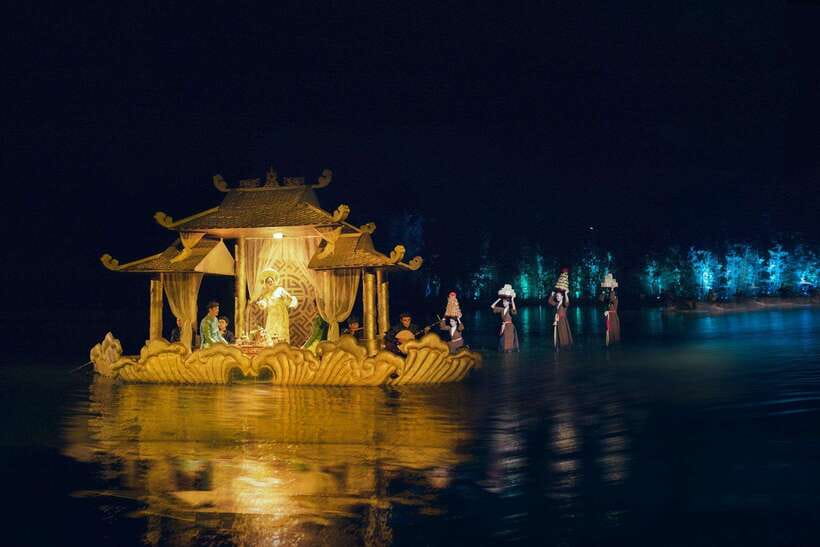
The stage changes into a peaceful lakeside setting, where young women play traditional Vietnamese instruments. The scene draws on the poetry of Ho Xuan Huong and includes fairies dancing over the water.
This is likely to be one of the show’s most visually graceful moments. After the movement of village life and examination candidates, the lake gives the performance space to slow down. Music and dance become the focus, while the water and lighting create a dreamlike setting.
You should not expect a historical reenactment in the strict sense. This act uses poetry, fantasy, and traditional performance styles to create a mood. Its value is visual and musical rather than explanatory.
The natural setting is particularly important here. In a standard indoor theater, a painted backdrop might suggest a lake. At Tinh Hoa Bắc Bộ, the stage uses water and open air to make the setting feel more immediate. The tradeoff is that outdoor performances can be affected by weather and conditions, though no specific weather policy is provided.
Act Five: the Mother Goddess and village spirituality
The fifth act turns to the spiritual lives of Vietnamese villagers. It focuses on worship of the Third Holy Mother and the Mother Goddess, traditions connected with farming, good fortune, and a prosperous life.
This section is valuable because it shows religion as part of everyday community life, not only as something found inside a pagoda. The performance presents rituals and beliefs tied to the hopes of village families. Successful crops, health, and prosperity are part of the same spiritual world.
The Mother Goddess practices shown here are recognized by UNESCO as Intangible Cultural Heritage. That does not mean you will receive a detailed explanation of the tradition during the performance. It means the scene represents a living cultural practice with a recognized place in Vietnam’s heritage.
For a first-time visitor, this may be the act that most benefits from preparation. If you read a short introduction to Vietnamese Mother Goddess worship before arriving, the costumes, gestures, and ceremony will have more meaning. Without that background, you can still appreciate the music and movement, but some of the symbolism may pass quickly.
Act Six: Quan Ho singing brings the night home
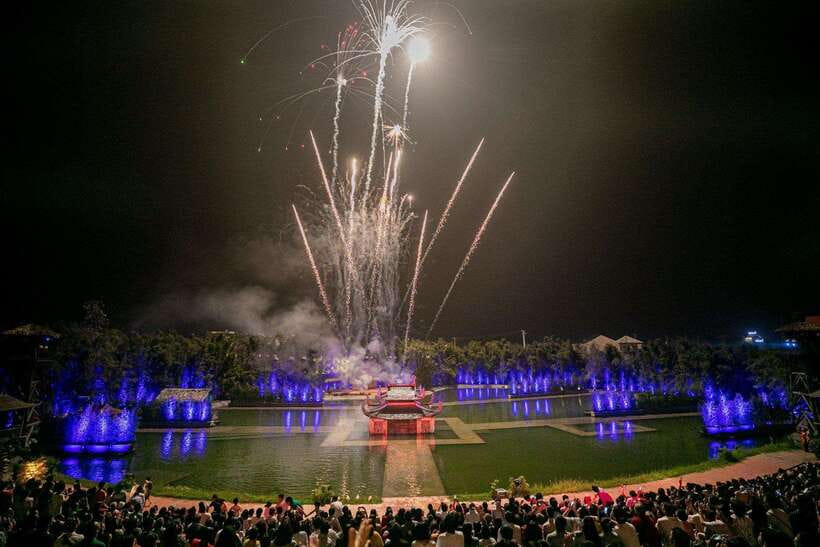
The final act ends with a challenge-and-response singing contest using Quan Ho folk songs. Traditional games, customs, and the Song Loan and Song Dinh processions add to the closing sequence.
Quan Ho is built around exchange. One singer or group offers a line, and another answers. That gives the finale a social quality. It is not only a song performed at you. It reflects the way folk traditions can bring people together through playful competition and shared memory.
The ending also includes the song Nguoi Oi Nguoi O Dung Ve, a farewell that marks the end of the cultural journey. The finale is designed to leave you with a sense of celebration rather than a quiet fade-out.
This closing section may be easier to enjoy than to translate. Even if you do not understand the words, the call-and-response structure is clear, and the procession and games give the ending movement.
What $42 gets you, and what it does not
At $42 per person, the ticket is priced above a simple local performance but below many full evening dinner shows in major Asian cities. The value depends on what you want from a cultural evening.
You are paying for access to a large-scale production with six acts, a purpose-built outdoor stage, water puppetry, lighting, traditional music, dancers, and a setting connected to Thay Pagoda. If you want a polished introduction to several Northern Vietnamese traditions in one sitting, the price is reasonable.
You are not paying for food. Local snacks and drinks at the venue are extra. You also should not assume transport is included, because the practical details say transportation must be arranged separately, while another description refers to round-trip transfers. That difference can change the real cost of the evening.
The ticket is best value for someone who would otherwise spend an evening in Hanoi looking for a cultural activity and wants a single organized event. It is less attractive if you prefer small, informal performances or if you are already planning several traditional shows.
Timing, transport, and the best type of audience
The full activity lasts about four hours, while the performance itself is listed at about two hours. The extra time covers arrival, pre-show food and exploration, and time around the venue after the finale.
This works well as an evening outing, but the distance from central Hanoi means you should plan the return trip before the show begins. The official meeting address is Khu vui chơi và văn hoá Baara Land, Thôn Đa Phúc, Xã Sài Sơn, Quốc Oai, Thành phố Hà Nội. The activity ends back at the meeting point.
I would recommend this show to you if you enjoy music, dance, visual staging, and cultural context presented through performance. It is also a good fit for families and first-time visitors who want more than a short water puppet show in the city.
I would be more cautious if you need a fully translated narrative or prefer a quiet religious visit. The show is large and theatrical. The pagoda-inspired surroundings add calm, but this is still a staged production with a broad cast and strong lighting effects.
The kind staff noted in the available feedback is another small plus. One short comment also praised the beautiful setting, while another said the show felt made for Vietnamese audiences and was difficult to understand but still enjoyable. That is a fair description of the experience: the pictures, music, water, and movement speak clearly, while the historical detail may require extra help.
Should you book the Quintessence of Tonkin?
Book it if you want an ambitious evening of Vietnamese song, dance, water puppetry, religion, and old village customs in one setting. Arrive around 6:30 PM, budget extra for snacks and possible transport, and read briefly about Tu Dao Hanh, Thay Pagoda, and Mother Goddess worship before you go.
Skip it if your priority is a small, intimate show with full English explanation. For everyone else, the production offers a memorable view of Northern Vietnam through sound and spectacle, even when every word is not clear.
FAQ
Where does the Quintessence of Tonkin show take place?
The show takes place at Tinh Hoa Bắc Bộ, at Khu vui chơi và văn hoá Baara Land, Thôn Đa Phúc, Xã Sài Sơn, Quốc Oai, Thành phố Hà Nội.
What time does the show start?
The show starts at 7:30 PM. You are advised to arrive at least 60 minutes earlier.
How long does the activity last?
The complete activity lasts about four hours. The traditional dance performance itself lasts about two hours.
What performances are included?
The show includes six acts featuring water puppetry, traditional music, dance, lights, religious stories, village customs, and Quan Ho folk singing.
Is food included in the ticket?
No. Outdoor food vendors sell local snacks and refreshments before the show, but these purchases are at your own expense.
Is transportation included?
The information provided is inconsistent. One section refers to round-trip transfer services, while the ticket details say transportation is not included and must be arranged separately. Check your booking terms before departure.
Is the venue wheelchair accessible?
Yes, the activity is listed as wheelchair accessible.
Can I cancel the booking?
The booking information says cancellation up to 24 hours in advance may qualify for a full refund, but it also says all sales are final and tickets are non-refundable. Check the specific terms attached to your booking before paying.
Just added to the Hanoi list
- (TOP) Private car: Hanoi/Noi Bai Airport (HAN) from/to Ninh Binh★ 3.5 · 16 reviews
- Thang Long Water Puppet Theater★ 4.5 · 45 reviews
- Private car transfer from Hanoi Airport to Hotels★ 4.5 · 5 reviews
- Private Tour Ninh Binh 1 Day★ 5.0 · 5 reviews
- Private Hanoi Old Quarter Food Tour with 8+ Authentic Tastings★ 5.0 · 11 reviews
- Private Transfer Service from Hanoi to Ha Long Bay★ 5.0 · 3 reviews
- Private Transfer Between Hanoi City and Noi Bai Airport (HAN)★ 5.0 · 3 reviews
- Private Hanoi Food Walking Tour of the French Quarter★ 5.0 · 38 reviews
Show, compared.
Water Puppet Show Ticket with Hotel Delivery Add-On
Read our review →
Thang Long Water Puppet Show Ticket – Skip The Line
Read our review →
Hanoi Water Puppet Show Tickets: Convenient Delivery Service
Read our review →