
Reviewed · INCENSE AND CONICAL HAT VILLAGE TOURS
Hanoi: Conical Hat Village & Incense Village SMALL GROUP
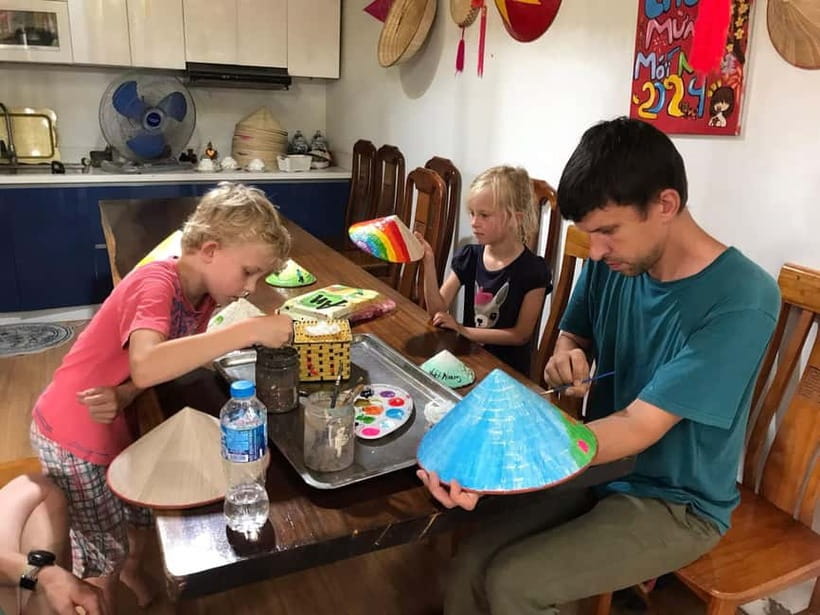
Vietnam’s famous conical hat is not just a souvenir. In Chuong Village, you see how palm leaves, bamboo ribs, thread, and patient handwork become the Non La worn across the country. At Quang Phu Cau, bundles of incense sticks turn the village’s family workshops into a bright lesson in local craft.
I like the hands-on parts best: you can paint one free conical hat and try several steps of incense-making, with incense sticks to take home. I also like the chance to meet Thao, a hat maker who has worked in the craft for 40 years. The main drawback is the transport time, and the half-day option does not include lunch.
Key points to know before booking
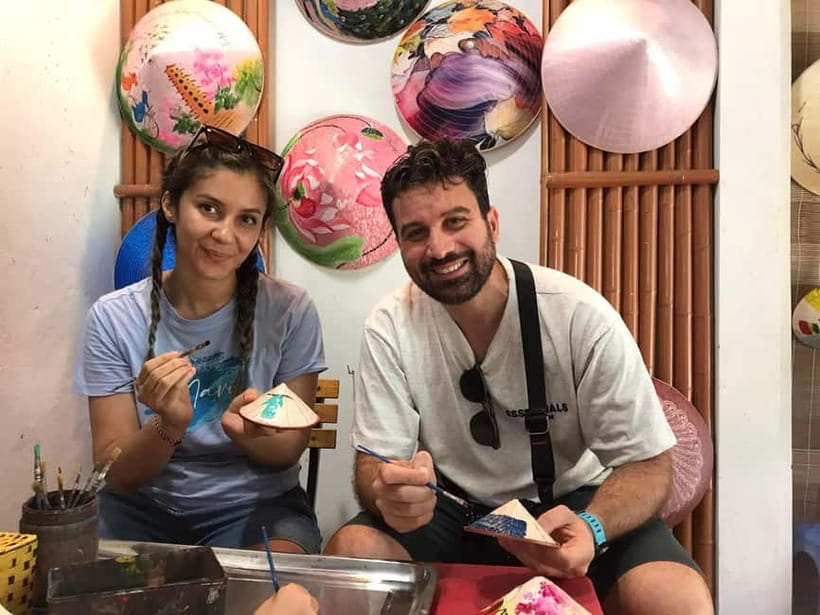
- Make and paint your own Non La: Your free conical hat becomes a useful and personal souvenir.
- Meet Thao near Chuong Pagoda: She explains the craft from the perspective of a lifelong village hat maker.
- See two different traditional crafts: Chuong focuses on palm-leaf hats, while Quang Phu Cau produces incense.
- Try the work yourself: You can take part in hat decoration and some incense-making steps.
- Check the calendar carefully: The Chuong market and special festival run only on certain lunar dates.
- Plan for the half-day format: Bring a snack or eat before leaving, since lunch is included only on the full-day version.
Why these two villages make a good Hanoi side trip
This outing gives you two very different views of rural craft in northern Vietnam. Chuong Village is about careful construction and balance. Quang Phu Cau is about repetition, color, drying, dyeing, and family production.
That contrast makes the day more useful than a single craft stop. You are not only looking at finished products. You see the materials and manual work behind them, then get a chance to handle part of the process yourself.
The tour costs about $15 per person, which is strong value if your price includes hotel pickup in Hanoi’s Old Quarter, entrance fees, a guide, bottled water, the hat-making activity, and incense souvenirs. The exact value depends on whether you choose the half-day or full-day format. The shorter option saves time and money but leaves out lunch and may feel tight if you prefer slow village walks.
This is a small-group experience, with private options also available. Guides can be arranged in English, Vietnamese, Chinese, French, Italian, Japanese, Portuguese, and Spanish. Recent bookings describe guides such as Henry and Hue as friendly and helpful, while one French-speaking guide received praise for explaining the subject clearly.
More incense and conical hat village trips:
- Incense Village, Hat Making & Lacquer Artisan Small Group Hanoi
★ 5.0 · 1,266 reviews - Incense Village, Conical Hat, Lacquer Art, SMALL GROUP From Hanoi
★ 5.0 · 1,170 reviews - Hanoi: Incense Village, Hat, and Lacquer Artisanal Tour
★ 4.6 · 1,005 reviews
Chuong Village and the making of a conical hat
The first major stop is Chuong Village, known for making Non La, the traditional Vietnamese conical hat. The shape is instantly recognizable, but the construction is more careful than it first appears.
A hat has two main parts: the frame and the leaves. The frame uses bamboo split into long, narrow pieces. The bamboo is soaked in water and then dried in the sun before it can be shaped and fitted.
The leaves come from a palm known as lá lụi. They are sourced from forests in Quang Binh and Thanh Hoa. Choosing the right leaves matters, because poor-quality leaves can affect the appearance and durability of the finished hat.
You see the green palm leaves being processed and dried during the dry season. This part helps you understand why the craft is tied to weather and timing. A hat is not made from one ready-to-use material. The leaves need preparation, and the bamboo needs its own treatment before the artisan can begin sewing and shaping.
Artisans may add red or pink silk to the hat. Some hats receive embroidered flowers, birds, or other designs. These details turn a practical item into a fashion accessory, especially for Vietnamese women.
Originally, the Non La helped protect people from strong sun and rain. It still does that job, but it also carries a clear cultural meaning. Seeing the hat made by hand gives you a better sense of why it remains such a familiar part of Vietnamese life.
Meeting Thao beside Chuong Pagoda
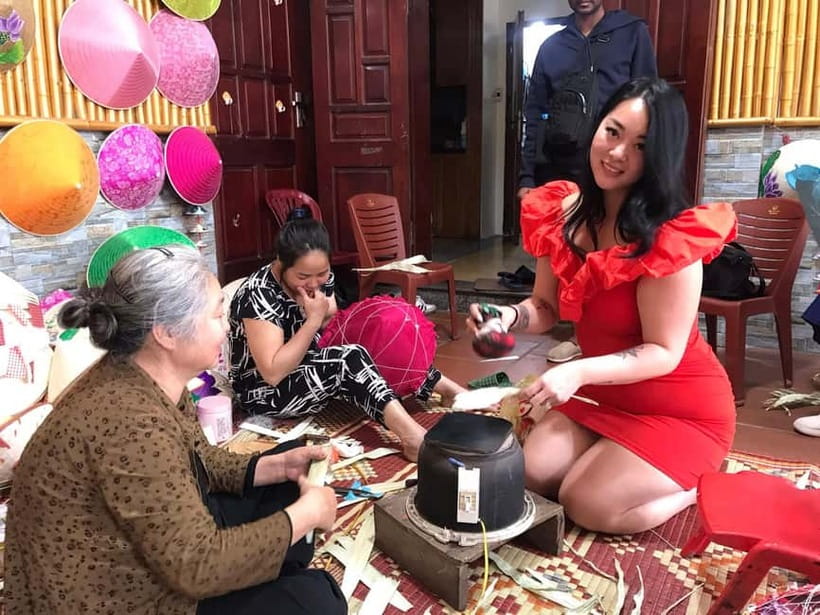
A particularly worthwhile part of the visit is meeting Thao at her home opposite Chuong Pagoda. She has made conical hats for 40 years, and her family has practiced the craft for several generations.
Her experience adds a human scale to the process. You are not just watching an anonymous production line. You hear how someone can grow up surrounded by hat-making and begin working as a child.
Thao explains that the craft requires skill and patience. That is easy to believe once you see how the leaf and bamboo sections must work together. The finished hat looks simple, but its clean shape depends on many small decisions.
The stop also helps you understand the village as a working place rather than a staged display. Families make hats as part of a long local tradition, and the techniques have been passed from one generation to the next.
You should expect a practical demonstration rather than a museum lecture. The most interesting details are the materials, the preparation, and the small decorative choices. If you enjoy craft, design, photography, or everyday culture, this is likely to be the strongest part of the day.
Painting your own hat in Chuong
You receive one conical hat to paint and take home. This changes the visit from simple observation into a short creative activity.
Your finished hat will be a souvenir, not a professional piece of village workmanship, so do not approach it as a test of artistic ability. The value is in understanding the object by working on it yourself.
The activity also gives you something more useful than a generic shop purchase. You know where the hat came from, how it was prepared, and how much handwork goes into the basic form.
Chuong’s market is another possible highlight, but timing matters. It takes place only on specific lunar dates. The special festival is held on the 10th day of the third lunar month, so you should not assume either event will be operating during your visit.
If the market date matches your plans, you can see hats for sale in their local setting. If not, the artisan visit and hands-on painting still provide the main cultural experience. Check the lunar calendar before booking if the market is important to you.
Something completely different for the rest of your time in Hanoi:
- Hanoi Jeep Tour: Food, Culture and Fun by Vietnam Army Jeep
★ 5.0 · 15,222 reviews - Full-Day Ninh Binh Highlights Tour from Hanoi
★ 5.0 · 7,761 reviews - Hanoi: Ha Long Bay Day Cruise – Swimming, Meal, Kayaking
★ 4.7 · 7,415 reviews - Hanoi: Water Puppet Show Tickets
★ 4.6 · 7,029 reviews
Quang Phu Cau and the colorful incense bundles

From Chuong, the tour continues to Quang Phu Cau, a village that has produced incense for more than 100 years. The work here looks very different from hat-making.
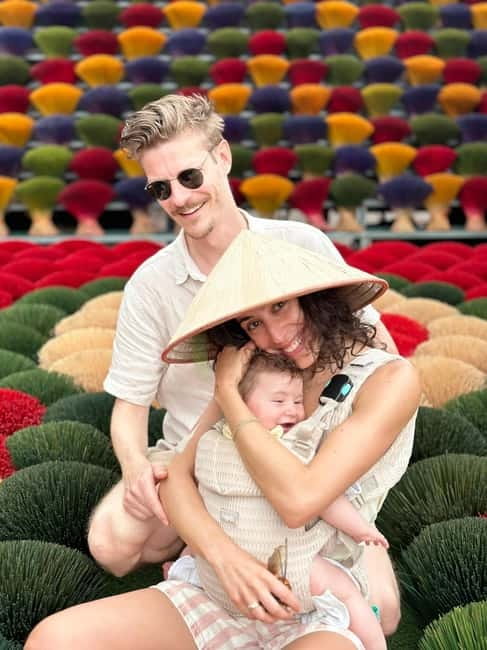
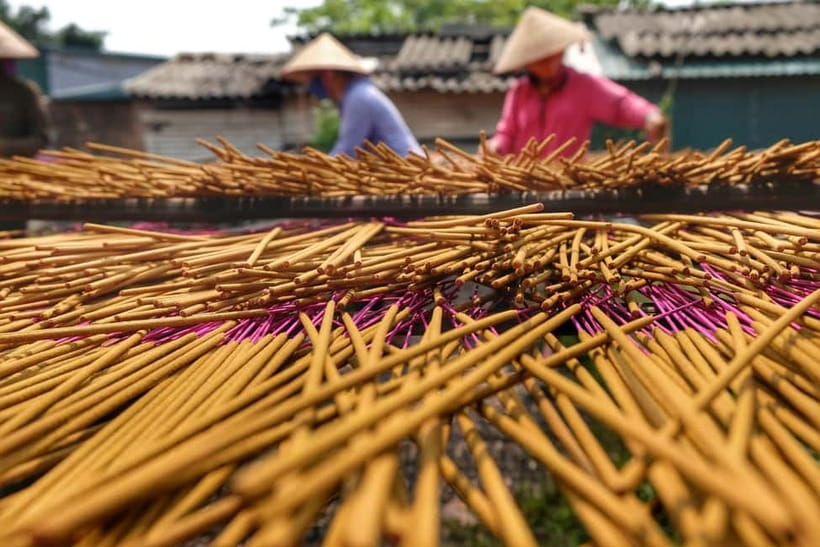
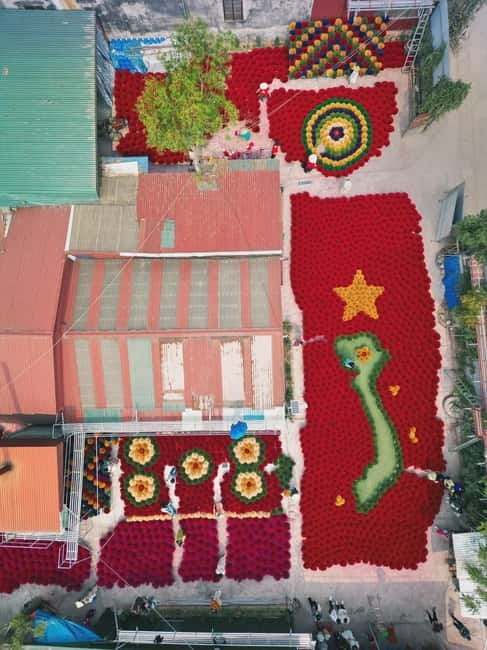
You walk toward the center of the village and see incense being made on a family scale. One family specializes in dyeing the incense sticks, creating the colored bundles that make this stop so appealing for photographs.
The color is part of the visual interest, but the production process matters more than the photo opportunity. You see how manual work remains central to the finished incense. The activity gives you a closer look at the labor behind a product that many people encounter only after it reaches a shop or temple.
A nearby factory adds another layer to the visit. There, the guide explains how incense is made from the beginning and talks about the lives of manual workers.
It is worth keeping your expectations realistic. The village experience may include a small arranged area used for displaying the colored sticks, rather than a broad rural scene. One recent booking described the display as an artificial field between concrete walls and felt it would have limited interest without the factory visit and the chance to see production.
That is useful advice. Treat Quang Phu Cau as a working craft stop with strong visual appeal, not as an untouched countryside attraction. The family workshop and factory explanation are the important parts.
Trying the incense-making process

You get to try several steps of incense production yourself. This is one of the best reasons to choose this tour instead of simply hiring a car to take photographs.
The work gives you a better sense of the repeated manual effort involved. Even a short attempt can show why the finished bundles represent hours of routine, accuracy, and coordination.
You also receive some incense sticks after making them. They are light, easy to pack, and more meaningful than a random market purchase because you handled part of the process.
Bring a camera if you like photography, but do not let the photo stop replace the explanation. Ask your guide to clarify which parts are done by family workshops and which are handled in the larger factory. That comparison helps you understand how older household production connects with more organized manufacturing.
The incense stop also brings you closer to the working lives of local people. It is not only about colorful bundles arranged for pictures. You see a product being prepared, dyed, dried, and handled by people who rely on the trade.
Transport, timing, and the half-day choice

The experience lasts about six hours for the half-day version, while the full-day format can extend to a full day. Hotel pickup and drop-off are provided in the Hanoi Old Quarter area.
The road journey is an important part of your planning. One booking described a two-hour drive and difficulty asking the driver for a toilet stop because the driver spoke little English. The guide helped by text, but you should use a restroom before departure and keep basic needs in mind during the ride.
The driver and guide may not have the same level of English. Guides are available in several languages, but one review specifically noted that communication with the driver was limited. Keep your guide’s contact details available, and tell the guide early if you need a stop.
The first city drop-off is Hanoi Train Street. If you do not want to get off there, you can remain on the bus. If you do stop, you are responsible for arranging your own taxi or Grab ride back to your hotel after spending time at Train Street.
The half-day tour does not include lunch. Eat before leaving or bring snacks, especially if your visit runs through the afternoon. The full-day option includes a home-cooked Vietnamese meal at a local artisan’s home, with vegetarian and non-vegetarian food served.
Who will enjoy this tour most
I would choose this experience if you want an affordable outing that includes more than sightseeing from a vehicle. The hat painting and incense-making give you a reason to pay attention, and the artisan meetings add context to the finished products.
It suits first-time visitors who want to see a side of northern Vietnam beyond central Hanoi. It also works well for families, photographers, craft enthusiasts, and anyone looking for small souvenirs that connect to a real production process.
The tour may be less satisfying if you want a quiet, unstructured village walk. The schedule includes two production stops, a return drive, and a city drop-off. Quang Phu Cau can also feel more arranged than rural, especially in the colorful display area.
The experience is listed as wheelchair accessible, but the activity involves village and workshop visits. If you use a wheelchair, confirm the exact vehicle and access arrangements when booking, particularly for individual artisan homes.
Price, guides, and overall value
At $15 per person, this is inexpensive for a guided day outside Hanoi. The price includes entrance fees, bottled water, local guiding, hotel pickup and drop-off in the Old Quarter, a painted hat, and incense souvenirs. Those inclusions make it better value than the headline price alone suggests.
The strongest praise has gone to the guides. Henry was described as especially good, and Hue was praised for taking many photographs during the incense activity. Another guide was praised for speaking French very well and explaining the subject clearly.
Your experience will depend partly on which guide leads your departure, but the multilingual guide pool is a useful feature. English, Vietnamese, Chinese, French, Italian, Japanese, Portuguese, and Spanish are listed as available languages.
The average rating is 4.8 from 10 reviews, with most scores at five out of five. The one consistent concern to keep in mind is not the craft content itself. It is the long transfer, limited driver communication, and the possibility that the incense display feels more photographic than traditional.
Free cancellation is available up to 24 hours before departure, and you can reserve while paying later. A Lunar New Year surcharge of 250,000 Vietnamese dong per person applies from February 16 to February 19, 2026.
Should you book this Hanoi craft tour?
Book it if you want a low-cost, hands-on introduction to two Vietnamese crafts and do not mind spending time on the road. The free painted hat, incense activity, artisan homes, factory visit, and local guide make this more useful than a quick photo stop.
Choose the full-day option if you want the home-cooked meal and a slower pace. Choose the half-day version if your Hanoi schedule is tight, but eat first and bring water or snacks.
I would skip it only if your main goal is an untouched rural village or a guaranteed local market day. For craft, culture, simple souvenirs, and a practical trip outside the city, this experience offers a lot for the price.
FAQ
How long does the tour last?
The half-day option lasts about six hours. A full-day option is also available, and starting times depend on availability.
Is lunch included?
Lunch is not included on the half-day tour. The full-day option includes a home-cooked Vietnamese meal at a local artisan’s home, with vegetarian and non-vegetarian dishes available.
Can I make my own conical hat?
You receive one free conical hat to paint in the hat village and take home as a personalized souvenir.
Can I make incense during the visit?
Yes. You can try several steps of the incense-making process and receive some incense sticks afterward.
Does the tour visit the Chuong Village market?
The market operates only on specific lunar dates. The special festival takes place on the 10th day of the third lunar month, so neither event is guaranteed on every departure.
Where does the tour pick up and drop off?
Hotel pickup and drop-off are provided for hotels in Hanoi’s Old Quarter area. The first city drop-off is Hanoi Train Street, and you can stay on the bus if you do not want to get off there.
Just added to the Hanoi list
- (TOP) Private car: Hanoi/Noi Bai Airport (HAN) from/to Ninh Binh★ 3.5 · 16 reviews
- Thang Long Water Puppet Theater★ 4.5 · 45 reviews
- Private car transfer from Hanoi Airport to Hotels★ 4.5 · 5 reviews
- Private Tour Ninh Binh 1 Day★ 5.0 · 5 reviews
- Private Hanoi Old Quarter Food Tour with 8+ Authentic Tastings★ 5.0 · 11 reviews
- Private Transfer Service from Hanoi to Ha Long Bay★ 5.0 · 3 reviews
- Private Transfer Between Hanoi City and Noi Bai Airport (HAN)★ 5.0 · 3 reviews
- Ba Be National Park With Boat Trip, Kayaking, Swimming, Trekking And Cycling★ 5.0 · 10 reviews
Incense and Conical Hat Village Tours, compared.
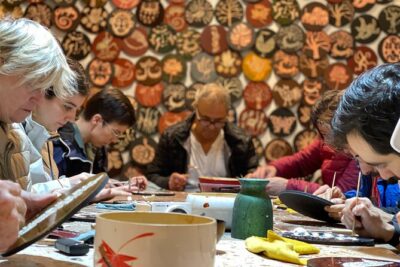
Incense Village, Hat Making & Lacquer Artisan Small Group Hanoi
Read our review →
Incense Village, Conical Hat, Lacquer Art, SMALL GROUP From Hanoi
Read our review →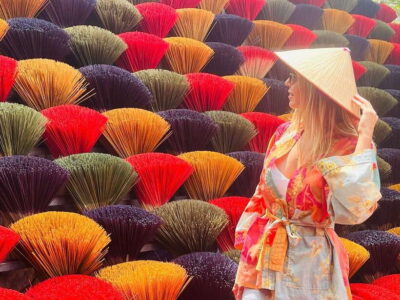
Incense Village, Hat, and Lacquer Artisanal Tour
Read our review →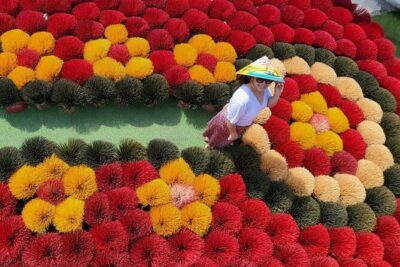
Incense Village Small Group of 9 Tour From Hanoi to Ninh Binh
Read our review →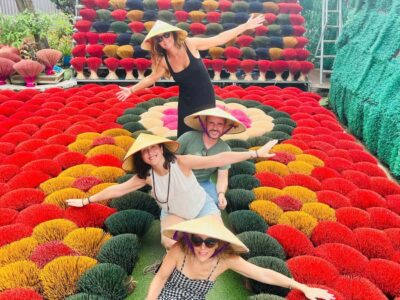
Incense Village, Hat, Lacquer Tour & City Highlights
Read our review →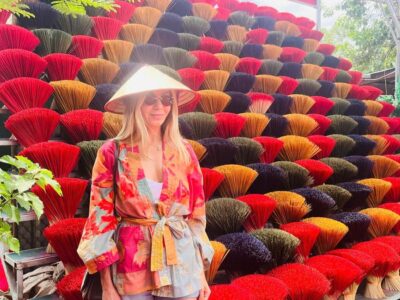
Incense Village, Hat, Lacquer, & City Highlights Tour
Read our review →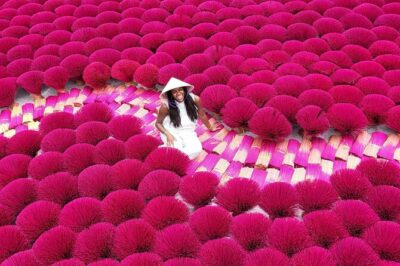
Instagram Incense Quang Phu Cau Village Tour with Train Street
Read our review →
INCENSE Villages & Ha Noi City Full Day guided Tour with Lunch
Read our review →Browse the lists this tour appears in