
Reviewed · HANOI
Vietnam War: Uncovering Hanoi’s Untold Stories
Hanoi’s war story looks different when you leave the grand monuments behind. This three-hour walk takes you through the Cho Gioi area, a former black-market district, a communal housing project, the Kham Thien B52 memorial, and the quieter end of Train Street. The focus is ordinary life during division, war, planned economy, and reunification.
I like the local scale of the tour and the way guides such as Kien and Dung turn history into conversation rather than a speech. I also like the chance to see places most visitors miss, including the air market and a housing block. The main consideration is that this is a walking history tour, not a parade of major war museums, so visitors expecting many formal military sites may want to add those separately.
Key points to know before booking
- Three hours with a short taxi ride: The route combines walking with one brief vehicle transfer, then returns to the starting point.
- Cho Gioi and the air market: You see a working local district and hear how trade and daily survival changed under the planned economy.
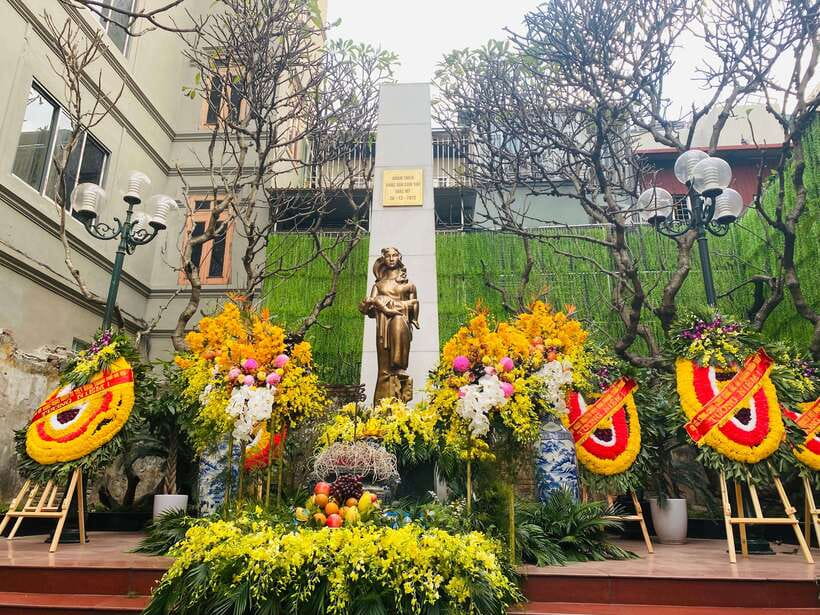
- Kham Thien B52 memorial: This stop recalls the Christmas bombings and the civilian cost of the war.
- Stories from both North and South: The tour addresses division, communism, anti-communism, reunification, and the effects on families.
- Train Street with a drink: Coffee or tea is included, and the final stop offers a relaxed place to talk and watch the railway setting.
- A small social contribution: Twenty percent of profit goes to the Vietnam Association for Victims of Agent Orange/Dioxin and Blue Dragon Children’s Foundation in Hanoi.
Why this Hanoi walk feels different
Many Hanoi tours begin with royal buildings, temples, or French colonial streets. This one begins with the lives of people who had to manage shortages, political change, separation from family, and the difficult years after war.
I like that the tour does not treat the Vietnam War as a single chapter with a simple ending. You hear about Vietnam divided between North and South, the pressures of the Cold War, the 1975 reunification, and the planned economy that shaped daily life afterward.
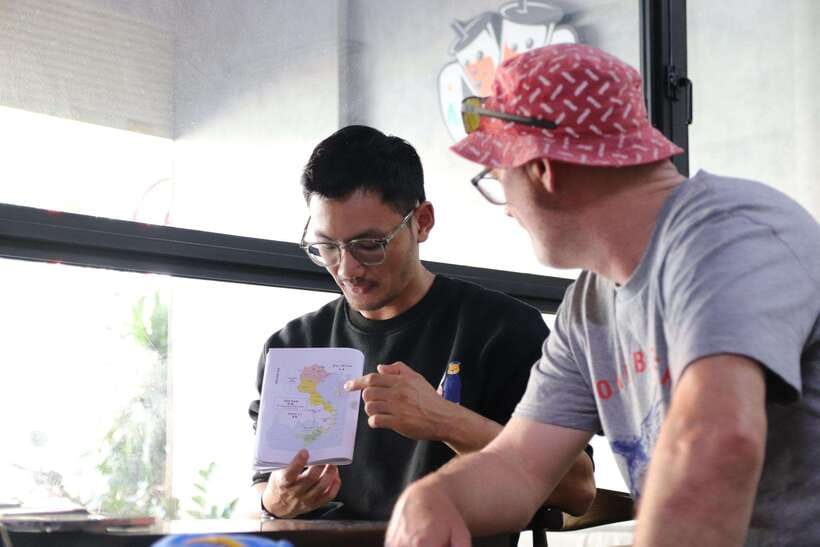
The guide’s role matters here. Kien is especially strong at explaining national events alongside local life, and his English is described as clear and easy to follow. Dung, Cong, and Quang have also led this experience, so the exact tone may vary by departure. The common thread is a relaxed conversation where you can stop and ask questions.
That format suits me better than a long lecture. You are encouraged to ask how political decisions affected housing, food, work, trade, and families. The history becomes easier to understand because it is tied to streets and buildings you can actually see.
Other ways to fill a day around Hanoi:
- Hanoi Jeep Tour: Food, Culture and Fun by Vietnam Army Jeep
★ 5.0 · 15,222 reviews - Full-Day Ninh Binh Highlights Tour from Hanoi
★ 5.0 · 7,761 reviews - Hanoi: Ha Long Bay Day Cruise – Swimming, Meal, Kayaking
★ 4.7 · 7,415 reviews
Starting near Chua Vua Street
The meeting point is at 24B Chua Vua Street, about 2.5 kilometers from Hoan Kiem Lake and roughly 3.5 kilometers from the Hanoi Old Quarter. Look for Trường Trung học cơ sở Đoàn Kết, a secondary school. A coffee shop and second-hand bicycle shops are nearby.
Give yourself time to find the spot. This is not a meeting point at a famous square or a major hotel entrance. If you are staying around the Old Quarter, you will need to arrange your own way there before the tour starts.
The location makes sense for the experience. You begin away from Hanoi’s most polished sightseeing zone, in an area where everyday commerce and neighborhood life set the scene. Wear comfortable shoes and breathable clothes. Hanoi can feel hot, and the walk includes local streets rather than a neatly paved sightseeing circuit.
The tour runs in rain or sunshine. Check the forecast the day before and carry an umbrella or raincoat if needed. A wet-weather plan matters because much of the experience takes place outdoors.
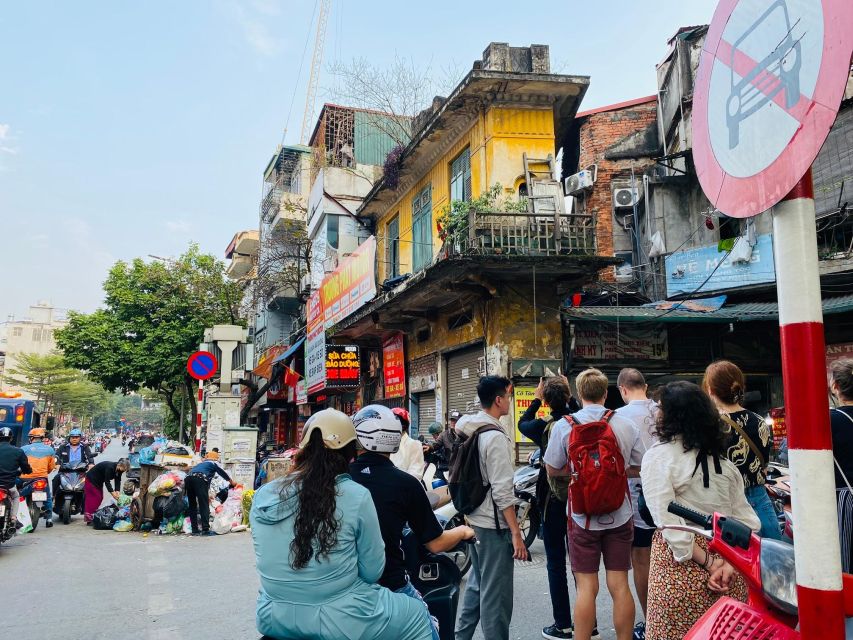
Cho Gioi, the black market, and the air market
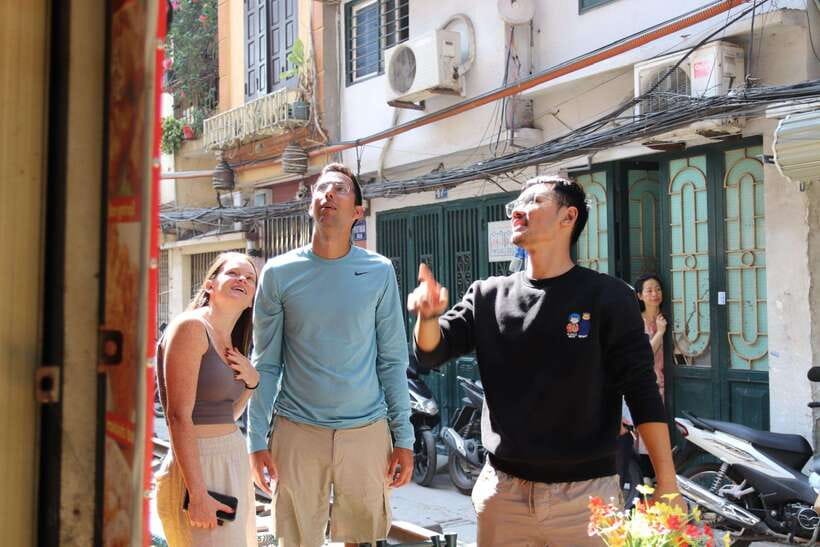
The first major section takes you into the Cho Gioi area, also described as the black market or air market. The point is not simply to look at stalls. Your guide uses the district to explain how people found goods, traded, and adapted during years when the state controlled much of the economy.
This is one of the strongest parts of the walk for anyone curious about daily life. Official history often tells you when governments changed. A market helps explain what those changes meant on the ground.
You may see a side of Hanoi that has little to do with the city’s usual tourist route. One visitor described being the only tourist in the market area. That is useful context: this is a working neighborhood, not a set built for sightseeing.
Your guide will help you read the place. You can ask about the planned economy, shortages, informal trade, and the ways local people managed. The value comes from the connection between the physical market and the larger political story.
Do not expect a shopping stop designed around souvenirs. The market is included as a window into Hanoi’s social and economic past. It may feel rougher and less organized than central Hanoi, which is precisely why it can be revealing.
A look inside communal housing
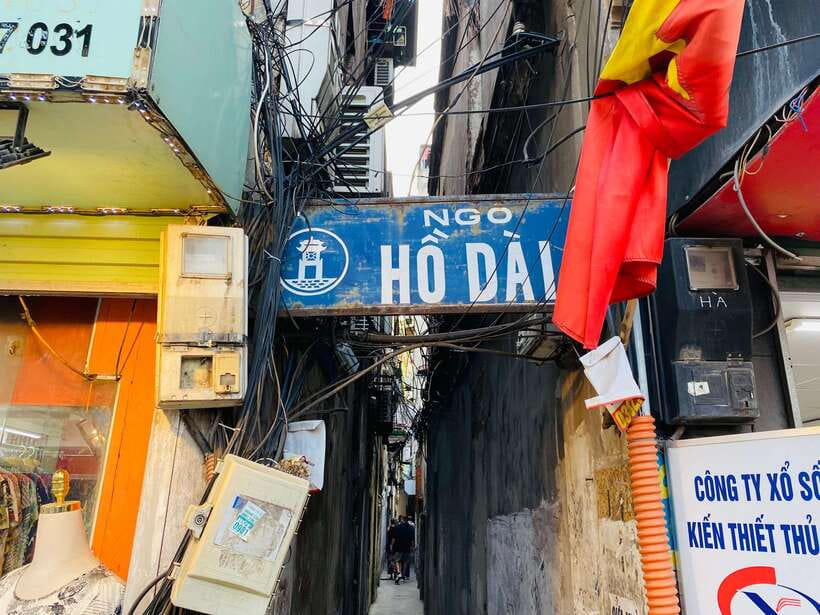
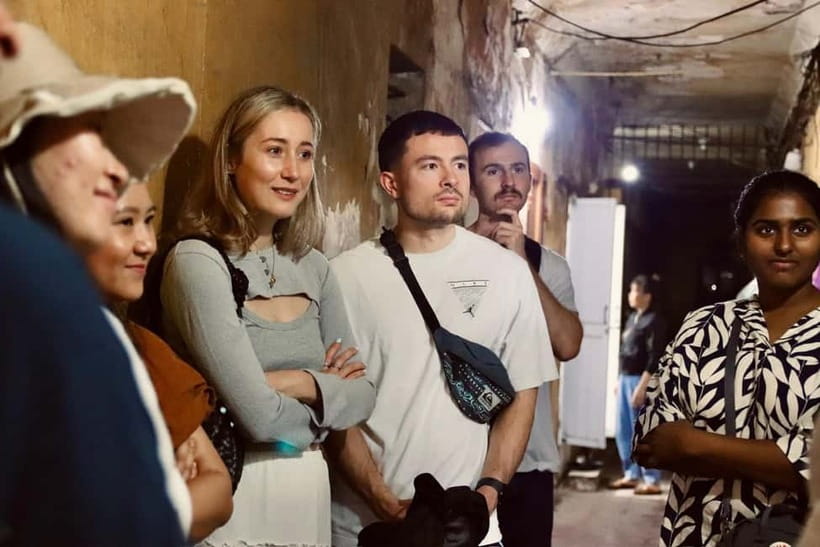
The walk also includes a communal housing project. This gives you a close view of another part of life shaped by the postwar system.
The housing stop is valuable because it moves the discussion from public events into private space. A memorial tells you about loss. A housing block can show how families lived, how shared buildings functioned, and how an earlier system left marks on the city.
Access to this kind of place is not something you would normally arrange alone as a short-term visitor. Your guide provides the local connection and explains what you are seeing without asking you to treat the neighborhood like a museum.
Be respectful here. People live in these buildings, and the point is understanding the community, not photographing every doorway. If you prefer only formal monuments and official displays, this part may feel less structured. If you want to understand Hanoi beyond its postcard views, it is one of the most useful stops.
Something completely different for the rest of your time in Hanoi:
- Hanoi: Water Puppet Show Tickets
★ 4.6 · 7,029 reviews - Hanoi Motorbike Tour: Food, Culture and Fun by Vintage Motorbike
★ 5.0 · 6,699 reviews - Hanoi: Guided Food Tour with Train Street Visit
★ 4.9 · 6,239 reviews - Hanoi Cooking Class: Culture, Local Market & Meaning CSR Impact
★ 5.0 · 5,147 reviews
Kham Thien and the memory of the B52 attacks
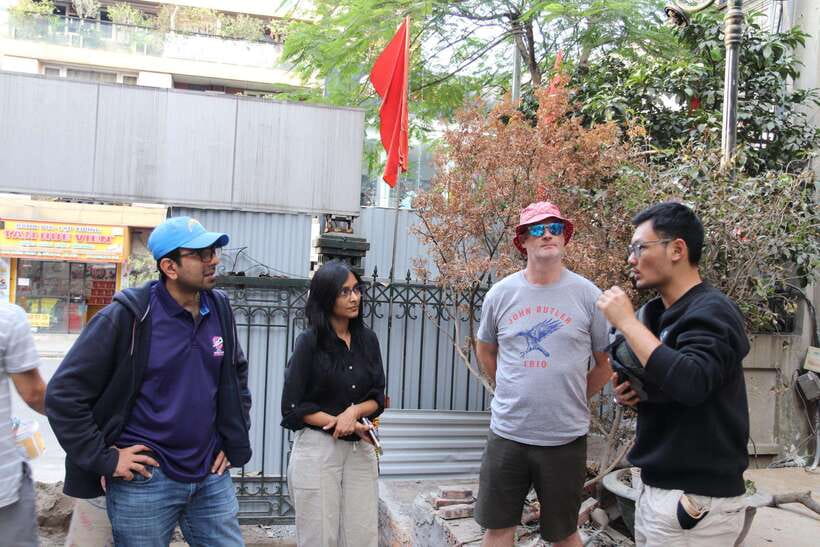
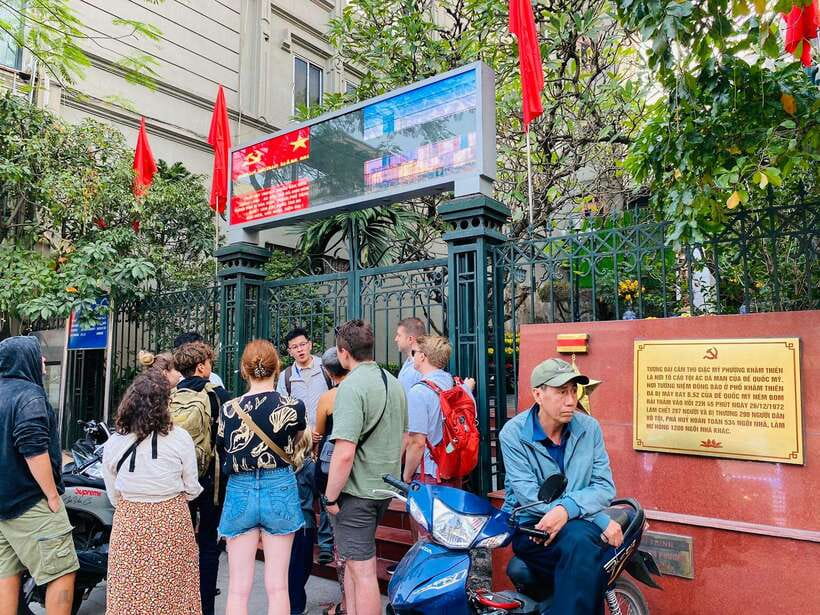
The Kham Thien War memorial recalls the Christmas bombings, a painful part of Hanoi’s wartime story. The memorial gives the tour a more solemn pause after the market and housing sections.
This is where the walk connects local streets to the larger air war. You are not looking at a vast museum collection. Instead, the memorial focuses attention on civilian suffering and the effect of bombing on a neighborhood.
That smaller scale can be powerful. A national timeline may tell you about military operations, but a local memorial asks you to think about homes, families, and people caught in the middle.
The tour also places this event within the broader conflict. It addresses the divided country, the competing political systems, and the Cold War pressures around Vietnam. Guides explain the past from more than one angle, including the experiences of people linked to both North and South.
The subject is serious, but the tone is not grim from start to finish. The guide leaves room for questions, humor, and conversation. That balance helps you stay engaged during a long discussion of difficult events.
Train Street as a quieter final stop
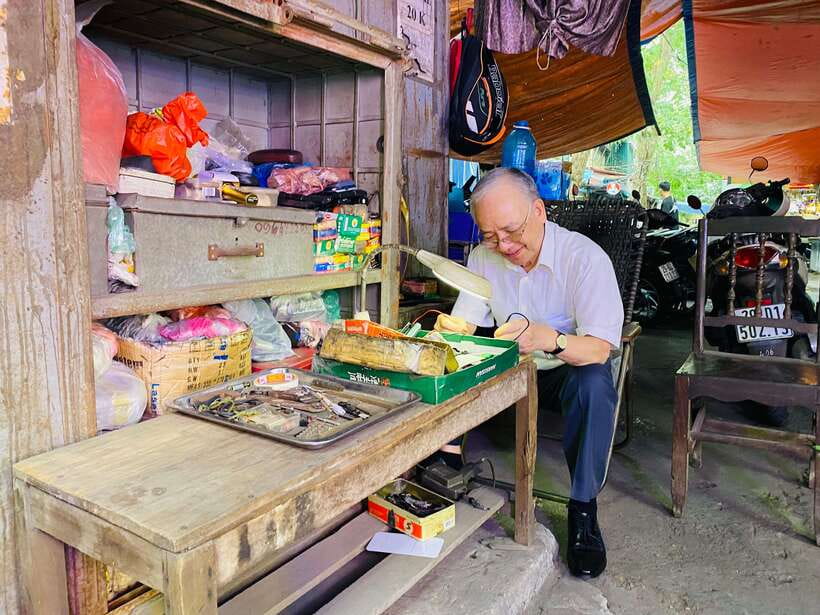
The final stop is Hanoi Train Street. This is a familiar name, but the experience here is intended to be calmer than the most crowded versions of the attraction.
You can sit with coffee, tea, or another refreshment and continue the conversation. Some departures include snacks, cold drinks, or time for lunch, although the clearly listed inclusion is coffee or tea. Do not book this tour solely for a guaranteed meal.
Train Street works well at the end because it brings the discussion into present-day Hanoi. After hearing how the city changed through war and planned economic life, you can watch an active neighborhood shaped by modern tourism and local routine.
The railway setting also gives the tour a natural finish. You are no longer standing at a formal memorial. You are talking in an ordinary social space, with the history still fresh in your mind.
The stop is not the main reason to book. Hanoi has many ways to see Train Street. Its value here is the conversation and the contrast with the earlier parts of the route.
The guides make or break the experience
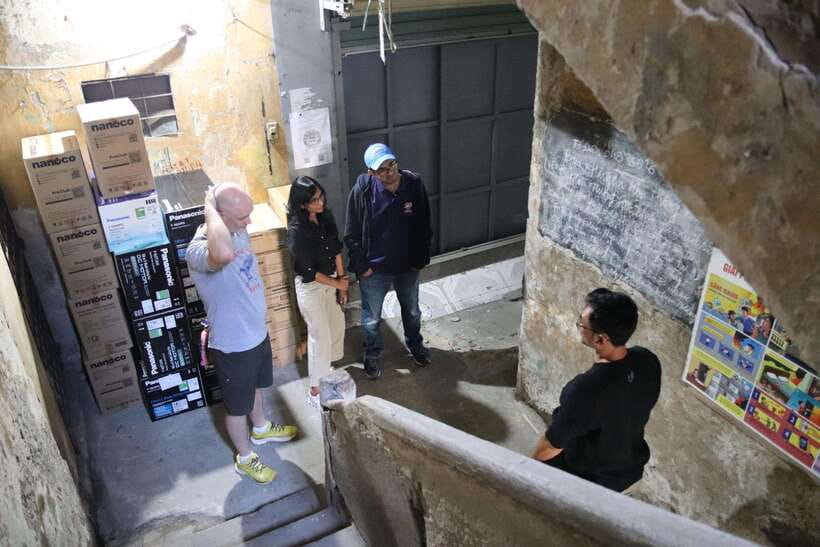
The supplied guide names include Kien, Dung, Cong, and Quang. Kien receives particularly strong praise for his storytelling, clear English, and ability to explain both national politics and everyday life. Dung is described as warm and passionate, while Cong is noted for a friendly approach and strong knowledge of Hanoi’s past.
You may not be able to select a particular guide, so book for the format rather than one individual. The best version of this tour depends on a guide who can explain sensitive subjects clearly and respond to questions without turning the walk into a political lecture.
The language is English. Some guides have personal or family connections to the events and changes discussed, which can make the material feel more immediate. Still, you should remember that personal accounts are one perspective. Ask questions, listen carefully, and use the tour as a starting point for further visits to places such as Maison Centrale prison.
One useful planning tip is to schedule this early in your Hanoi stay. The tour can help you understand later visits to museums, memorials, and neighborhoods. It gives you a framework for noticing how history appears in the present city.
What the $28 price gets you
At $28 per person, the tour offers good value if you want interpretation rather than simple transport between sights. The price includes the guide, stories about local people during the war, coffee or tea, and a short taxi ride halfway through the route.
The strongest value is access. You are not paying only for three hours of walking. You are paying for a local guide who can take you into areas that are difficult to understand independently and explain why they matter.
The donation also adds purpose. Twenty percent of profit goes to the Vietnam Association for Victims of Agent Orange/Dioxin and Blue Dragon Children’s Foundation in Hanoi. That does not replace careful judgment about charities, but it gives the booking a clear social element.
The price does not include every possible drink, snack, meal, or transport cost before and after the tour. Several departures include extra refreshments in practice, but coffee or tea is the reliable listed inclusion. Budget a little extra if you want to buy food or drinks at Train Street.
Who should book this walk
I recommend it most strongly to people interested in modern Vietnamese history, political change, and ordinary family life. It is also a good choice if you have already seen Hanoi’s major temples and want a more local route.
Families with teenagers can manage it, especially if they enjoy stories and discussion. One family found the guide’s relaxed style kept a child engaged, and another group included a young child in a stroller. Still, the route is not described as fully accessible, so ask before booking if mobility is a concern.
This is also a good tour for solo visitors. The conversational format makes it easy to ask questions, and the coffee stop provides a natural break.
It is less suitable for anyone who dislikes walking, hot weather, informal neighborhoods, or difficult wartime subjects. The experience is also listed as unsuitable for people with vertigo or epilepsy.
Practical details for a smoother morning or afternoon
Plan around three hours, plus the time needed to reach the meeting point. The tour ends back at 24B Chua Vua Street, not at Train Street or Hoan Kiem Lake.
Wear shoes with good support. Bring water, breathable clothing, sun protection, and rain gear when the forecast calls for it. The tour operates in all weather.
Keep your schedule flexible after the walk. The short taxi ride is included, but traffic can affect timing. If you want to visit Maison Centrale afterward, it is a short walk from where the tour ends and can work well as a follow-up to the war discussion.
You can reserve now and pay later, which helps if your Hanoi schedule is still changing. Cancellation is free up to 24 hours before the experience.
Should you book Vietnam War: Uncovering Hanoi’s Untold Stories?
Book it if you want Hanoi explained through markets, housing, memorials, and personal stories rather than only through famous monuments. The combination of Cho Gioi, communal housing, Kham Thien, and Train Street gives you a useful view of how national events affected local lives.
Skip it if you want a museum-heavy military tour or a route packed with formal war sites. There is only one main memorial, and much of the experience is discussion in ordinary neighborhoods.
For most history-minded visitors, the $28 price is fair. I would take it near the start of a Hanoi stay, bring questions, and treat the tour as a foundation for seeing the rest of Vietnam with better context.
FAQ
How long does the tour last?
The walk lasts about three hours and includes a short taxi ride halfway through.
Where does the tour start?
It starts at 24B Chua Vua Street, near Trường Trung học cơ sở Đoàn Kết secondary school. A coffee shop and second-hand bicycle shops are nearby.
Where does the tour end?
The activity ends back at the starting point on Chua Vua Street.
What places are included?
The route includes the Cho Gioi area, the Kham Thien B52 memorial, and Hanoi Train Street. It can also include a local communal housing project and the air market.
Is coffee or tea included?
Yes. Coffee or tea is included in the experience.
What language is the tour offered in?
The tour is offered in English.
What should I wear and bring?
Wear comfortable shoes and breathable clothing. The tour operates rain or shine, so bring an umbrella or raincoat if the forecast calls for rain.
Is the tour suitable for people with vertigo or epilepsy?
No. The experience is listed as unsuitable for people with vertigo and for people with epilepsy.
Can I cancel for a full refund?
Yes. You can cancel up to 24 hours in advance for a full refund.
Just added to the Hanoi list
- (TOP) Private car: Hanoi/Noi Bai Airport (HAN) from/to Ninh Binh★ 3.5 · 16 reviews
- Thang Long Water Puppet Theater★ 4.5 · 45 reviews
- Private car transfer from Hanoi Airport to Hotels★ 4.5 · 5 reviews
- Private Hanoi Old Quarter Food Tour with 8+ Authentic Tastings★ 5.0 · 11 reviews
- Private Tour Ninh Binh 1 Day★ 5.0 · 5 reviews
- Private Transfer Service from Hanoi to Ha Long Bay★ 5.0 · 3 reviews
- Private Transfer Between Hanoi City and Noi Bai Airport (HAN)★ 5.0 · 3 reviews
- Ba Be National Park With Boat Trip, Kayaking, Swimming, Trekking And Cycling★ 5.0 · 10 reviews