Reviewed · HALF-DAY
Ha Noi – Half-day Mindfulness meditation retreat
The most memorable part of this four-hour retreat is its variety. You do not sit cross-legged for the whole morning. You learn pagoda manners, join Buddhist rituals, walk with attention, practice breathing and Qi Gong, speak with a monk, release animals, and share a vegetarian meal.
I like the patient guidance from Hieu and Hung, especially for beginners, and I like that the retreat connects meditation with everyday actions such as eating, walking, greeting monks, and avoiding waste. The main consideration is that this is a working religious setting, not a spa. You must dress modestly, keep quiet, and accept that the pagoda may change if local ceremonies require the space.
Key points to know
- A beginner-friendly mix of practices: Try sitting meditation, mindful breathing, walking meditation, chanting, and Qi Gong rather than relying on one method.
- Real pagoda customs: Learn how to greet monks and nuns, follow local rules, and take part in Buddhist rituals.
- Personal spiritual guidance: Use time with a monk to ask questions about meditation, karma, and daily practice.
- Compassion in action: Release animals as a ritual linked with loving-kindness and good deeds.
- A mindful vegetarian meal: Pause before and after eating to express gratitude and reduce waste.
- Simple but important dress rules: Bring long sleeves and long trousers. Short clothing, ripped clothing, smoking, alcohol, drugs, and noise are not allowed.
A quiet morning away from Hanoi’s traffic
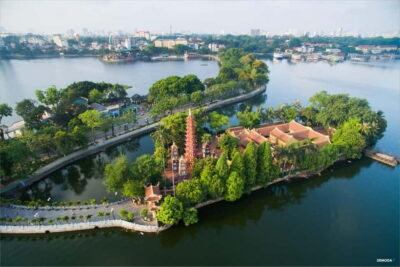
This retreat takes place at a pagoda in Dong Bac, in a green and peaceful setting away from the noise of the city. The calm surroundings matter because the morning is built around attention. You are asked to notice your breath, your steps, your speech, your food, and your conduct inside a religious site.
I like this approach more than a meditation class that treats practice as a single technique. Here, meditation is tied to Buddhist ideas and rituals. You learn that calm is not only something you seek while sitting still. It can also appear when you walk carefully, eat gratefully, speak gently, or pause before acting.
The guides speak English and lead the program on site. Hieu has been described as especially patient and kind with first-time meditators, while Hieu and Hung provide personal guidance during the wider experience. That matters if you are new to Buddhism or unsure how to behave in a pagoda.
This is not a sightseeing stop where you quickly take a few photographs and move on. The point is to slow the pace. You should arrive ready to participate rather than watch from the side.
More half-day trips from Hanoi:
- Hanoi Half-day with Food + Fun + Culture By Russian Jeep
★ 5.0 · 1,243 reviews - Hanoi City Tour: Private Half-Day Customized with Train Street
★ 5.0 · 455 reviews - Hanoi City Half-Day Private Tour: Train Street And All Highlights
★ 5.0 · 298 reviews
Starting with pagoda manners at 8:00
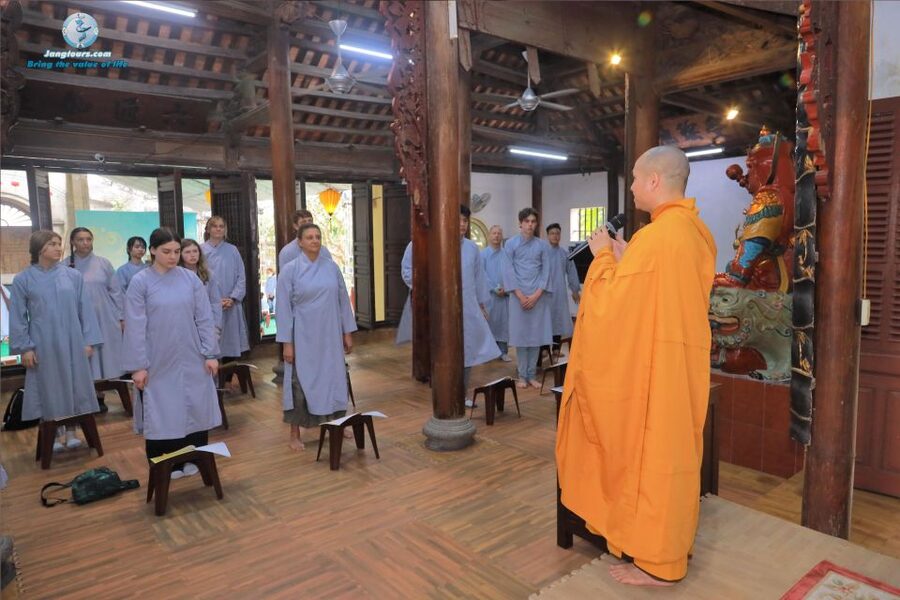
The morning begins with introductions and a lesson on the rules of staying in a pagoda. You learn how to greet monks and nuns when you meet them, along with the conduct expected inside the religious compound.
For many visitors, this may be the most practical part of the morning. A pagoda is not simply an attractive building. It is a place of worship and a working community, so knowing when to lower your voice, how to dress, and how to greet religious figures helps you show respect.
The provided schedule begins at 8:00 and finishes around noon, but starting times depend on availability. Confirm the time when booking. Transportation is not included, and you meet at the pagoda, so allow extra time to reach Dong Bac.
The location can change at short notice if the pagoda must host a ceremony for local residents. In that case, the activities move to an equivalent pagoda and the planned content remains the same. This is worth keeping in mind if you are arranging a tight morning schedule.
Buddhist rituals and the meaning of sutras
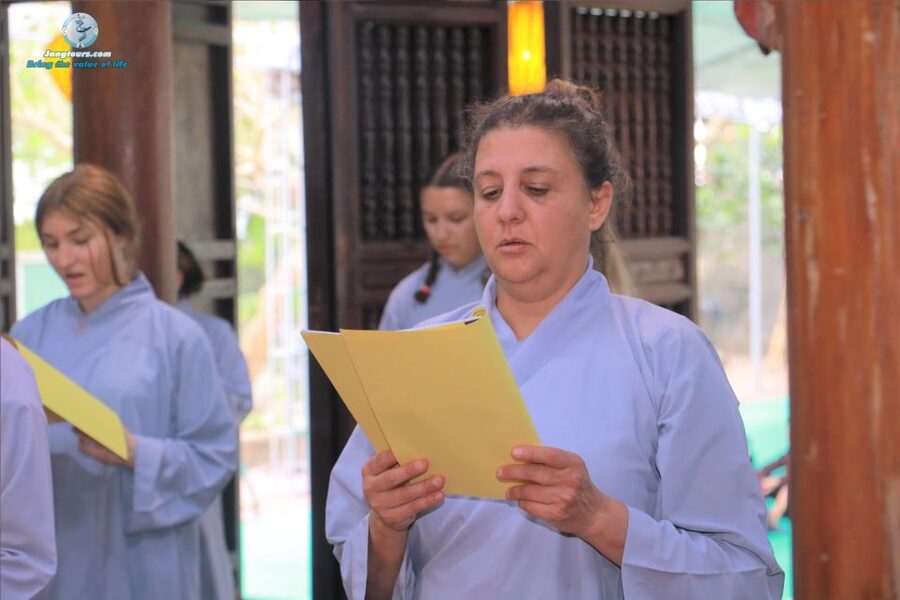
The next session introduces Buddhist rituals and sutras. Sutras are teachings associated with the Buddha, and the purpose here is to connect those teachings with ordinary life and spiritual practice.
You do not need a background in Buddhism to take part. The session gives you a basic framework for understanding why rituals matter. They are not presented only as formal actions. They are ways to focus the mind, express respect, and bring certain values into daily behavior.
If you are curious about the difference between meditation as relaxation and meditation as a Buddhist practice, this part helps. The retreat presents meditation as a path toward peace and insight, not simply as a method for reducing stress.
Some visitors may find the ritual element unfamiliar. That is part of the experience, but it also means you should not expect a fully secular wellness workshop. The morning has a clear spiritual purpose.
Walking meditation and mindful breathing
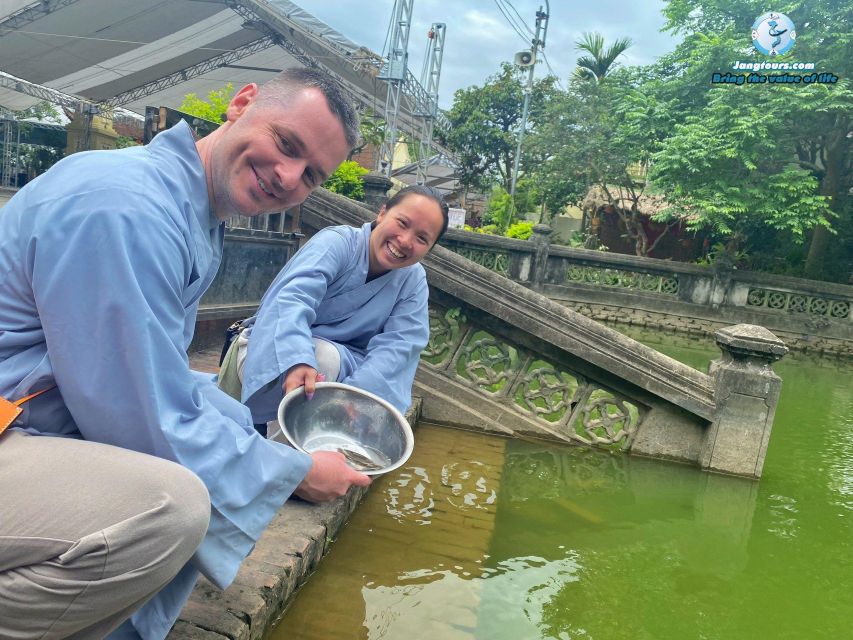
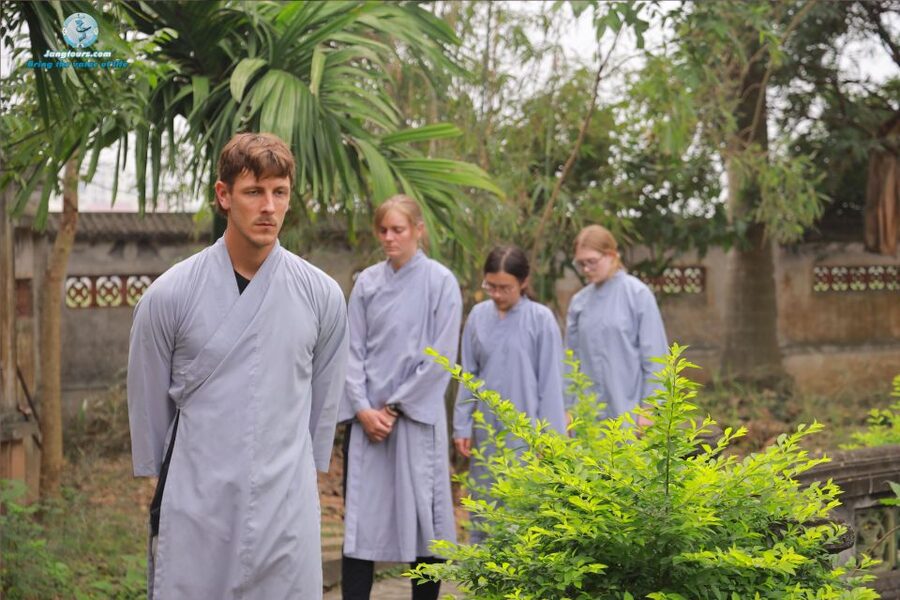
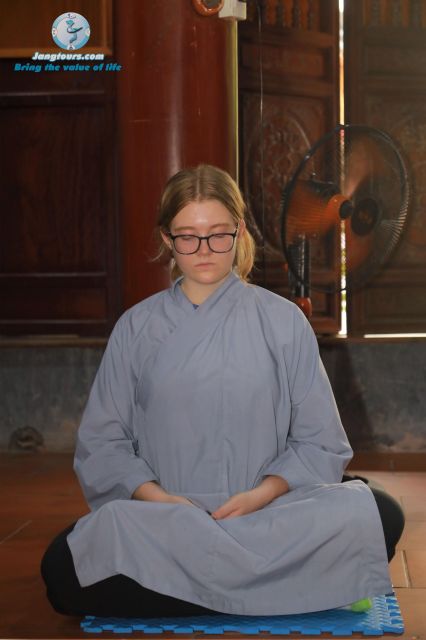
At about 9:15, the retreat turns to walking meditation. You are guided to pay attention to every step and breath, rather than letting your mind race ahead to the next task.
Walking meditation is useful for people who find seated meditation difficult. You have a physical action to follow, yet the practice remains quiet and focused. The aim is not to walk far or exercise. It is to notice movement as it happens.
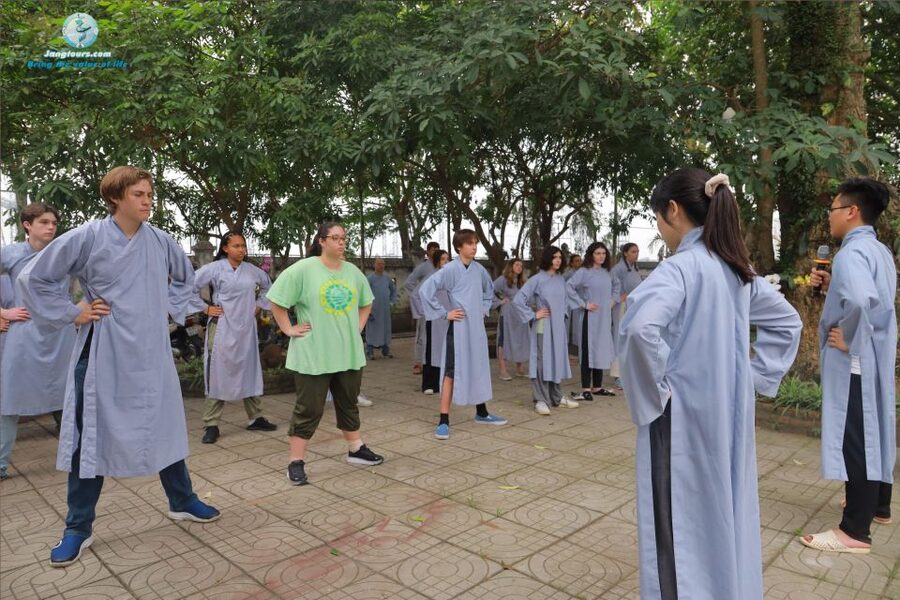
The breathing session adds another layer. The program combines mindful breathing with inner energy movements, with the goal of supporting a healthy body and calm mind. Later accounts of the experience also describe sitting, chanting, walking, and Qi Gong meditation, so you receive several ways to practice rather than one rigid formula.
I especially like this variety for beginners. If sitting still makes you restless, walking or Qi Gong may feel more natural. If movement distracts you, the seated breathing practice offers a quieter route.
Do not expect advanced instruction in every method during a four-hour session. The benefit is an introduction to several practices and a chance to notice which one feels most useful to you.
Something completely different for the rest of your time in Hanoi:
- Hanoi Jeep Tour: Food, Culture and Fun by Vietnam Army Jeep
★ 5.0 · 15,222 reviews - Full-Day Ninh Binh Highlights Tour from Hanoi
★ 5.0 · 7,761 reviews - Hanoi: Ha Long Bay Day Cruise – Swimming, Meal, Kayaking
★ 4.7 · 7,415 reviews - Hanoi: Water Puppet Show Tickets
★ 4.6 · 7,029 reviews
Touching peace through stillness
The short session called the art of touching peace presents meditation as a practice of happiness. Its central idea is that peace of mind can be more lasting than pleasure from possessions or entertainment.
This is a brief teaching, but it gives the morning a clear direction. You are not being asked to force your mind to become blank. Instead, the practice encourages you to notice thought and feeling without allowing them to control every moment.
The language used in Buddhist meditation can sound grand, especially when it refers to destroying ignorance or reaching enlightenment. It is best to treat those ideas as part of Buddhist doctrine rather than promises of what a first-time visitor will achieve in one morning.
For you, the immediate value is simpler. You learn how to sit, breathe, and return your attention when it wanders. That is a practical skill you can continue after leaving the pagoda.
Sitting meditation and spiritual questions
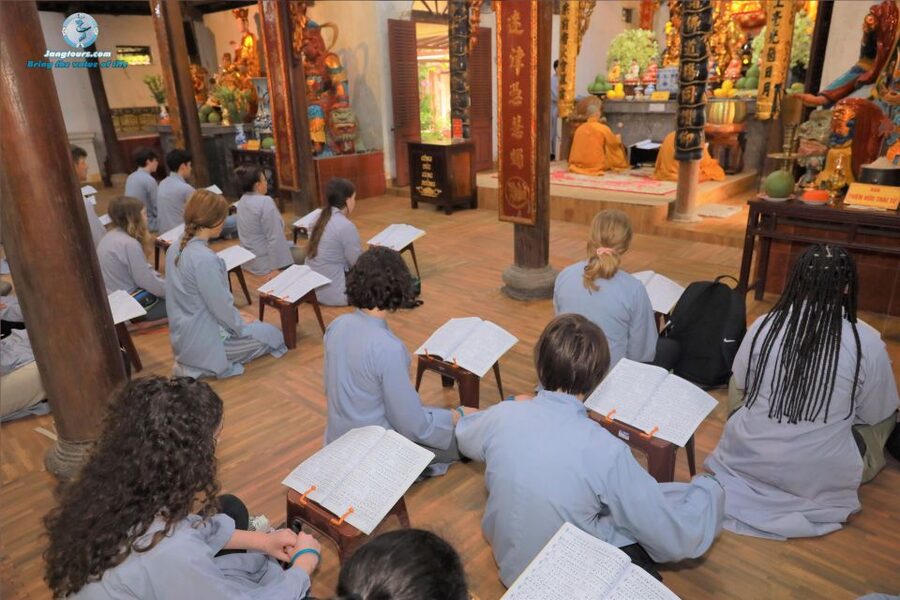
The main meditation session, listed as soul purification, focuses on bringing the mind toward peace and insight. The retreat describes meditation as a way to move away from being ruled by passing thoughts and emotions.
Again, keep your expectations sensible. Four hours will not turn you into an experienced meditator. It can, however, give you a clear introduction to posture, breathing, attention, and the purpose behind Buddhist practice.
One of the stronger features is the chance to speak with a monk. This is a good opportunity to ask questions about spiritual practice rather than relying on vague ideas picked up from books or social media.
The conversation also introduces the law of karma, using photographs as part of the lesson. Karma is a central Buddhist idea, but it is often reduced to the simple phrase what goes around comes around. A guided conversation gives you a better chance to understand how the concept fits with conduct, intention, and responsibility.
Prepare one or two questions before you arrive. You might ask how to continue meditation at home, how to handle a wandering mind, or how Buddhist practice relates to ordinary work and family life. The time is limited, so focused questions will be more useful than trying to cover all of Buddhism.
The Arhat ritual and asking for blessings
The schedule includes a ritual described as asking for the Arhat. It connects worship of the Arhats with blessings and with planting the seed of enlightenment in future lives.
This is another point where cultural respect matters. You may not share the beliefs behind the ritual, and you do not need to pretend that you do. You can still observe carefully, follow instructions, and understand what the practice means to the people taking part.
If religious ceremonies are not part of your normal travel plans, this may be one of the most distinctive sections of the morning. It offers contact with living Buddhist practice rather than a museum explanation of Buddhism.
The experience is more meaningful when you avoid treating the ritual as a photo opportunity. Keep your phone away unless you are clearly told photography is acceptable, and follow the request to remain quiet.
Releasing animals as a compassionate act
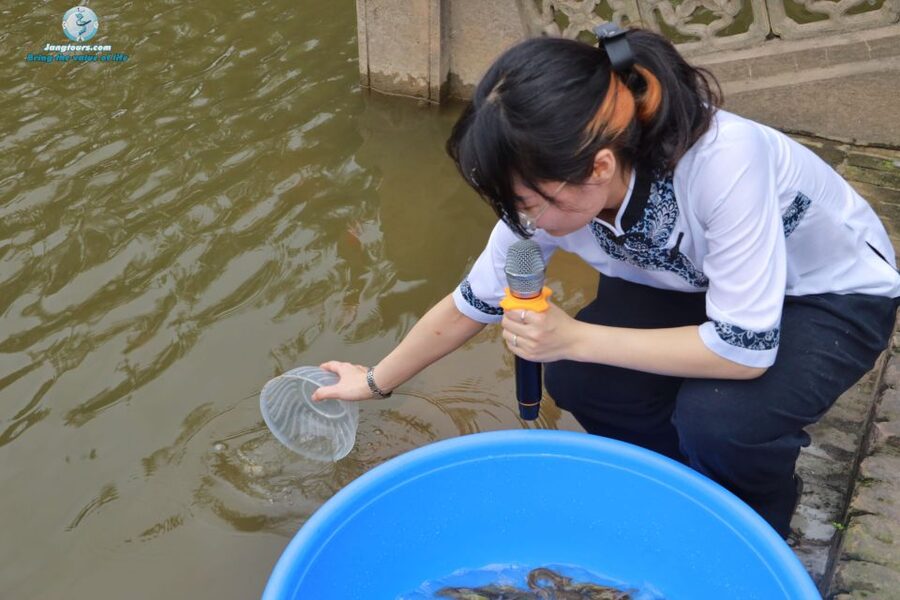
The compassionate practice involves releasing animals. The retreat presents this as a way to nurture loving-kindness, compassion, and good deeds.
This activity gives a physical form to ideas discussed earlier. Instead of only talking about compassion, you take part in a ritual intended to express it. The focus is less on entertainment and more on the feeling of protecting living beings.
You may find this especially moving if you are interested in Buddhist ethics. It also shows how the retreat links spiritual practice with action. Mindfulness here is not only about your own calm. It includes the way you treat other living beings.
Because the information does not specify the type of animals or the exact release site, do not arrive expecting a particular encounter. The important part is the ritual meaning and the chance to practice kindness in a direct way.
A grateful vegetarian meal at noon
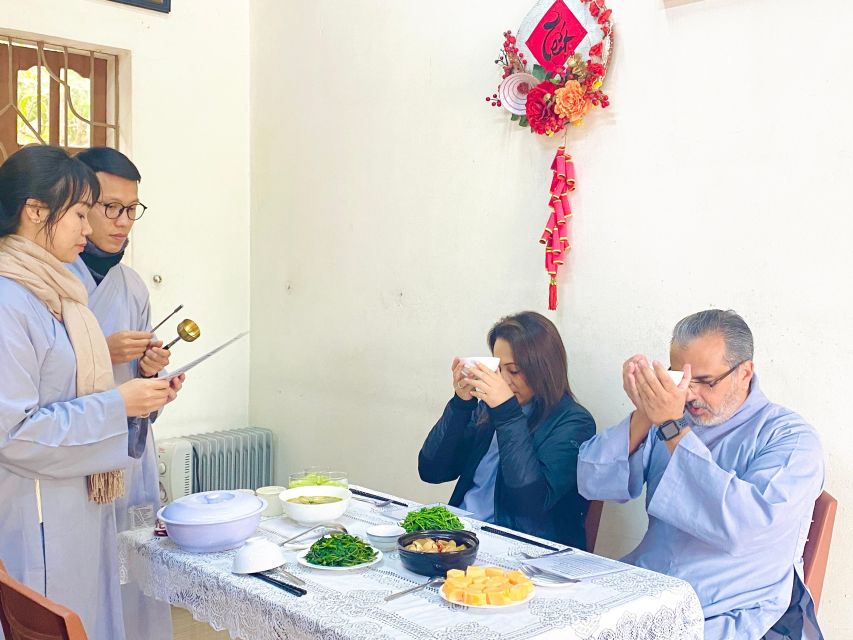
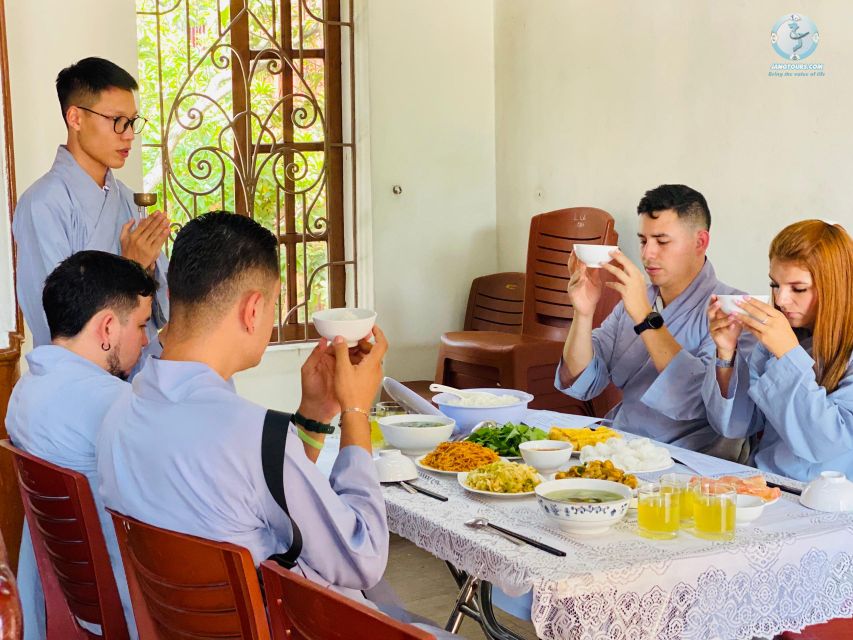
The morning ends with a vegetarian meal, scheduled around 11:00 to 12:00. Before and after eating, you take part in a gratitude practice that encourages appreciation for the food and discourages waste.
This may be the most approachable lesson of the day. You do not need to be Buddhist to understand the value of slowing down before a meal. Eating without rushing can make you more aware of what is on your plate and how easily food is wasted.
The meal is included, along with mineral water. It is described as a vegetarian lunch, so tell the provider in advance if you have dietary questions or concerns. The supplied information does not specify the menu or how allergies are handled.
The shared meal also gives the retreat a social finish. One account describes the experience becoming personal through time spent with Hieu and a meal at the end. That fits the tone of the program: instruction, conversation, and simple hospitality rather than a formal class that ends the moment meditation stops.
A small gift is provided for visitors after the meal. The activity then finishes back at the pagoda.
What the $65 price covers
At $65 per person, this is not the cheapest way to spend a morning in Hanoi. You are paying for a guided spiritual program, entrance fees, rituals, a monk conversation, a vegetarian meal, water, and local instruction in English.
The value depends on what you want. If you only want to sit quietly for an hour, the price may feel high. If you want a structured introduction to several meditation methods, Buddhist customs, and compassionate rituals, the package is easier to justify.
Transportation is not included, which is the main extra cost to plan for. You also need to make your own way to the meeting point and remain flexible if the pagoda changes because of a local ceremony.
The four-hour length is sensible. It is long enough to include several practices and a meal, but short enough to fit into a wider Hanoi visit. The early start also leaves the rest of the day free.
Who will get the most from this retreat
I would recommend it most strongly to first-time meditators who want guidance without committing to a long retreat. The mix of sitting, walking, breathing, Qi Gong, chanting, ritual, and discussion gives you a broad first look.
It also suits visitors interested in Buddhism as a living faith rather than only as architecture or history. You receive practical lessons in how to behave at a pagoda and why certain actions matter.
It may be less suitable if you want a silent retreat with no conversation, or a polished spa-style wellness session. The program includes teaching, rituals, interaction with guides and a monk, and a shared meal.
The activity is not suitable for wheelchair users or babies under one year. Short attire is not appropriate, and you should bring a long-sleeved shirt and long trousers. Smoking, alcohol, drugs, red wine, ripped clothing, and making noise are not allowed.
Free cancellation is available up to 24 hours before the activity for a full refund, and you can reserve now and pay later. Those terms are useful if your Hanoi plans are still shifting.
Should you book the Hanoi mindfulness retreat?
Book this if you want a calm, structured morning that joins meditation with real Buddhist customs. The strongest reasons are the patient English guidance, the chance to ask a monk direct questions, and the range of practices you can try in one visit.
I would be cautious only if you need transport included, have strict accessibility needs, or prefer a secular class with no rituals. For everyone else, $65 buys more than quiet sitting: you get an introduction to pagoda etiquette, Buddhist ideas, mindful movement, compassionate practice, and a grateful vegetarian meal.
Arrive in modest clothing, keep an open mind, and treat the pagoda as a place of worship rather than a stage. That approach will help you get the most from the experience.
FAQ
Where does the mindfulness retreat take place?
The retreat takes place at a pagoda in Dong Bac, Vietnam, in a peaceful green setting away from city noise. The activity begins and ends at the meeting point.
How long does the activity last?
The retreat lasts four hours. The published schedule runs from 8:00 to 12:00, but you should check availability for the exact starting time.
Is transportation included?
No. Transportation is not included, so you must arrange your own way to the pagoda. The meeting point may change to an equivalent pagoda if a local ceremony requires the original site.
What meditation practices are included?
The program includes mindful breathing, walking meditation, seated meditation, Buddhist rituals, chanting, and Qi Gong meditation. It also includes lessons on Buddhist teachings and time to speak with a monk.
What should I wear?
Wear a long-sleeved shirt and long trousers. Short attire, short skirts, and ripped clothing are not appropriate inside the pagoda.
Is food included?
Yes. A vegetarian lunch and mineral water are included. The meal includes a gratitude practice before and after eating.
Just added to the Hanoi list
- (TOP) Private car: Hanoi/Noi Bai Airport (HAN) from/to Ninh Binh★ 3.5 · 16 reviews
- Thang Long Water Puppet Theater★ 4.5 · 45 reviews
- Private car transfer from Hanoi Airport to Hotels★ 4.5 · 5 reviews
- Private Hanoi Old Quarter Food Tour with 8+ Authentic Tastings★ 5.0 · 11 reviews
- Private Tour Ninh Binh 1 Day★ 5.0 · 5 reviews
- Private Transfer Service from Hanoi to Ha Long Bay★ 5.0 · 3 reviews
- Private Transfer Between Hanoi City and Noi Bai Airport (HAN)★ 5.0 · 3 reviews
- Ba Be National Park With Boat Trip, Kayaking, Swimming, Trekking And Cycling★ 5.0 · 10 reviews
Half-Day, compared.

Hanoi Half-day with Food + Fun + Culture By Russian Jeep
Read our review →
Hanoi City Tour: Private Half-Day Customized with Train Street
Read our review →
Hanoi City Half-Day Private Tour: Train Street And All Highlights
Read our review →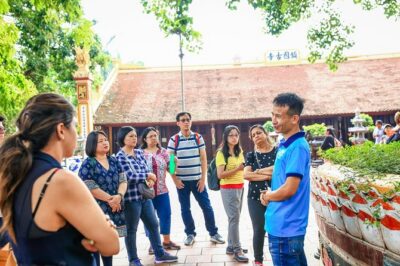
Private Hanoi City Half-Day Tour with Train Street Visiting
Read our review →
Half-day Explore Bat Trang Ceramic Village by Russian Jeep
Read our review →