
Reviewed · PHOTOGRAPHY SESSIONS
Hanoi Street Photography in a Vintage Community
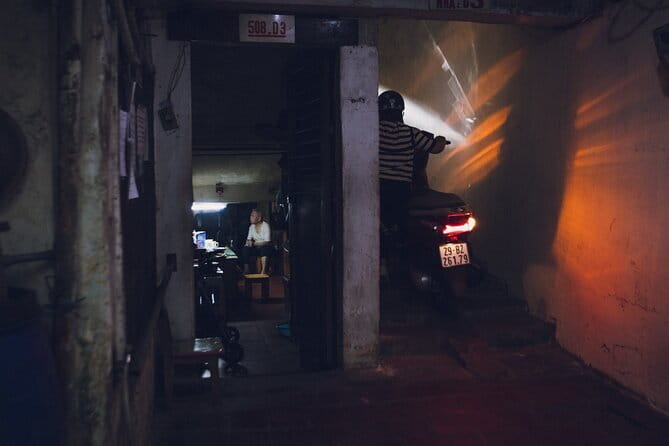
Hanoi’s old worker housing districts offer the kind of street photography that organized sightseeing often misses: yellow walls, worn staircases, tangled wires, sidewalk tea, scooter repairs, and neighbors simply getting on with the day. This four-hour outing takes you into a 1960s-era residential community, built for working people in the Soviet style.
I like the maximum group size of four, which gives you room to stop and frame a scene without holding up a crowd. I also like the practical teaching: guides such as Mike, Son, and James have helped photographers work on camera settings while explaining local life. The main consideration is that this is a working neighborhood, not a polished attraction, so respectful behavior and patience matter more than a checklist of sights.
Key points at a glance
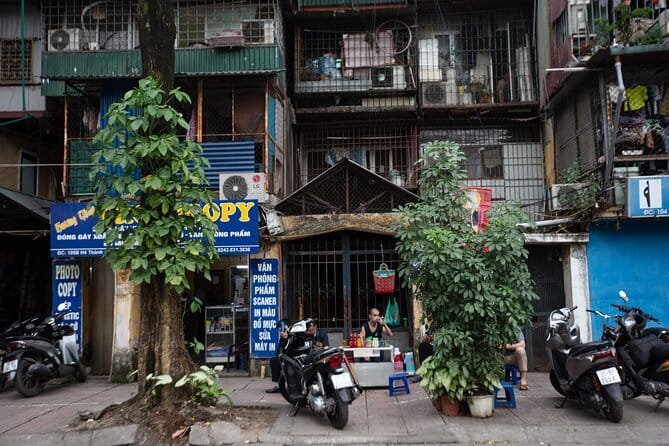
- Soviet-inspired worker housing: Photograph residential blocks built after the French departure and expanded during the State-built housing era.
- A genuine Hanoi setting: Walk through markets, tea stalls, playgrounds, repair shops, and lanes outside the usual tourist circuit.
- Small groups: The outing accepts no more than four people, making personal instruction more likely.
- Useful camera guidance: Bring questions about settings, composition, and photographing people in public spaces.
- Four hours on foot and by vehicle: Air-conditioned transport and pickup are offered, while much of the picture-making happens in the lanes.
- Good value for serious photographers: The $98 price includes the instructor, transport, and coffee or tea, but not a meal.
Entering Hanoi’s old worker neighborhoods
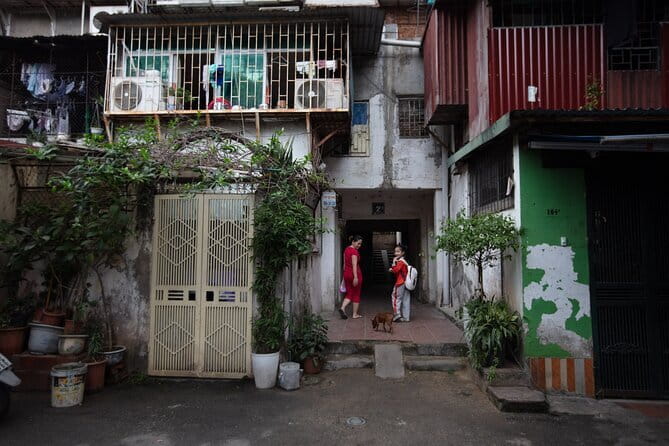
The central idea is simple: photograph Hanoi from the inside of an ordinary community. You are not sent from one grand monument to another. Instead, you enter a maze of housing blocks and narrow lanes where the best subjects may be a tea seller, an aging wall, a child in a playground, or a line of laundry above a stairwell.
These districts grew after the French left Vietnam. State-built housing for working people expanded during the 1950s and 1960s, with Soviet architectural ideas shaping the design. The result is a useful setting for photography because the buildings are not isolated museum pieces. They are still part of daily life.
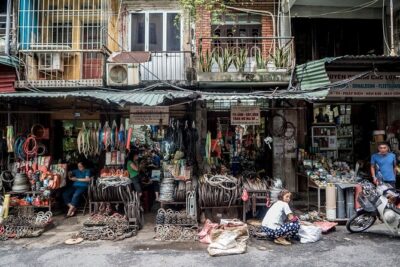
You may see old facades beside improvised cages, scooter repair stalls, barbers, market tables, and homes adapted over many years. The contrast is what gives the area its visual force. Straight concrete lines meet tangled electric cables. Faded paint sits beside brightly colored goods. A quiet tea stall can appear only a few steps from a noisy market.
I would not book this expecting classic Hanoi postcard views. The appeal is closer to documentary photography. You are looking at how a neighborhood works, changes, and ages.
More photo shoots around Hanoi:
- Hanoi Private Photoshoot – Iconic Spots & Hidden Gems
★ 5.0 · 118 reviews - Hanoi Explorer Photo Tour
★ 5.0 · 40 reviews - Hanoi On the Tracks Photo Tour
★ 5.0 · 33 reviews
A four-hour walk through ordinary Hanoi
The exact order can change, but the outing is built around wandering rather than rushing. Pickup is offered, and an air-conditioned vehicle is included, which helps with the practical side of reaching the neighborhood. Once there, expect to spend much of your time walking through lanes and stopping when a scene develops.
The first stage is likely to be getting your bearings. The guide can explain the background of the housing area and point out details that might otherwise look like simple urban wear. A chipped wall, repeated balcony design, or cramped stairway can tell you how the buildings were planned and how residents have reshaped them.
The housing itself is one of the strongest subjects. Soviet-influenced blocks tend to give you repeating forms, hard edges, aging surfaces, and tight views through courtyards and passageways. If you enjoy black-and-white work, these areas offer plenty of texture and contrast. If you prefer color, look for painted doors, market produce, clothing, signs, and small personal touches against the muted buildings.
The guide’s role matters here. Without context, it is easy to photograph decay and miss the people who live among it. A good instructor helps you see the neighborhood as home first and photo subject second.
Markets, tea stalls, and repair shops
The market adds movement and sound to the session. You might photograph vendors, goods arranged along a lane, customers pausing to buy something, or the tight relationship between commerce and housing. The point is not to collect random snapshots. You are learning to wait for a person, gesture, or arrangement that makes the frame work.
Markets can also be visually messy. That is part of the challenge. Bright packaging, scooters, wires, signs, and people may all compete for attention. Your instructor can help you simplify the frame, choose a position, and decide whether a wider scene or a detail tells the story better.
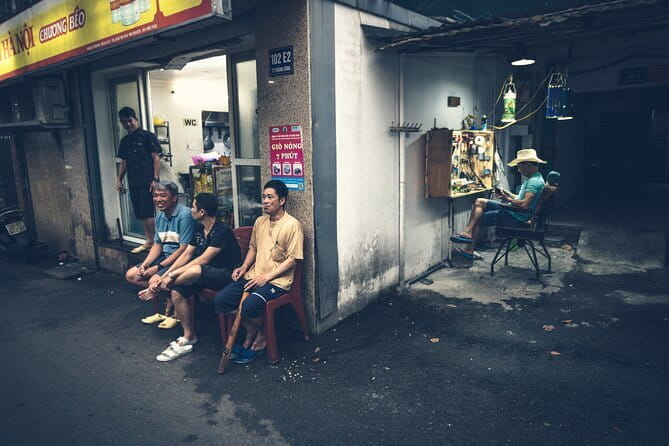
Sidewalk tea stalls offer a slower counterpoint. These small gathering places can show the social rhythm of the neighborhood, with people sitting, talking, or watching the street. They are useful for practicing candid photography because the setting gives you layers: a seated group in the foreground, passing scooters beyond, and old walls or shopfronts behind.
The tour also calls out scooter repair shops and barber shops. These are strong subjects because they show work being done in cramped, practical spaces. Tools, spare parts, mirrors, chairs, and hands can produce close details, while the storefront gives you a wider environmental portrait.
You should ask before making a close portrait. Even when the setting feels informal, you are photographing someone’s home area and workplace. A patient approach will produce better photographs than a fast, intrusive one.
Playgrounds and the human side of the frame

Children and older residents may be seen playing or relaxing in neighborhood playgrounds. These spaces help balance the architecture-heavy side of the tour. The old buildings provide structure, but people give the pictures a sense of time and place.
Photographing children calls for extra care. Keep your distance unless the guide helps with the interaction, and do not assume a candid image is welcome. The same applies to older residents sitting outside their homes. A friendly exchange may lead to a stronger photograph, but the photograph should not be treated as the only reason for speaking with someone.
This is one area where the small group is especially useful. With no more than four people, you can pause without creating a large audience around a person or doorway. The guide can also help with local etiquette and translation when needed, though the supplied details do not promise a dedicated portrait session or formal permission process.
The human scenes are not guaranteed at every minute. That is worth understanding. This is an active neighborhood, but daily life has its own pace. You may need to wait, revisit a corner, or accept that a promising scene changes before you can frame it.
Something completely different for the rest of your time in Hanoi:
- Hanoi Jeep Tour: Food, Culture and Fun by Vietnam Army Jeep
★ 5.0 · 15,222 reviews - Full-Day Ninh Binh Highlights Tour from Hanoi
★ 5.0 · 7,761 reviews - Hanoi: Ha Long Bay Day Cruise – Swimming, Meal, Kayaking
★ 4.7 · 7,415 reviews - Hanoi: Water Puppet Show Tickets
★ 4.6 · 7,029 reviews
What the photography instruction adds
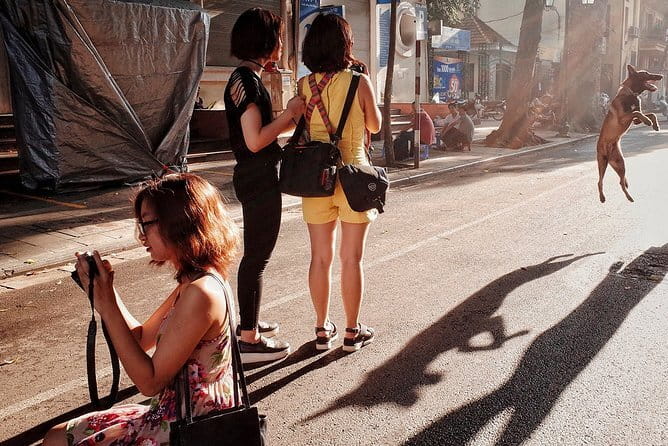
This is more than a walk with a camera. A photography instructor is included, and the strongest practical benefit is the chance to work on your settings while you shoot. One account specifically highlights help with camera settings from a guide named Mike, while Son is praised for combining photography skill with cultural explanation. James has also led an outing through older Hanoi housing and street markets.
The experience should suit different skill levels. If you are new to street photography, you can use the session to work on basic exposure, focus, timing, and framing. If you already shoot often, the neighborhood gives you a fresh assignment: find order in clutter, use architecture as a frame, or tell a story with three connected images.
Do not expect a classroom lecture with a fixed lesson plan. The instruction appears to happen in response to what you see. That is useful because the advice applies immediately. You can change a setting, move a few steps, and test the result before the moment disappears.
Bring a camera you can operate without too much fuss. The supplied details do not specify equipment, lens rentals, editing help, or a required skill level. A phone may work for the walk, but the instruction is most valuable if you bring a camera and have at least a basic interest in improving your images.
Why the small group changes the experience
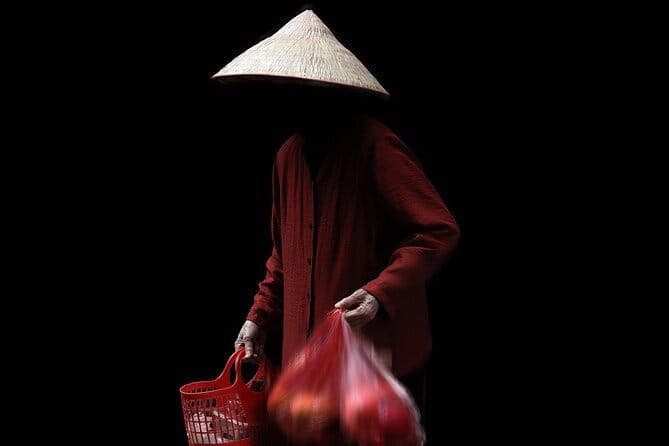
A four-person maximum is one of the best features here. Street photography depends on timing, and a large group can make every stop awkward. It also makes it harder to hear the guide or ask for individual help.
With this format, you have a better chance to ask about a difficult exposure, compare two possible compositions, or spend a little longer at an interesting shop. The guide can pay attention to the people in the group rather than simply moving everyone from point to point.
The small size does not guarantee a private tour. It only means the total group is capped at four. One booking may have been private, but you should not assume that will be the arrangement unless confirmed at booking.
Group discounts are offered, which may make the price easier to justify if you are traveling with a photography partner. Pickup is also offered, and mobile tickets are supported. These are small conveniences, but they reduce friction on a short half-day outing.
Is $98 a fair price?
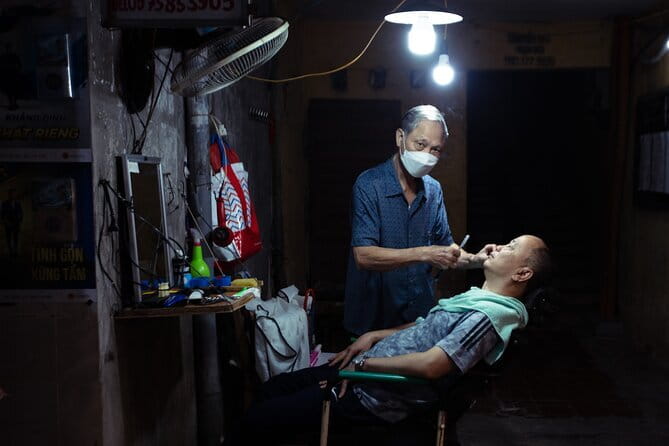
At $98 per person, this is not a bargain walking tour. It is priced as a specialist photography experience, and the value depends on how much you want instruction and local access rather than simple sightseeing.
The fee includes a photography instructor, an air-conditioned vehicle, and coffee or tea. The group cap is important when judging the price. You are paying for a guide who can respond to your images and questions, not just for transport through Hanoi.
The four-hour length also matters. A shorter photo walk could be cheaper, but it might not give you enough time to move between architecture, markets, tea stalls, shops, and playgrounds. Here, the half-day format gives you room to work at a slower pace.
Lunch and dinner are not included. That is easy to handle, since the experience lasts about four hours, but you should plan your own meal before or after. No special meal should be expected as part of the outing.
I would consider the cost reasonable for a photographer who values personal instruction and unusual subject matter. If you only want to see old Hanoi for a few minutes, the price may feel high. You are paying for access, context, and shooting time, not a long list of attractions.
Practical limits and respectful photography
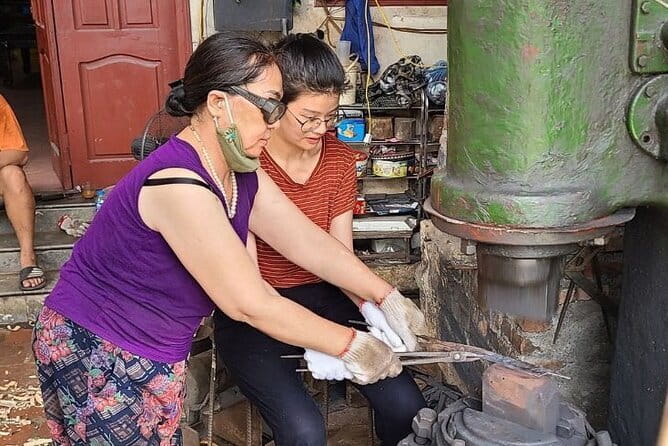
The neighborhood is described as being off the usual tourist route. That is the attraction, but it also means you should not expect the polished paths, formal exhibits, or clear photo points found at major Hanoi sights.
You will be photographing a lived-in area. Avoid blocking stairs, doorways, shop entrances, and narrow lanes. Be careful with equipment around scooters and market traffic. The supplied information says most people can participate, but it does not describe the walking surface, stair count, or exact accessibility arrangements.
Comfortable clothing and shoes make sense for a four-hour outing, though the tour details do not specify a dress code or equipment list. Carry only what you can manage while walking. A camera, spare battery, memory card, and simple lens setup should be enough for most people, but those equipment suggestions are practical preparation rather than listed inclusions.
Free cancellation is available if you cancel at least 24 hours before the local start time. Cancellations or changes made later are not accepted for a refund. That gives you some flexibility, but the deadline is firm.
Who will get the most from this tour?
This outing is a strong match for you if you enjoy:
- Street and documentary photography
- Urban architecture with signs of age and adaptation
- Small groups and direct help from a guide
- Meeting ordinary Hanoi through daily routines
- Photographing markets, shops, tea stalls, and public spaces
- Learning how to make better images in changing conditions
It can also work for someone without a camera who wants to see a side of Hanoi beyond the standard route. Still, the experience is designed around photography, so a non-photographer may not receive the full value of the instructor-led format.
It is less suitable if you want grand landmarks, a fixed sightseeing route, or guaranteed portraits. The best images may come from waiting and noticing rather than checking off scheduled stops.
Should you book the Hanoi vintage community photo tour?
Book it if you want real neighborhood life, Soviet-influenced housing, and hands-on camera advice in a very small group. The mix of old buildings, market activity, tea stalls, repair shops, and playgrounds gives you plenty to work with, while the four-hour length keeps the outing manageable.
Skip it if you mainly want famous Hanoi sights or a relaxed ride with little walking. For the right person, $98 buys more than transport and a few photo stops. It buys time in a working community, a guide who can help you react to the scene, and access to a part of Hanoi that most standard tours leave out.
FAQ
Where does this photography tour take place?
It takes place in Hanoi, Vietnam, in a vintage residential area built from the 1950s and 1960s for working people.
How long does the experience last?
The photography outing lasts approximately four hours.
What will I photograph?
Subjects include Soviet-influenced housing, old staircases, yellow walls, tangled electric wires, markets, sidewalk tea stalls, scooter repair shops, barber shops, playgrounds, children, and older residents.
Is transportation included?
Yes. An air-conditioned vehicle is included, and pickup is offered.
How many people can join?
The activity has a maximum of four participants.
Is a photography instructor included?
Yes. A photography instructor is included, and the experience includes help with camera settings and photography guidance.
Is food included?
Coffee and/or tea are included. Lunch and dinner are not included.
Can most people participate?
The activity information says most people can participate. It does not provide specific details about walking surfaces, stairs, or accessibility arrangements.
Can I cancel for a refund?
Yes. You can cancel at least 24 hours before the local start time for a full refund. Cancellations or changes made less than 24 hours before the start time are not accepted for a refund.
Just added to the Hanoi list
- (TOP) Private car: Hanoi/Noi Bai Airport (HAN) from/to Ninh Binh★ 3.5 · 16 reviews
- Thang Long Water Puppet Theater★ 4.5 · 45 reviews
- Private car transfer from Hanoi Airport to Hotels★ 4.5 · 5 reviews
- Private Hanoi Old Quarter Food Tour with 8+ Authentic Tastings★ 5.0 · 11 reviews
- Private Tour Ninh Binh 1 Day★ 5.0 · 5 reviews
- Private Transfer Service from Hanoi to Ha Long Bay★ 5.0 · 3 reviews
- Private Transfer Between Hanoi City and Noi Bai Airport (HAN)★ 5.0 · 3 reviews
- Ba Be National Park With Boat Trip, Kayaking, Swimming, Trekking And Cycling★ 5.0 · 10 reviews
Photography Sessions, compared.

Hanoi Private Photoshoot – Iconic Spots & Hidden Gems
Read our review →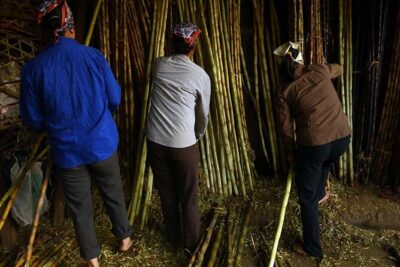
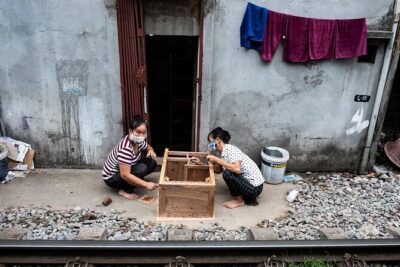
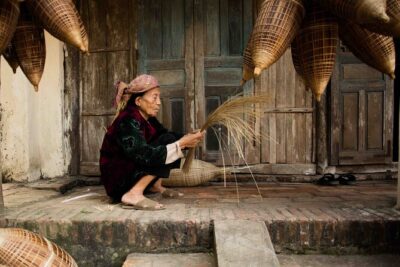
Photo Tour to Capture The Vanishing Craft of Making Fish Traps
Read our review →
Hanoi Street Photography with a Pro – Phone & Camera
Read our review →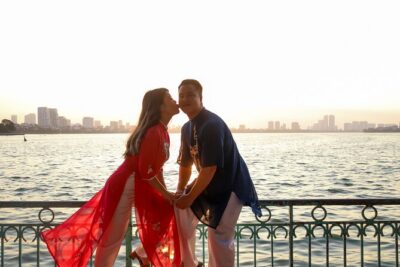
Private Hanoi Photoshoot – Iconic Spots & Hidden Gems
Read our review →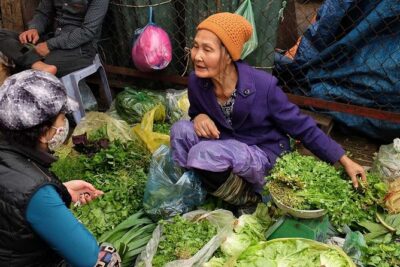
Browse the lists this tour appears in