Reviewed · TOURS
French Quarter Tour
Hanoi’s French Quarter is best understood as a record of changing power. In a few city blocks, you move from old religious buildings to French colonial monuments, Soviet-influenced concrete, Art Deco homes, and newer commercial streets. The buildings tell the story, but the contrasts between them are just as interesting.
I like the small private format, which gives you room to ask about architecture and Vietnamese history instead of following a large crowd. I also like the mix of major sights and less obvious stops, especially the Cultural Friendship Palace and the former Indochina University. The main drawback is practical: taxis between several stops are not included, and the listed starting point is outside the central French Quarter, so confirm the pickup plan before you go.
Key points to know before booking
- Five stops cover several eras: You see Soviet-era design, French colonial buildings, a university, a cathedral, and the political district.
- Nikita may be your guide: A past guest specifically praised her warm explanations, architectural knowledge, and family stories, though guide assignments can vary.
- It is a private tour: Only your own group takes part, making it easier to ask questions and set the pace.
- Taxis are part of the route, but not the price: Transportation between stops is excluded, so carry cash or arrange payment details in advance.
- Coffee, tea, and snacks are included: These add a welcome pause during the 3 to 4-hour outing.
- Expect moderate walking: You will walk around several sites, cross busy city streets, and use taxis between districts.
Hanoi’s French Quarter is a lesson in changing power

The French Quarter occupies the grid of streets south of Hoan Kiem Lake. It feels different from Hanoi’s Old Quarter, where narrow lanes, shopfronts, tangled traffic, and dense activity define the streetscape. Here, wider roads and more formal buildings create a calmer first impression, although Hanoi traffic is never far away.
What makes this area worth a guided walk is not simply the presence of handsome old buildings. Each architectural style points to a different period in Vietnam’s political and cultural life. Ancient pagodas sit near French civic buildings. Soviet-influenced concrete appears beside colonial facades. International modernist and Art Deco houses show that the district kept changing long after French rule.
A good guide helps you read those changes. You are not just looking at columns, windows, and gray concrete. You are asking who built the structure, what purpose it served, and what kind of society it represented.
The tour also reaches beyond the core French Quarter. St. Joseph’s Cathedral sits near the edge of the Old Quarter, where the architectural change is especially easy to see. The final stop moves into Hanoi’s political district, where French-built institutions and later national monuments share the same streets.
Other ways to fill a day around Hanoi:
- Hanoi Jeep Tour: Food, Culture and Fun by Vietnam Army Jeep
★ 5.0 · 15,222 reviews - Full-Day Ninh Binh Highlights Tour from Hanoi
★ 5.0 · 7,761 reviews - Hanoi: Ha Long Bay Day Cruise – Swimming, Meal, Kayaking
★ 4.7 · 7,415 reviews
Starting at the Cultural Friendship Palace
The tour begins at the Cultural Friendship Palace, or Cung Van Hoa Huu Nghi. This is the meeting point and one of the more unusual stops because its appearance differs sharply from the graceful French buildings you may expect in this part of Hanoi.
The palace was rebuilt with help from the Soviet Union. Its heavy gray design reflects the close political relationship between Vietnam and the Soviet bloc. It is not a delicate colonial showpiece. Its strong lines and solid mass make a useful opening lesson: Hanoi’s architectural story did not end when the French period ended.
Allow about an hour here. That is a generous amount of time for a building that some people may find less immediately attractive than the Opera House or cathedral. The value lies in the explanation. You can learn how international alliances affected public buildings and how the city’s visual identity shifted after colonial rule.
This stop also gives the tour a useful balance. A route made only of French buildings would present a narrow version of Hanoi. Starting with a Soviet-influenced structure makes clear that the city has been shaped by several outside powers and by Vietnamese responses to them.
The palace is free to enter according to the tour details. Still, access inside may depend on local conditions, so treat the building and surrounding grounds as the focus rather than expecting a formal indoor visit.
The former Indochina University and Hanoi’s academic past
From the palace, you take a taxi to Hanoi University of Science and Technology. The ride is listed as about 30 minutes at the stop, though the actual time will depend on traffic. This is one reason to ask how transportation is being handled before the walk begins.
The university is described as the first university in Vietnam, founded as Indochina University under French rule. French authorities used it to teach local students subjects including medicine and science. That makes the site more than an academic campus. It shows how education served both practical and political purposes during the colonial period.
I find this type of stop especially useful because it moves the tour away from postcard architecture. A grand opera house tells you how a government wanted to present itself. A university tells you how institutions tried to shape the people and skills of the country.
Plan on roughly 30 minutes here. The stop is short, but it adds needed context before the tour reaches the more famous buildings. You will want to listen for how your guide connects education, public service, and French colonial policy. With a private guide, you can also ask about the building’s later role and how the university fits into modern Hanoi.
Admission is listed as free. The tour details do not promise a full interior visit, so do not book this expecting a museum-style campus tour. Its main value is the setting and the historical explanation.
The Hanoi Opera House brings Parisian form to Vietnam
The route then continues on foot to Hanoi Opera House, one of the tour’s visual highlights. This is the point where the French Quarter can feel sharply different from the rest of the city. The building’s European design and formal setting create a surprising scene in the middle of Hanoi.
The Opera House is described as well preserved. You will have about an hour here, allowing time to study the exterior, hear about its role, and take in the surrounding streets. The tour information does not promise tickets to a performance or admission inside, so think of this as an architectural and historical visit rather than a concert outing.
The building matters because it shows how French planners brought European cultural forms into colonial Indochina. At the same time, it now belongs to Hanoi’s own city life. That tension is worth discussing. A colonial monument can represent foreign control, yet it can also become part of the local city’s later identity.
This is a good place for photographs, but do not let the photo stop replace the explanation. Look at the proportions, the public square, and the way the building relates to the broad streets around it. Your guide can help you notice the difference between a ceremonial civic building and the smaller homes and commercial buildings nearby.
The Opera House is also a useful comparison with the first stop. The Friendship Palace uses the visual language of a later political era. The Opera House uses a European colonial language. Seeing both in one outing makes Hanoi’s changes much easier to understand than seeing either building alone.
Something completely different for the rest of your time in Hanoi:
- Hanoi: Water Puppet Show Tickets
★ 4.6 · 7,029 reviews - Hanoi Motorbike Tour: Food, Culture and Fun by Vintage Motorbike
★ 5.0 · 6,699 reviews - Hanoi: Guided Food Tour with Train Street Visit
★ 4.9 · 6,239 reviews - Hanoi Cooking Class: Culture, Local Market & Meaning CSR Impact
★ 5.0 · 5,147 reviews
St. Joseph’s Cathedral and the edge of the Old Quarter
A second taxi takes you toward St. Joseph’s Cathedral, near the edge of the Old Quarter. The journey is short in distance but important in atmosphere. Here, the orderly French Quarter begins to meet the tighter, more commercial streets associated with central Hanoi.
The cathedral is a clear example of European religious architecture in Vietnam. The surrounding area also helps explain how French planning interacted with existing neighborhoods and local religious communities. The tour notes that many Catholics once lived in this area, adding a human layer to what might otherwise be treated as just another old building.
Allow about 30 minutes. That is enough for an exterior look, some photographs, and a discussion of the surrounding streets. The tour information does not state that cathedral entry is included, so check with your guide if seeing the interior matters to you.
This is one of the best places to pay attention to the change in scale. Wide streets and formal facades give way to narrower routes, busy shopfronts, and a more mixed street scene. You will see the architectural contrast without needing a lecture to point it out.
The short stop works well because the tour does not linger too long at one church. Its purpose is to connect the French Quarter with the Old Quarter and show how different parts of central Hanoi sit side by side.
The political district around Ho Chi Minh Mausoleum
The final taxi takes you to Ho Chi Minh Mausoleum, in Hanoi’s political district. This part of the city includes major national buildings and areas shaped by both French colonial planning and later Vietnamese government.
The tour description notes that after France took control of Vietnam in 1884, the colonial government built many facilities in this district. These included the President Palace and financial institutions connected with Indochina. The area therefore adds a political finish to the architectural story.
You have about 30 minutes here. The stop is not presented as a mausoleum interior visit, and no entry ticket is included. Instead, expect an outdoor look at the district and an explanation of how French administrative buildings later became part of the capital of an independent Vietnam.
This ending works because it shifts the focus from style to power. The Opera House shows public culture. The university shows education. The political district shows administration and government. Together, the stops give you a framework for understanding why Hanoi looks the way it does.
The final location is also the endpoint, which can be convenient if you plan to continue sightseeing around Ba Dinh. The tour ends at Ho Chi Minh’s Mausoleum, 1 Hung Vuong, in the Dien Bien area.
What the private format changes
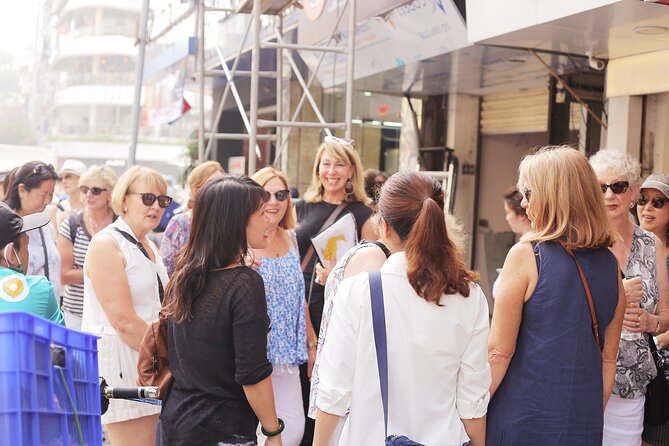
This is a private activity, so only your group takes part. That matters on a walking tour built around questions. If you want to stop and ask why a building has a certain style, or how French and Soviet influence differed, you do not need to worry about holding up a large group.
The strongest personal touch may come from the guide. One guide named Nikita received specific praise for combining architectural and historical explanations with family stories. That kind of local connection can make a building feel less distant. Guide assignments are not guaranteed, so book this expecting a local guide rather than expecting Nikita by name unless the operator confirms it.
The tour lasts about 3 to 4 hours. That is long enough to cover five stops without turning into a full-day commitment. It is also short enough to fit around other Hanoi plans, but the taxi transfers and traffic can affect the exact pace.
You should have a moderate level of fitness. The route includes walking at several sites, standing during explanations, and crossing central streets. Hanoi’s heat, humidity, and traffic may make the outing feel more demanding than the distance suggests, although the provided information does not specify a strenuous hike.
Is $34 a fair price?
At $34 per person, the value depends on what you want from a city tour. The admission tickets listed for the stops are free, so you are mainly paying for the guide’s time, private format, planning, and interpretation rather than entrance fees.
That can be good value if architecture and history are priorities. A self-guided walk would cost less, but you would need to research the buildings and work out the route yourself. The guide also helps connect sites that do not make much sense as isolated photo stops.
Transportation is the key extra cost. Taxis between the palace, university, cathedral, and final district are not included. Ask how many taxis the group normally uses, how fares are paid, and whether the guide rides with you. The tour description mentions a first, second, and third taxi, so you should budget for several short rides.
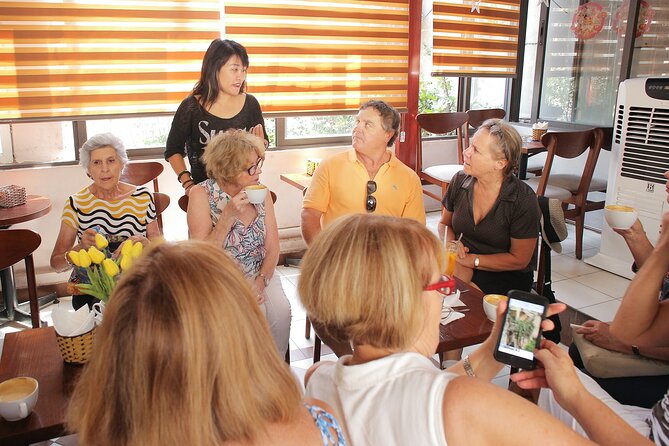
Coffee or tea and snacks are included. That is a small benefit, but it gives the route a pause and keeps the tour from feeling like nonstop standing and walking.
The price makes the most sense for a couple, family, or small group that wants direct access to a guide. If you are happy with a map and prefer to explore at your own pace, the fee may feel less attractive.
Who should book this Hanoi walk?
I would choose this tour if you care about architecture, colonial history, urban planning, or the political story behind Hanoi’s monuments. It is also a good first or second-day activity because it gives you a clear map of how the French Quarter relates to the Old Quarter and Ba Dinh district.
The route suits people who prefer context over a checklist of famous sights. The Cultural Friendship Palace and former Indochina University are not simply filler stops. They widen the story beyond the Opera House and cathedral.
It may be less suitable if you want a relaxed café walk with no transport planning. Several taxi rides are built into the route, and those fares are extra. It is also not the right choice if your main goal is entering every building, since interior admission is not promised.
Check the starting point carefully. The listed meeting point is Lumi HanoiMặt on Duong Cao Toc 08 in Tay Mo, Nam Tu Liem, while the tour itself is described as beginning in the French Quarter. That is a detail worth confirming before booking, as the location appears outside the central sightseeing area.
Free cancellation is available if you cancel at least 24 hours before the start time. Changes or cancellations inside that window are not refundable. Poor weather or failure to reach the minimum number of participants can lead to a different date or a full refund.
Should you book the French Quarter Tour?
Book it if you want Hanoi’s buildings explained as political and cultural clues, not just photographed. The private format, local guide, coffee and snacks, and mix of French, Soviet, religious, academic, and political sites give the tour a clear purpose.
I would be cautious only if you dislike taxis, want guaranteed interior access, or find the listed meeting point inconvenient. Confirm transportation costs and the exact starting arrangement first. For an architecture-minded visitor who wants a focused introduction to central Hanoi, this 3 to 4-hour route offers a useful balance of major sights and less obvious history.
FAQ
How long does the French Quarter Tour last?
The tour lasts approximately 3 to 4 hours.
Where does the tour end?
It ends at Ho Chi Minh’s Mausoleum, at 1 Hung Vuong, Dien Bien, Ba Dinh, Hanoi.
Where is the listed meeting point?
The listed starting point is Lumi HanoiMặt, Duong Cao Toc 08, Tay Mo, Nam Tu Liem, Hanoi.
Is this a private tour?
Yes. Only your group participates in the activity.
What sites does the tour visit?
The route includes the Cultural Friendship Palace, Hanoi University of Science and Technology, Hanoi Opera House, St. Joseph’s Cathedral, and Ho Chi Minh Mausoleum.
Are entrance tickets included?
The tour details list admission as free at the stops. Interior entry is not specifically promised for each site.
Is transportation included in the price?
No. Transportation during the tour is not included. The route uses taxis between several locations.
Are food and drinks included?
Yes. Coffee or tea and snacks are included.
How physically demanding is the tour?
A moderate level of physical fitness is recommended. You will walk between and around several sites and use taxis for some transfers.
Can I cancel for a full refund?
Yes, if you cancel at least 24 hours before the experience start time. Cancellations made less than 24 hours before the start time are not refunded.
Just added to the Hanoi list
- (TOP) Private car: Hanoi/Noi Bai Airport (HAN) from/to Ninh Binh★ 3.5 · 16 reviews
- Thang Long Water Puppet Theater★ 4.5 · 45 reviews
- Private car transfer from Hanoi Airport to Hotels★ 4.5 · 5 reviews
- Private Tour Ninh Binh 1 Day★ 5.0 · 5 reviews
- Private Hanoi Old Quarter Food Tour with 8+ Authentic Tastings★ 5.0 · 11 reviews
- Private Transfer Service from Hanoi to Ha Long Bay★ 5.0 · 3 reviews
- Private Transfer Between Hanoi City and Noi Bai Airport (HAN)★ 5.0 · 3 reviews
- Ba Be National Park With Boat Trip, Kayaking, Swimming, Trekking And Cycling★ 5.0 · 10 reviews
Tours, compared.

Hanoi Jeep Tour: Food, Culture and Fun by Vietnam Army Jeep
Read our review →
Full-Day Ninh Binh Highlights Tour from Hanoi
Read our review →
Hanoi Motorbike Tour: Food, Culture and Fun by Vintage Motorbike
Read our review →
Small Group Hanoi Street Food Tour with a Real Foodie
Read our review →
Ninh Binh Full-Day Tour from Hanoi to Hoa Lu, Tam Coc & Mua Cave Via Boat & Bike
Read our review →
Ninh Binh, Bai Dinh/Hoa Lu, Trang An, & Mua Cave Tour
Read our review →