
Reviewed · SAPA TOURS FROM HANOI
Sapa: 3-Day, 3-Night Trek and Hotel with Overnight Train
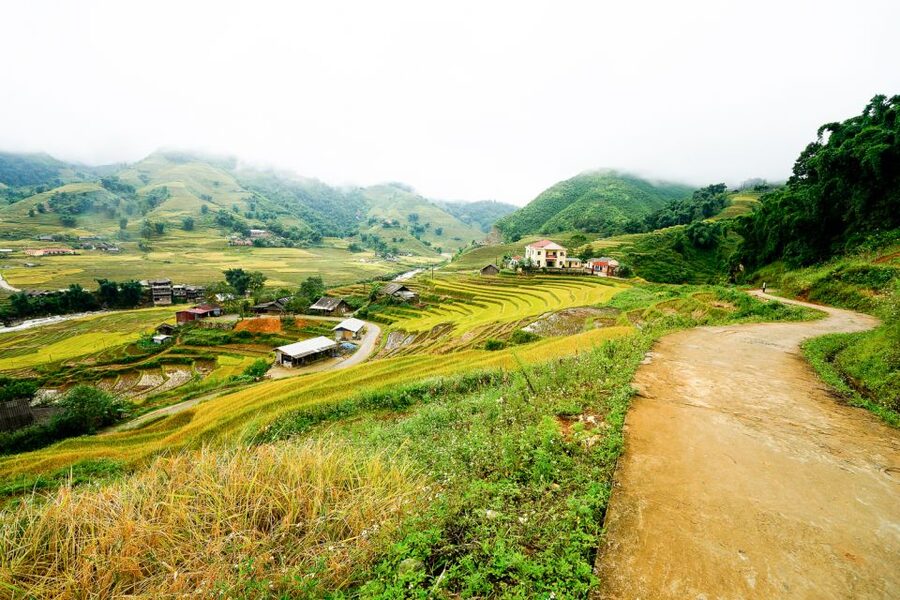
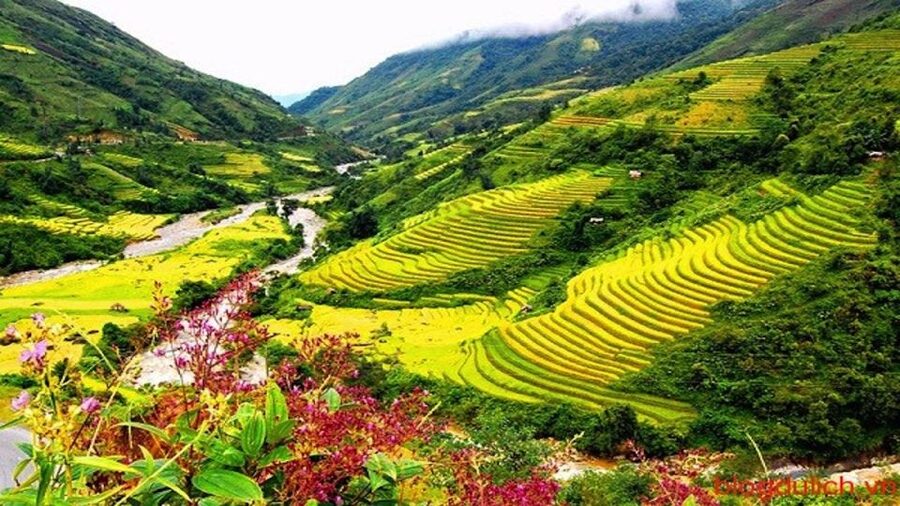
Sapa’s best moments come on foot, along muddy paths above the Muong Hoa Valley, where rice terraces lead to Hmong, Dzay, and Red Dao villages. This trip gives you that rural side of northern Vietnam, plus a night in Ta Van with a Dzay family and the fun, slightly rough-edged adventure of an overnight train.
I like the sensible mix of transport and walking: the train saves a hotel night, while the Sapa hotel gives you a private base before and after the homestay. I also like the local guides, including Mai and Chu, who allow time for photos, conversation, and stops rather than rushing you from one village to the next.
The main caution is stamina. The longest walking day covers about 9 kilometers, with steep or slippery sections, and Sapa weather can change quickly. You should also expect persistent sellers along parts of the route, especially near popular villages and meal stops.
Key points to know before booking

- Overnight train from Hanoi: Sleep in a shared four-bed, air-conditioned cabin on the way to Lao Cai.
- Three distinct village areas: Walk through Black Hmong, Dzay, and Red Dao communities around the Muong Hoa Valley.
- One-night homestay in Ta Van: Spend the night with a Dzay family instead of staying in Sapa every night.
- A real mountain walk: The route includes rice terraces, bamboo forest, a waterfall, and a rattan bridge.
- Useful comfort balance: You get one night in a three-star hotel in central Sapa, plus the homestay.
- Good value at $212: The price covers transport, accommodation, guides, sightseeing fees, and listed meals, though drinks and personal spending cost extra.
Why this Sapa trip works well
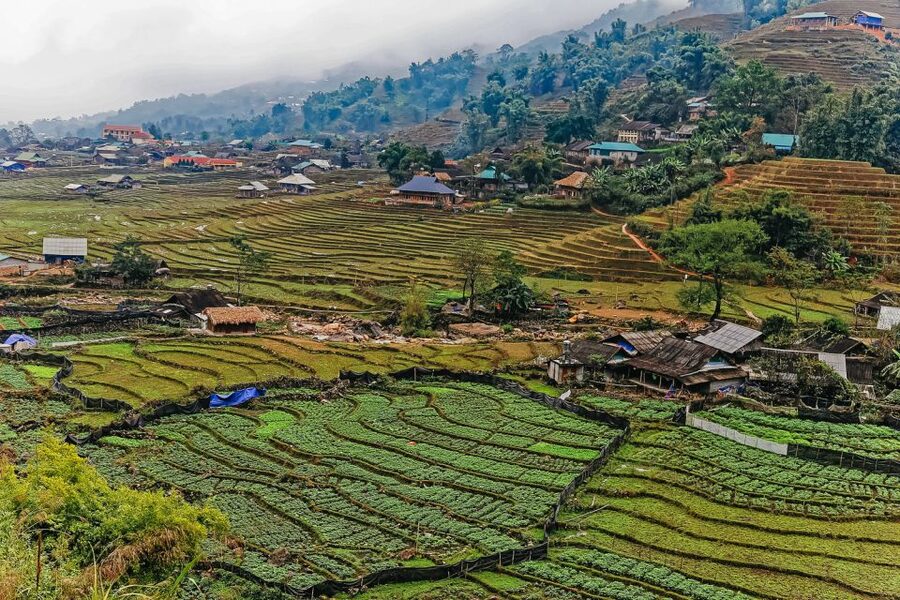
This is a compact introduction to northern Vietnam’s mountain country. You leave Hanoi at night, arrive near the mountains early the next morning, walk through several minority villages, sleep in Ta Van, and return to Hanoi by limousine on the third afternoon.
That structure saves time. You do not spend a full day traveling to Sapa and another full day returning. Instead, the train handles the long overnight journey while you sleep, at least in theory. The ride is air-conditioned and the berths are soft, but the train can be noisy and bumpy, and the onboard toilet is basic.
At $212 per person, the package is strongest for people who value simple planning. It includes Hanoi Old Quarter pickup and drop-off arrangements, the overnight train, shared transport from Lao Cai to Sapa, a three-star hotel, a homestay, meals listed in the schedule, a local English-speaking guide, and entrance fees.
It is less attractive if you want complete control over your sleeping arrangements or food spending. Drinks are not included, bunk choices may not be available, and solo visitors can face a single supplement for two nights of accommodation. Confirm that extra charge before paying.
More Sapa treks and homestays:
- Sapa 2 Days 1 Night From Hanoi – Overnight in Ta Van Village
★ 5.0 · 2,669 reviews - Hanoi – Sapa 2 Days 1 Night Overnight At Homestay
★ 5.0 · 899 reviews - From Hanoi: 2-Day Sapa Trekking Trip with Homestay & Meals
★ 4.8 · 704 reviews
Night zero: Hanoi to Lao Cai by train
The trip begins at Hanoi Railway Station. You either reach the station yourself by about 9 PM or arrange optional pickup from a hotel in the Old Quarter. Staff provide your train tickets, and the meeting instructions point you toward the second floor and gate 2A.
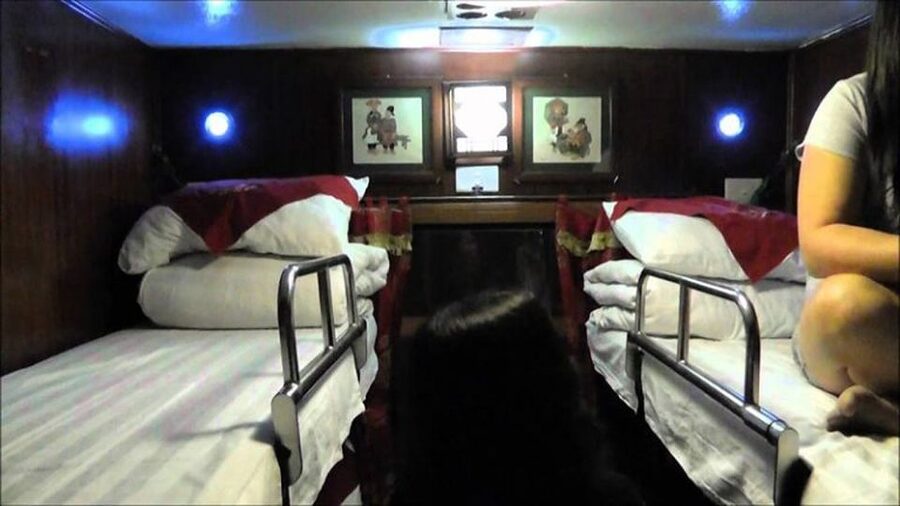
The train leaves around 10 PM. You share a four-bed, air-conditioned cabin, which is a pleasant way to meet the basic demands of this route without paying for a separate hotel in Hanoi or Lao Cai.
I would pack a small overnight bag and keep it beside your berth. Your larger luggage can be left for the Sapa hotel, but you should have warm clothes, water, toiletries, and any medicine close at hand. The train ride is part of the experience, not luxury transport. Expect movement, noise, and a limited toilet.
Bunk position may be assigned rather than chosen. If climbing to an upper berth would be difficult, ask about this before departure. The early arrival also matters. You reach Lao Cai in the morning, then transfer by shared minibus to Sapa.
Day one: Sin Chai and the Black Hmong

You meet the guide at the station and transfer to Sapa at about 6 AM. After leaving your luggage at the hotel, you have breakfast there. Standard room check-in is at 2 PM, so do not assume the room will be ready when you arrive. Early check-in may be available for an added fee.
The first walk heads southwest from Sapa to Sin Chai, a Black Hmong village roughly 2 kilometers from the town center. This is a useful first look at village life because it is close enough to reach on foot but feels more rural than central Sapa.
Sin Chai is described as simple and rustic, with a less polished feel than the busiest areas around town. You see the ordinary setting of a highland village rather than spending the whole morning in Sapa’s shops and cafés.
The walk back leads to lunch at the hotel, followed by free time. This break is welcome after the overnight train and morning walk. You can rest, explore Sapa, or handle practical tasks such as buying snacks, exchanging money, or checking your clothing before the longer trek.
Dinner is around 6 PM. At night, Sapa offers easy local treats such as roasted corn and baked eggs beside charcoal fires. The town is an active tourist base, so this evening is less remote than the homestay, but it gives you a comfortable night before the main valley walk.
Day two: Y Linh Ho, Lao Chai, and Ta Van
The second day is the heart of the trip. After breakfast, you follow the side of the Muong Hoa Valley toward Y Linh Ho, a village associated with the Black Hmong. The route then continues down toward Lao Chai, another Hmong village.
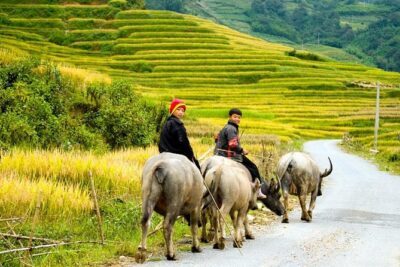
The main attraction is not one single monument. It is the changing view as the path runs beside rice terraces and through mountain villages. In May, you may see planting work in progress, and the route can give you a close look at how rice cultivation shapes daily life.
This is also the day when footwear matters most. The route can become demanding in rain, and wet paths may be slippery. Wear proper trekking shoes rather than casual trainers. Bring sun cream and insect repellent, but also pack warm layers because Sapa can be cold from September through March.
Lunch comes during the route before you continue through the terraces toward Ta Van. This portion is likely to be the most memorable for anyone who wants contact with rural life rather than a quick photo stop. You may see people working, making traditional clothing, or handling everyday tasks, though the exact sights depend on the season and the day.
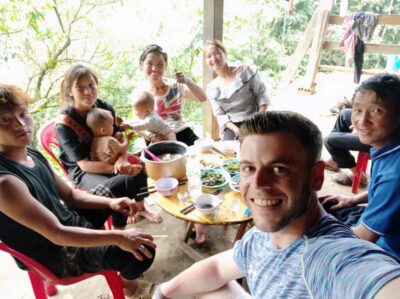
Ta Van is home to the Dzay minority people and provides the overnight homestay. The stay gives you a better sense of village life than a hotel in Sapa can offer. You sleep in a shared local accommodation rather than a private city room, so bring an open mind along with your sleeping clothes.
The homestay is described as clean and pleasant, but it is still a homestay. Comfort levels and privacy are different from a standard hotel. Meals are included, while drinks are not, so keep some Vietnamese dong handy.
Something completely different for the rest of your time in Hanoi:
- Hanoi Jeep Tour: Food, Culture and Fun by Vietnam Army Jeep
★ 5.0 · 15,222 reviews - Full-Day Ninh Binh Highlights Tour from Hanoi
★ 5.0 · 7,761 reviews - Hanoi: Ha Long Bay Day Cruise – Swimming, Meal, Kayaking
★ 4.7 · 7,415 reviews - Hanoi: Water Puppet Show Tickets
★ 4.6 · 7,029 reviews
Day three: Red Dao villages, bamboo forest, and the return
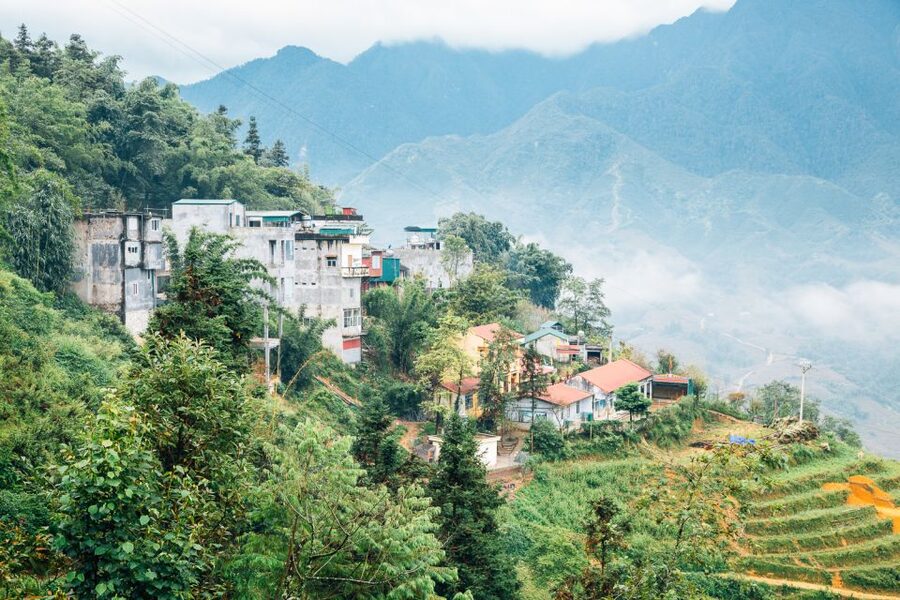
After breakfast in Ta Van, the walk continues toward villages associated with the Red Dao and Hmong communities. The route includes a waterfall, a rattan bridge, and views through bamboo forest.
This final walk adds variety to the trip. The second day focuses heavily on terraces and valley villages, while the third brings more woodland and water. The rattan bridge and waterfall give the route a few clear landmarks, though the appeal remains the combination of scenery, walking, and village life.
You eventually reach the main road and take a vehicle back to Sapa. Around 2 PM, you collect your belongings and prepare for the return journey. A limousine takes you back toward Hanoi, with arrival at your hotel expected around 8 to 9 PM.
That return transfer is a major convenience, but check the exact drop-off arrangement for your hotel. The included pickup and drop-off service is tied to Hanoi’s Old Quarter. If your hotel is elsewhere, you need to select the appropriate meeting point option.
What the guides add to the walk
The guide can make or break a mountain trek, and this trip uses local English-speaking guides. Names connected with the experience include Mai, Chu, Su Su, and Ai, though your assigned guide can vary.
The strongest part of the guiding style is the chance to stop and talk. You are not simply marched between villages. There is time for pictures, questions, and small details about local work and family life.
You should stay close to the official guide, especially when people offer to accompany you. Local women and children may walk alongside the group, sell handmade goods, or ask for money. Some may follow for much of the route, and the sellers can be persistent at stops and lunch.
This situation is common around Sapa and can feel uncomfortable. The best approach is polite but firm: listen if you want to talk, but do not feel obliged to buy. If you do shop, check prices carefully. The tour operator specifically advises you to ignore unwanted sellers and stick with the guide, though the practical reality is that this issue may still arise.
The hotel, homestay, and train comparison

You get three different types of accommodation, each serving a different purpose.
The train cabin is practical and memorable. It is air-conditioned, with four berths, but it is not quiet or smooth. Pack earplugs if you use them, and keep your expectations modest.
The Sapa hotel provides the most familiar comfort. It is a three-star property in the center, useful for breakfast, luggage storage, lunch, rest, and access to town. The standard check-in time is 2 PM, so early arrival does not guarantee immediate room access.
The Ta Van homestay is the most important stay for the cultural side of the trip. You spend the night in the village with the Dzay community, eat included meals, and step away from Sapa’s tourist center. It will not offer the same privacy as the hotel, but that difference is the point.
Solo visitors should ask about the accommodation supplement. The information provided specifies an added charge for two nights in a three-star hotel and private bungalow, with the amount confirmed at booking. If you are traveling alone, do not judge the $212 price until that extra cost is clear.
Food, money, and packing advice
Breakfast, lunch, and dinner are included on the days shown in the schedule. That removes much of the daily decision-making, but drinks are not included. Carry cash in Vietnamese dong for water, soft drinks, snacks, souvenirs, and small purchases.
Sapa’s banking system may not work reliably, so do not depend entirely on cards. US dollars, euros, and Australian dollars are also accepted in Sapa, but local currency is usually more useful for small expenses.
Pack light for the walking days. Your essential list should include:
- Trekking shoes with dependable grip
- Warm clothing, including a scarf and hat
- Sun cream and sunglasses
- Insect repellent
- Personal medicine
- Small cash in Vietnamese dong
- A compact overnight bag for the train and homestay
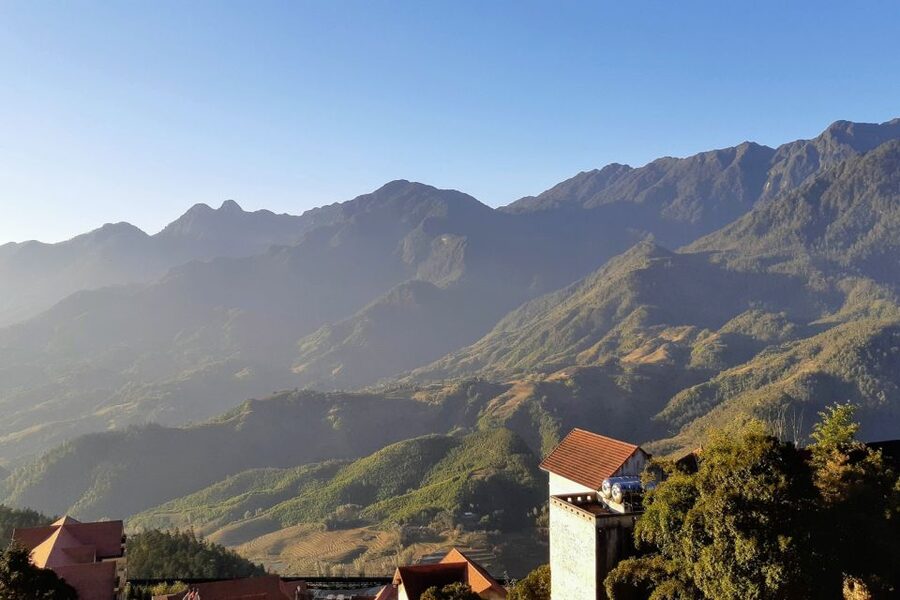
Sapa weather is unpredictable. From September through March, it is often cold, while December through March can bring fog. Rain changes the character of the route quickly, so a waterproof layer would be a sensible addition even though it is not specifically listed among the required items.
Who should book this mountain trip?
I would choose this trip if you want a first taste of Sapa without arranging trains, village transfers, meals, and accommodation yourself. It suits active adults who can manage a 9-kilometer trek and do not mind uneven ground, changing weather, shared rooms, or an early start.
It also works well for people who want more than a scenic drive. The time in Sin Chai, Y Linh Ho, Lao Chai, and Ta Van gives you several views of Hmong and Dzay life, while the final day adds Red Dao communities, bamboo forest, a waterfall, and a rattan bridge.
I would hesitate if you have limited mobility, use a wheelchair, are traveling with young children, or dislike physically demanding walks. The tour is not recommended for older people or children because of the trek length and terrain.
I would also think twice if you need quiet transport and hotel-level comfort throughout. The overnight train is noisy and bumpy, the homestay is shared, and sellers can be persistent. A private group option may help with pacing and communication, but it will not remove every rough edge of Sapa.
Should you book it?
Book this experience if you want strong coverage in a short window and value local village walks over polished comfort. The best parts are the Muong Hoa Valley route, the Dzay homestay in Ta Van, and the useful combination of train, hotel, and road transport.
At $212, it is a fair package when you use the included accommodation, meals, transfers, guide, and fees. Before booking, confirm the solo supplement, your Hanoi pickup details, and the accommodation arrangement. Bring proper shoes, warm layers, cash, and patience for the sellers along the trail, and you will be ready for a rewarding but active few days in Sapa.
FAQ
Is the overnight train included?
Yes. The price includes one night in a shared four-bed, air-conditioned cabin on the train from Hanoi to Lao Cai.
Where does the tour start in Hanoi?
You can meet staff at Hanoi Railway Station, with instructions directing you to the second floor and gate 2A. Optional pickup is available from hotels in Hanoi’s Old Quarter.
How long is the trek?
One of the walks covers about 9 kilometers. The route includes village paths, rice terraces, bamboo forest, a waterfall, and a rattan bridge.
Where do I sleep during the trip?
You spend one night on the train, one night in a three-star hotel in central Sapa, and one night at a homestay in Ta Van Village.
Are meals and drinks included?
Meals listed in the schedule are included. Drinks are not included, so you should carry cash for beverages and snacks.
Is the tour suitable for people with mobility impairments?
No. The activity is not suitable for people with mobility impairments or wheelchair users, and the 9-kilometer trek is not recommended for older people or children.
More 3-day tours in Hanoi
- Amanda Cruise – Ha Long, Lan Ha Bay – All Inclusive 2D1N & 3D2N
★ 5.0 · 4,358 reviews - Halong Bay – Le Journey Cruises – All Inclusive 2D1N and 3D2N
★ 5.0 · 2,500 reviews - Hanoi: 3-Day Ninh Binh, Ha Long, & Lan Ha Bay 5-Star Cruise
★ 4.8 · 1,401 reviews - Mon Chéri Cruises 5 star: Amazing 3 days exploring Halong & Cat Ba island
★ 5.0 · 1,280 reviews
More hiking tours in Hanoi
- Halong Bay Full Day with Kayaking, Hiking viewpoint, Cave – Deluxe To Luxury
★ 5.0 · 884 reviews - Sapa 3 Days 2 Nights Trekking Tour (1 Night In Ta Van Village, 1 Night In Hotel)
★ 5.0 · 699 reviews - 3-Day Trekking Adventure of Sapa from Hanoi – Stay Ta Van Village
★ 5.0 · 611 reviews - 3D and 2N Lan Ha Bay Cat Ba Island Kayaking & Trekking with Vega
★ 5.0 · 593 reviews
Just added to the Hanoi list
- (TOP) Private car: Hanoi/Noi Bai Airport (HAN) from/to Ninh Binh★ 3.5 · 16 reviews
- Thang Long Water Puppet Theater★ 4.5 · 45 reviews
- Private car transfer from Hanoi Airport to Hotels★ 4.5 · 5 reviews
- Private Hanoi Old Quarter Food Tour with 8+ Authentic Tastings★ 5.0 · 11 reviews
- Private Tour Ninh Binh 1 Day★ 5.0 · 5 reviews
- Private Transfer Service from Hanoi to Ha Long Bay★ 5.0 · 3 reviews
- Private Transfer Between Hanoi City and Noi Bai Airport (HAN)★ 5.0 · 3 reviews
- Ba Be National Park With Boat Trip, Kayaking, Swimming, Trekking And Cycling★ 5.0 · 10 reviews
Sapa Tours from Hanoi, compared.
Sapa 2 Days 1 Night From Hanoi – Overnight in Ta Van Village
Read our review →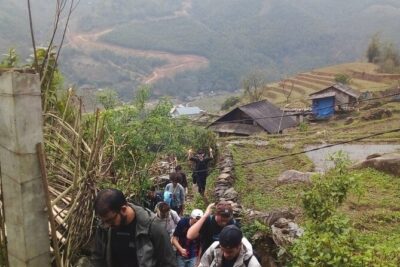
Sapa 3 Days 2 Nights Trekking Tour (1 Night In Ta Van Village, 1 Night In Hotel)
Read our review →
3-Day Trekking Adventure of Sapa from Hanoi – Stay Ta Van Village
Read our review →
2-Day Sa Pa Ethnic Homestay Tour & Trek with Limousine Bus
Read our review →
Sapa 2 Days 1 Night From Hanoi – Overnight in Hotel
Read our review →
Sapa 3 Day 2 Night Trekking With Hotel & Homestay
Read our review →Browse the lists this tour appears in